3.15 - Gender and Masculinity
Characters disagree about gender and strength
Masculinity means the qualities and behaviour associated with being a man; femininity means those associated with being a woman. Characters disagree over whether strength means cruelty, restraint, care, or grief. Their disagreements let us examine gender expectations without accepting them as truths about what men and women are naturally like.
In Jacobean England, conventional ideals emphasised a wife’s obedience and a mother’s care for her children. Lady Macbeth challenges the expectation of obedience when she directs her husband, while her appeals for cruelty reject the tenderness associated with motherhood.
Military courage earns Macbeth honour
The Captain calls Macbeth "brave Macbeth" while describing his violence in battle in Act 1, Scene 2. Duncan rewards his service with Cawdor’s title. This connection between fighting, honour, and advancement helps explain why accusations of cowardice matter to him.
Lady Macbeth uses masculinity to pressure Macbeth
In Act 1, Scene 7, Macbeth abandons the plan to murder Duncan. Lady Macbeth challenges his manhood to change his mind.
Macbeth links manhood with moral restraint
“I dare do all that may become a man. / Who dares do more is none.”
Here, "become" means befit. Macbeth argues that courage has moral limits: murdering someone he should protect would make him less worthy of being called a man.
Lady Macbeth makes murder a test of manhood
She replies, "When you durst do it, then you were a man". She shifts attention from whether murder is right to whether he can bear to seem cowardly. She also says she would kill a baby she was nursing if she had promised to do so. Tenderness becomes something she claims she would sacrifice to keep her word. Her pressure helps persuade him, but he remains responsible for choosing an act he knows is wrong.
Lady Macbeth and the witches unsettle gender expectations
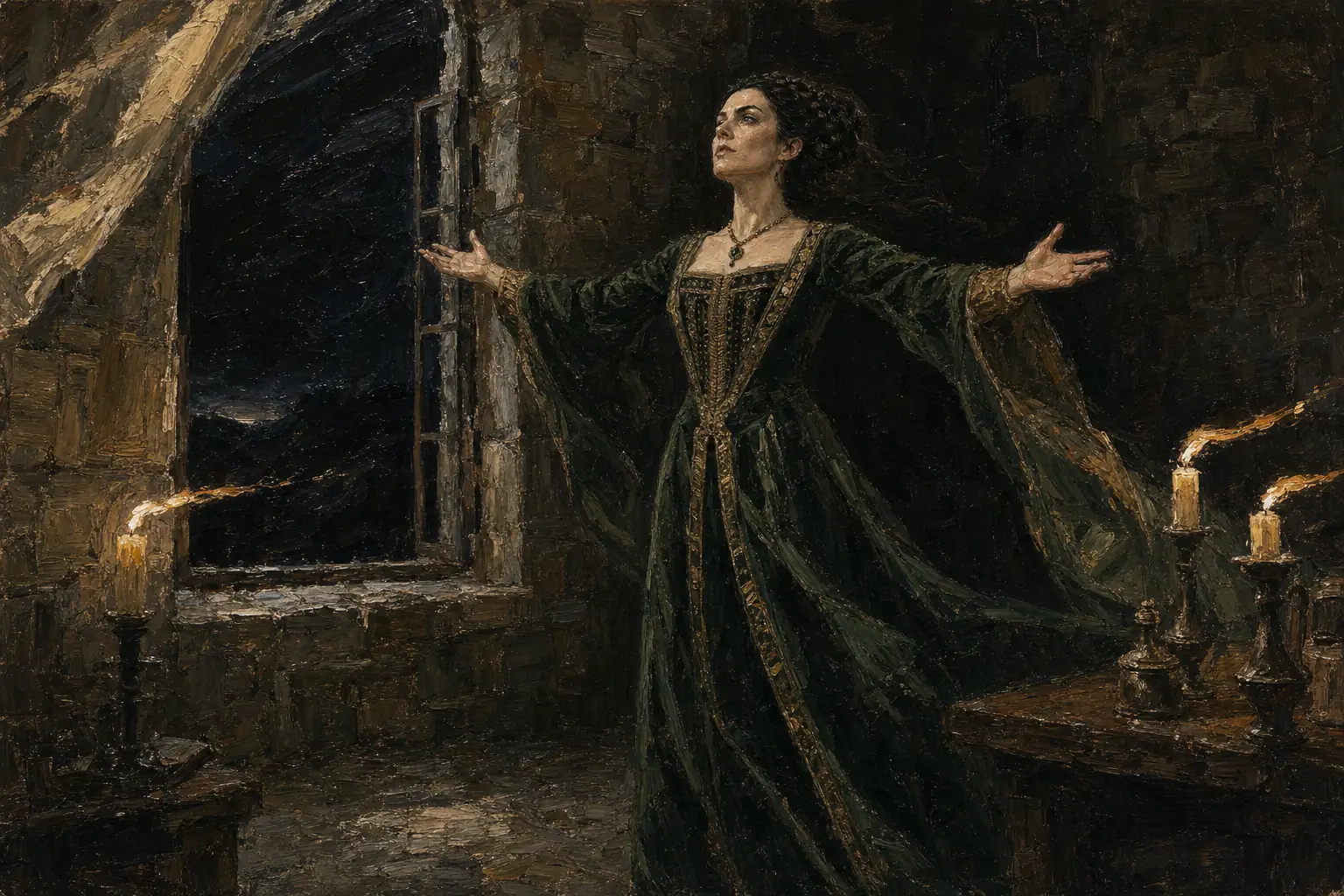
Lady Macbeth associates tenderness with womanhood and treats it as an obstacle to power.
Lady Macbeth tries to reject maternal tenderness
In Act 1, Scene 5, she asks spirits to "unsex me here" and "take my milk for gall". Milk suggests nurturing a child, while gall is bitter bile. Replacing one with the other expresses her wish to exchange tenderness for cruelty.
She challenges expectations of female tenderness while accepting the association of ruthlessness with men. Her request shows what she wants; it does not prove the spirits transform her.
Her determination has limits
In Act 2, Scene 2, she says Duncan's resemblance to her father stopped her killing him herself. She nevertheless returns the daggers and smears the guards with blood when Macbeth cannot face doing so. Affection and practical composure coexist here.
By Act 5, Scene 1, her command "Out, damned spot, out, I say!" cannot remove the blood she imagines. The change from directing Macbeth to trying to control her own memories exposes the failure of her effort to suppress conscience. Macbeth also suffers fear and guilt, so distress is not presented as an exclusively female weakness.
The witches unsettle Banquo's expectations
In Act 1, Scene 3, Banquo says, "You should be women, / And yet your beards forbid me to interpret / That you are so." Their appearance confounds his expectations of women. Lady Macbeth asks to shed qualities she associates with womanhood; Banquo struggles to categorise the witches. Their uncertain appearance connects gender with the difficulty of judging what people are from how they look.
Macbeth challenges the murderers' masculinity
In Act 3, Scene 1, Macbeth recruits men to kill Banquo after blaming him for their misfortunes.
Macbeth makes murder proof of manhood
When the First Murderer asserts that they are men, Macbeth replies:
“Ay, in the catalogue you go for men,”
Macbeth compares a "catalogue", or list, of men with different kinds of dogs: sharing a name does not give them equal worth. He presents killing Banquo as a chance to prove their worth as men and gain his favour, exploiting their anger and desperation.
The repetition across scenes shows Macbeth adopting the pressure previously used against him. As king, he can offer rewards as well as shame men into proving themselves.
Lady Macduff measures courage through family protection
In Act 4, Scene 2, Lady Macduff says her husband "wants the natural touch", meaning he lacks family affection. Macduff has gone to England to seek help against Macbeth, leaving his household exposed. Her image of a tiny mother wren fighting an owl makes maternal care a source of courage. Lady Macbeth tries to suppress tenderness for power; Lady Macduff values courage that protects others.
She judges Macduff's departure as a failure to protect his family, though Ross defends his judgement. Later, she questions "that womanly defence / To say I have done no harm": she recognises that innocence offers no safety under tyranny.
Macduff presents grief as part of manhood
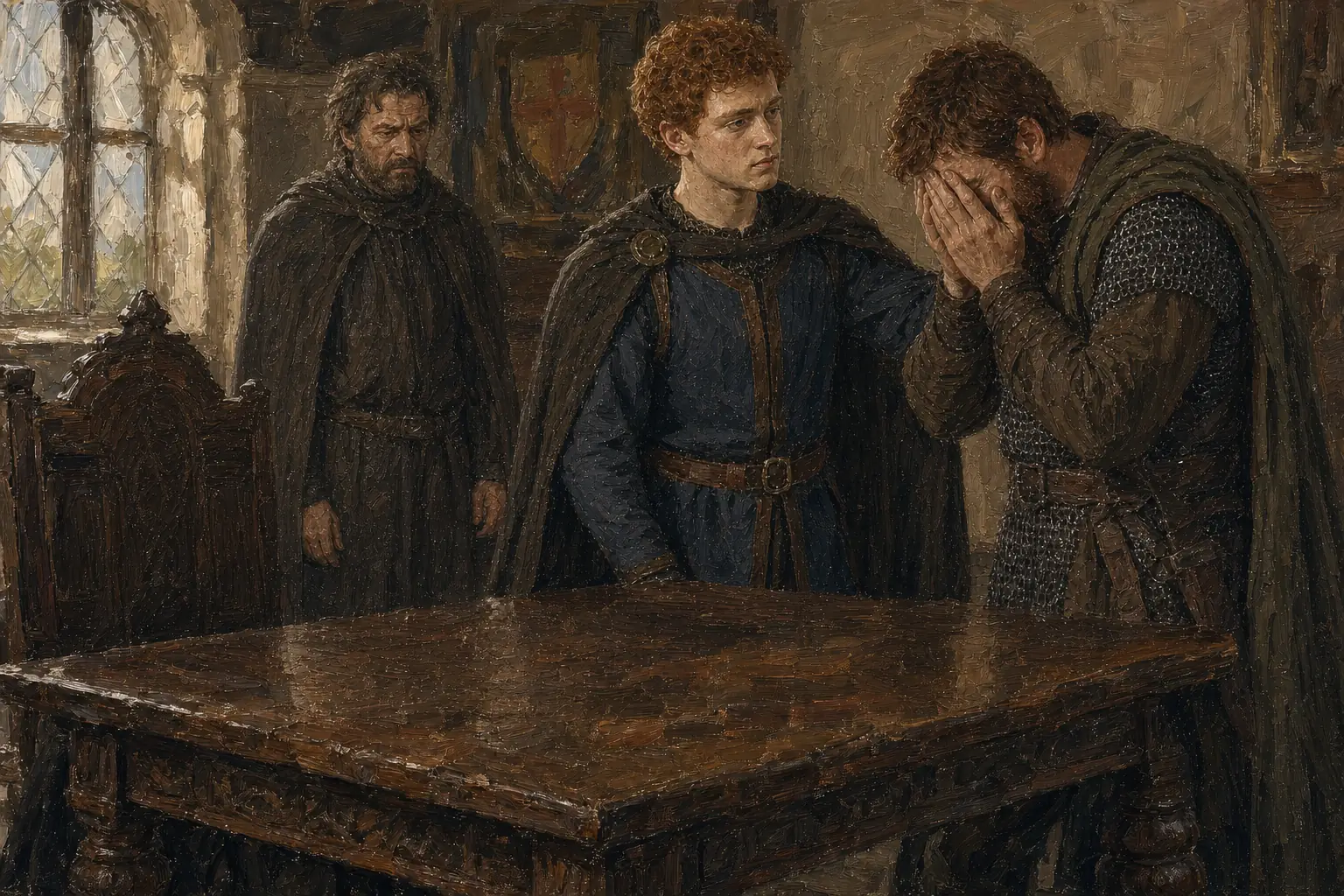
In Act 4, Scene 3, his family's murder adds a personal reason for Macduff to fight Macbeth.
Manhood includes action and feeling
Malcolm urges him to "Dispute it like a man." Here, dispute means fight against his grief. Macduff replies, "I shall do so, / But I must also feel it as a man."
The word "also" joins action with feeling. Macduff insists that grieving for those he loves belongs within manhood. This values the tenderness Lady Macbeth tries to suppress.
Grief and revenge remain connected
Malcolm has already encouraged him to express grief: "Give sorrow words." He also presents revenge as its cure. Macduff later says, "I could play the woman with mine eyes", associating tears with women. He broadens manhood to include feeling while still struggling with expectations that men should suppress tears and fight.
Courage and mourning at the end
Macbeth's courage continues into the final battle, but he now fights to defend his own rule against those trying to free Scotland. Physical bravery alone does not make his actions honourable.
In Act 5, Scene 8, Siward takes consolation in his son's death because he died fighting, with his wounds on the front of his body. Malcolm replies, "He's worth more sorrow, and that I'll spend for him." Their different responses keep the value of grief in view even during victory. The play ends with violent resistance to tyranny, while also allowing tenderness and mourning to matter.