1.4 - Key Themes
Themes overlap
In Macbeth, the same event often develops several themes: Macbeth's plan to kill Duncan connects his ambition for the crown, his deception of a trusting king, and his awareness that murder is wrong.
Ambition
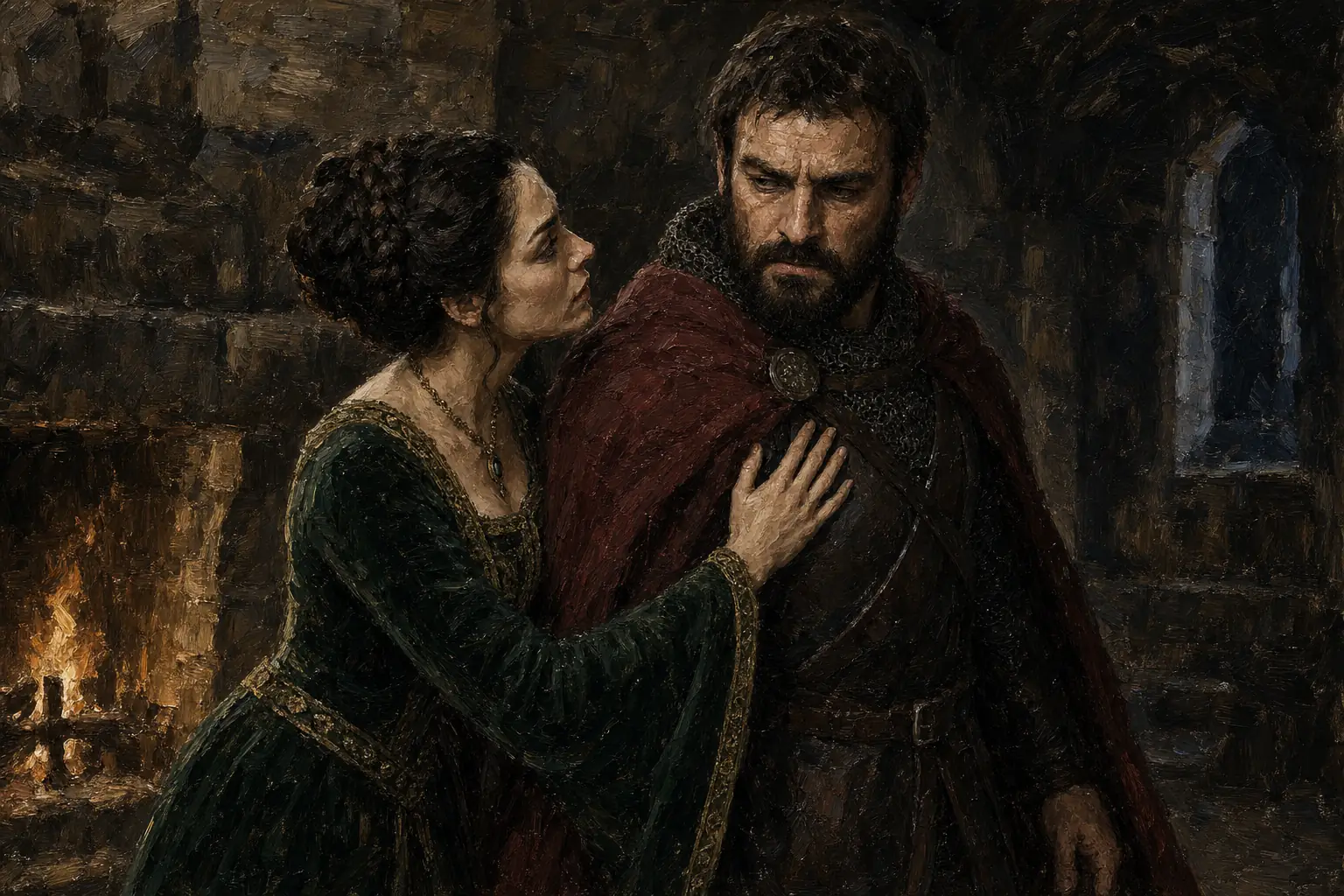
Ambition concerns what people want to achieve and what they are willing to do for it. The prospect of greater status tempts Macbeth, Lady Macbeth, and Banquo, but they respond differently.
Examples from the play:
- Desire overcomes duty - Macbeth recognises his duty to protect Duncan, yet names "Vaulting ambition" as his motive for killing him. Lady Macbeth challenges his courage and helps persuade him to proceed (Act 1, Scene 7).
- Temptation without murder - Banquo hopes the witches' promise of royal descendants will come true, even while suspecting Macbeth of wrongdoing. He takes no part in Duncan's murder, showing that wanting advancement needn't mean killing for it (Act 3, Scene 1).
Guilt and conscience
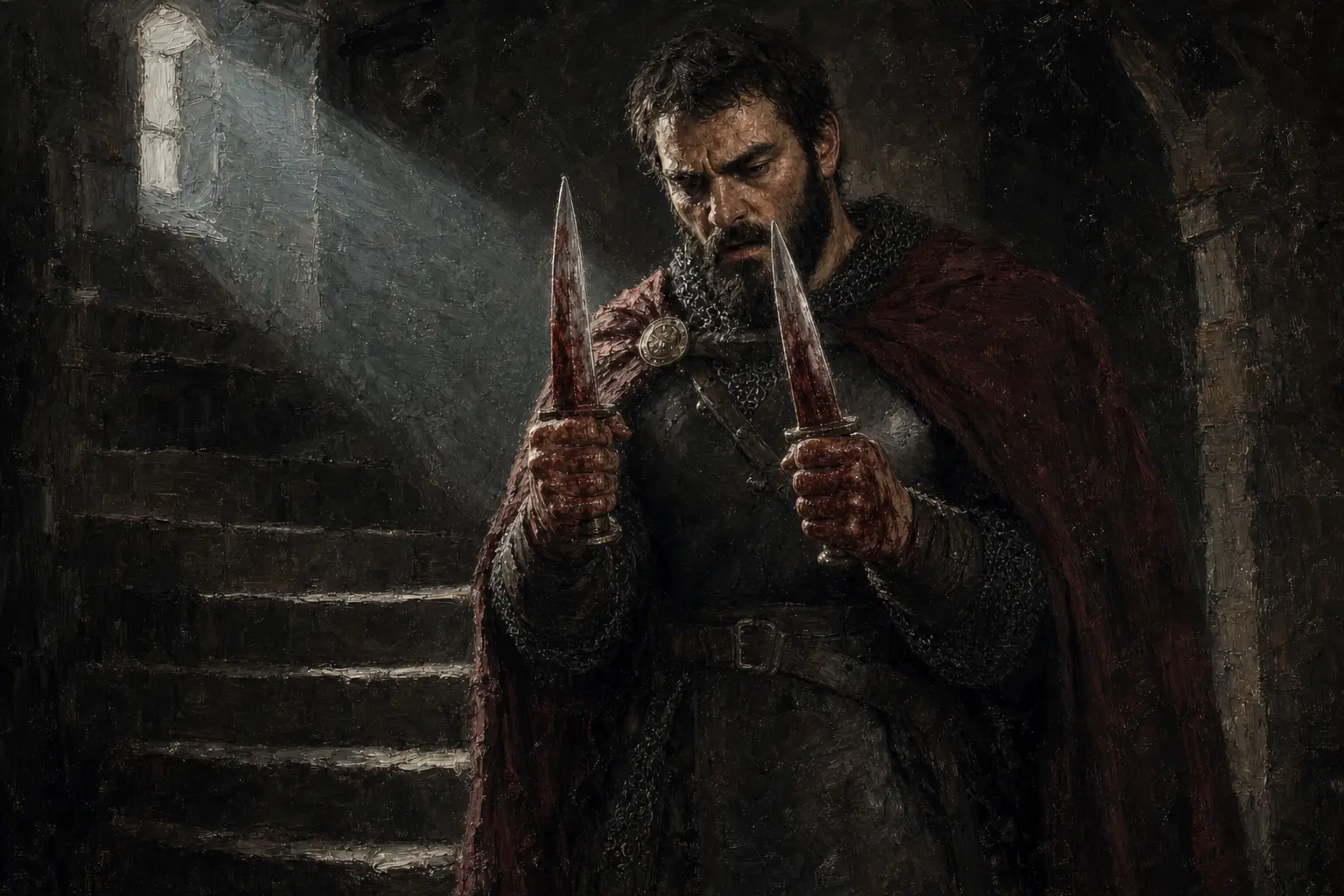
Conscience makes Macbeth hesitate before murder, and guilt troubles the Macbeths after it. Their responses change: Lady Macbeth's early confidence gives way to distress, while Macbeth becomes increasingly willing to use violence.
Examples from the play:
- Macbeth's remorse - After killing Duncan, Macbeth imagines his bloodstained hand turning the seas red. The exaggerated image suggests that washing away the evidence cannot remove his guilt (Act 2, Scene 2).
- Lady Macbeth cannot forget - After Duncan's murder, she insists, "A little water clears us of this deed." By her sleepwalking scene, she imagines blood she cannot wash off. Her cry of "Out, damned spot, out, I say!" suggests that guilt has defeated her efforts to dismiss the crime (Act 2, Scene 2 and Act 5, Scene 1).
Appearance versus reality
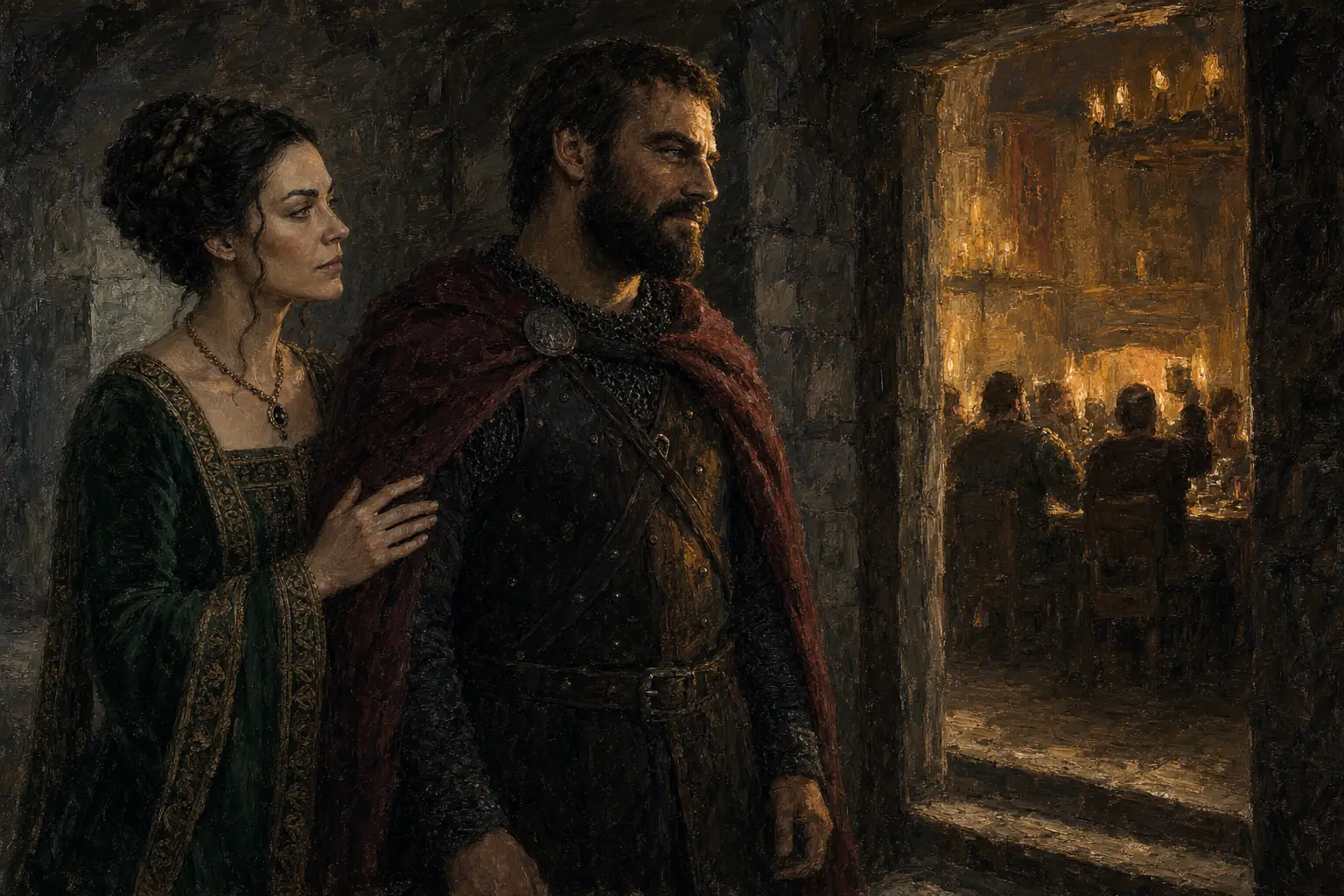
Characters conceal their intentions behind convincing appearances. Deceptive language also makes it difficult to distinguish a reliable promise from a dangerous one.
Examples from the play:
- Hospitality conceals betrayal - Lady Macbeth welcomes Duncan to the castle after discussing his murder. The audience knows about the plan while Duncan trusts his hosts, creating dramatic irony (Act 1, Scenes 5–6).
- Reassurance conceals danger - An apparition says Macbeth cannot be defeated until Birnam Wood comes to Dunsinane. He assumes this is impossible, but Malcolm's soldiers later carry branches towards the castle, fulfilling the prediction (Act 4, Scene 1 and Act 5, Scene 4).
Supernatural
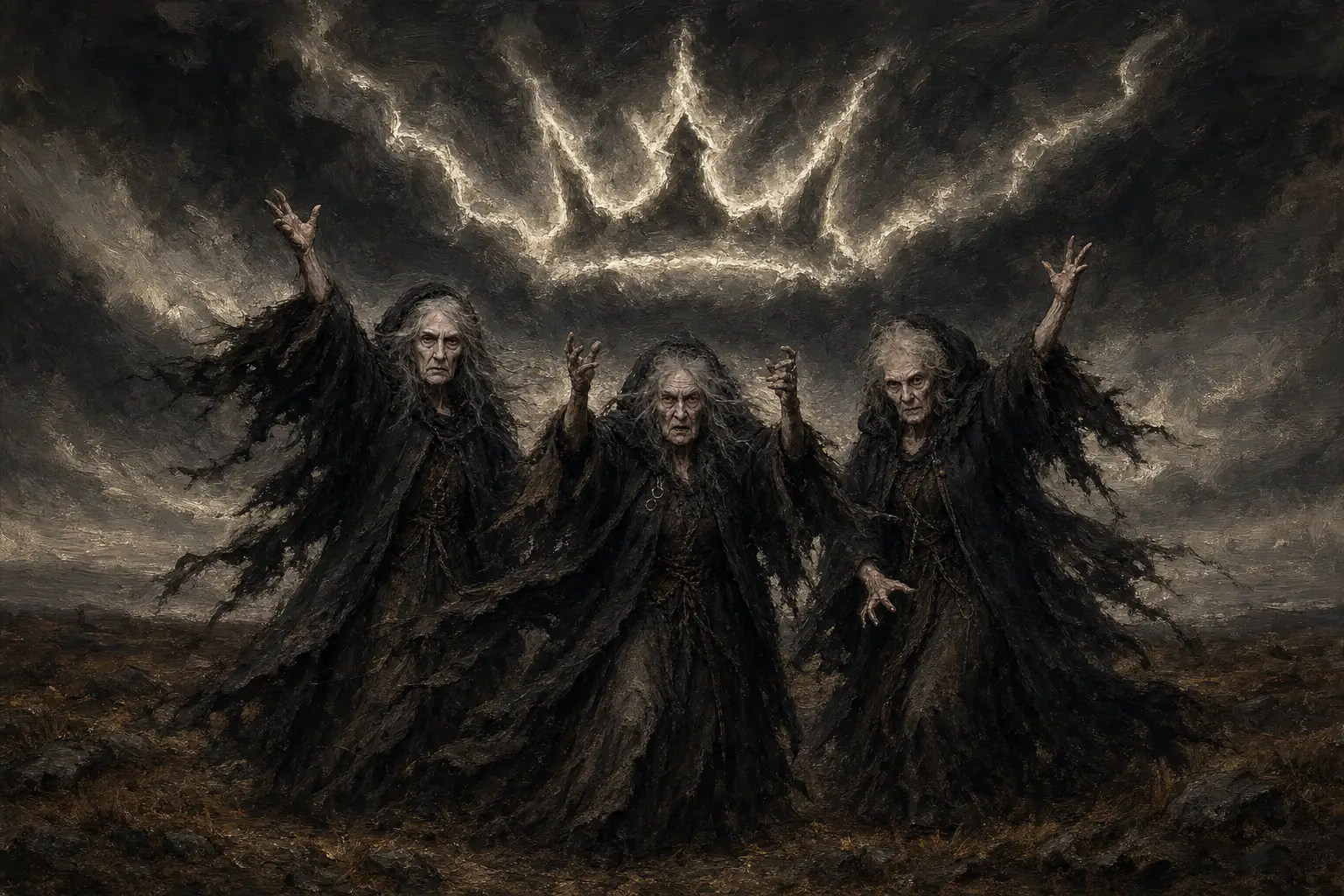
The witches and their apparitions tempt Macbeth with knowledge of the future. Other visions raise questions about whether Macbeth encounters supernatural forces or sees images produced by his troubled mind.
Examples from the play:
- The witches have witnesses - Macbeth and Banquo both see and question the witches. Their appearance cannot simply be explained as Macbeth's private hallucination (Act 1, Scene 3).
- Macbeth's visions are less certain - He sees a dagger before killing Duncan and Banquo's ghost after arranging Banquo's murder. Only Macbeth sees these visions, which can be read as supernatural appearances or expressions of his fear and guilt (Act 2, Scene 1 and Act 3, Scene 4).
Corruption of power
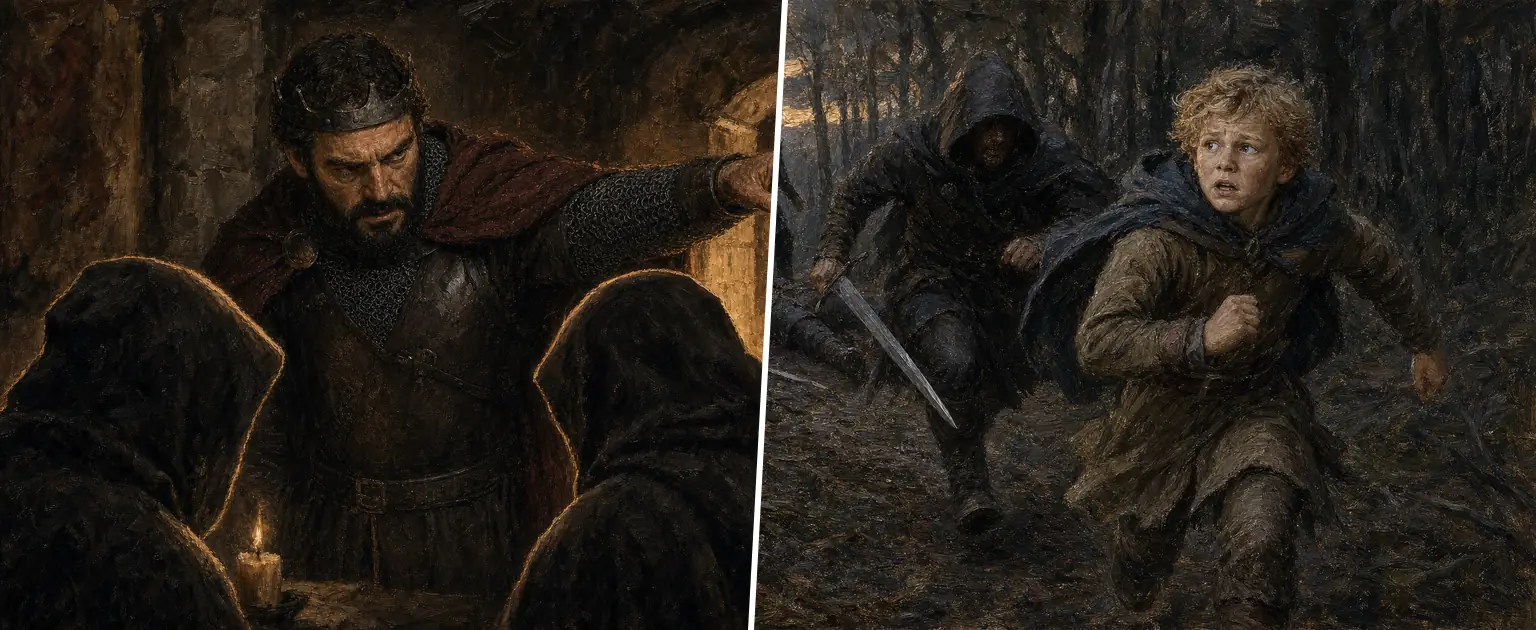
Macbeth's reign shows how power can be used to protect a ruler's position at the expense of other people. His fear of losing the crown leads him to order further violence, which spreads suffering through Scotland.
Examples from the play:
- Power brings insecurity - Macbeth fears Banquo and resents the promise that Banquo's descendants will be kings. He arranges the attack on Banquo and Fleance to protect his own hold on the throne (Act 3, Scene 1).
- Violence reaches the innocent - After learning that Macduff has fled to England, Macbeth orders the killing of Macduff's wife and children. His use of power now includes attacks on the families of his opponents (Act 4, Scenes 1–2).
Kingship
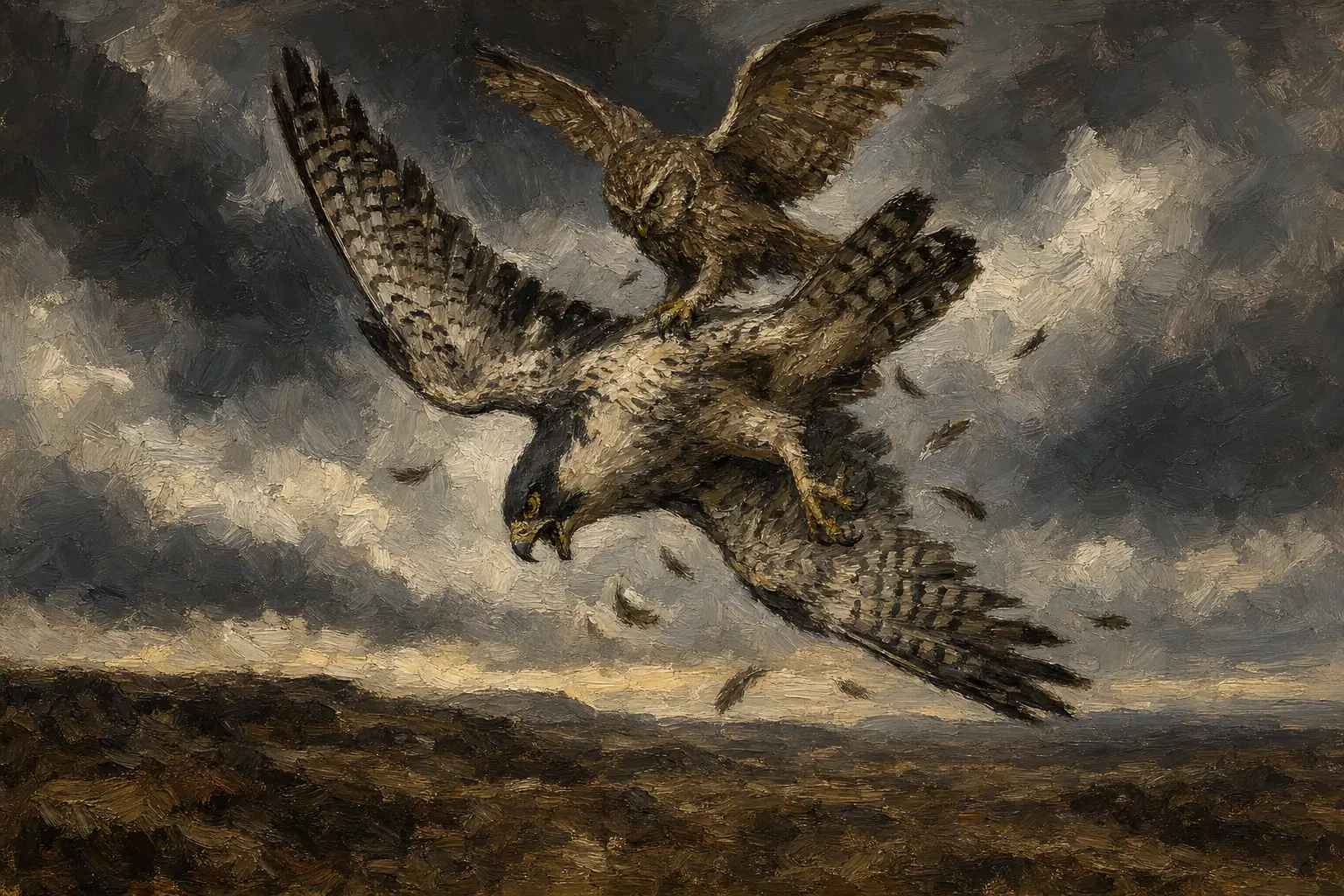
Kingship concerns both a ruler's right to the throne and the qualities needed to govern well. Duncan's generosity and Malcolm's declared wish to serve Scotland contrast with Macbeth's violent rule.
Examples from the play:
- Royal authority is sacred - Macduff describes Duncan's body as "The Lord's anointed temple". This reflects the belief that kings receive their authority from God, making the murder a religious offence as well as a political crime (Act 2, Scene 3).
- Good rule requires virtue - To test Macduff's loyalty, Malcolm falsely claims to have none of the "king-becoming graces", the qualities fit for a king, such as justice, mercy, and courage. These qualities offer a standard against which Macbeth's selfish, violent government can be judged (Act 4, Scene 3).
Fate versus free will
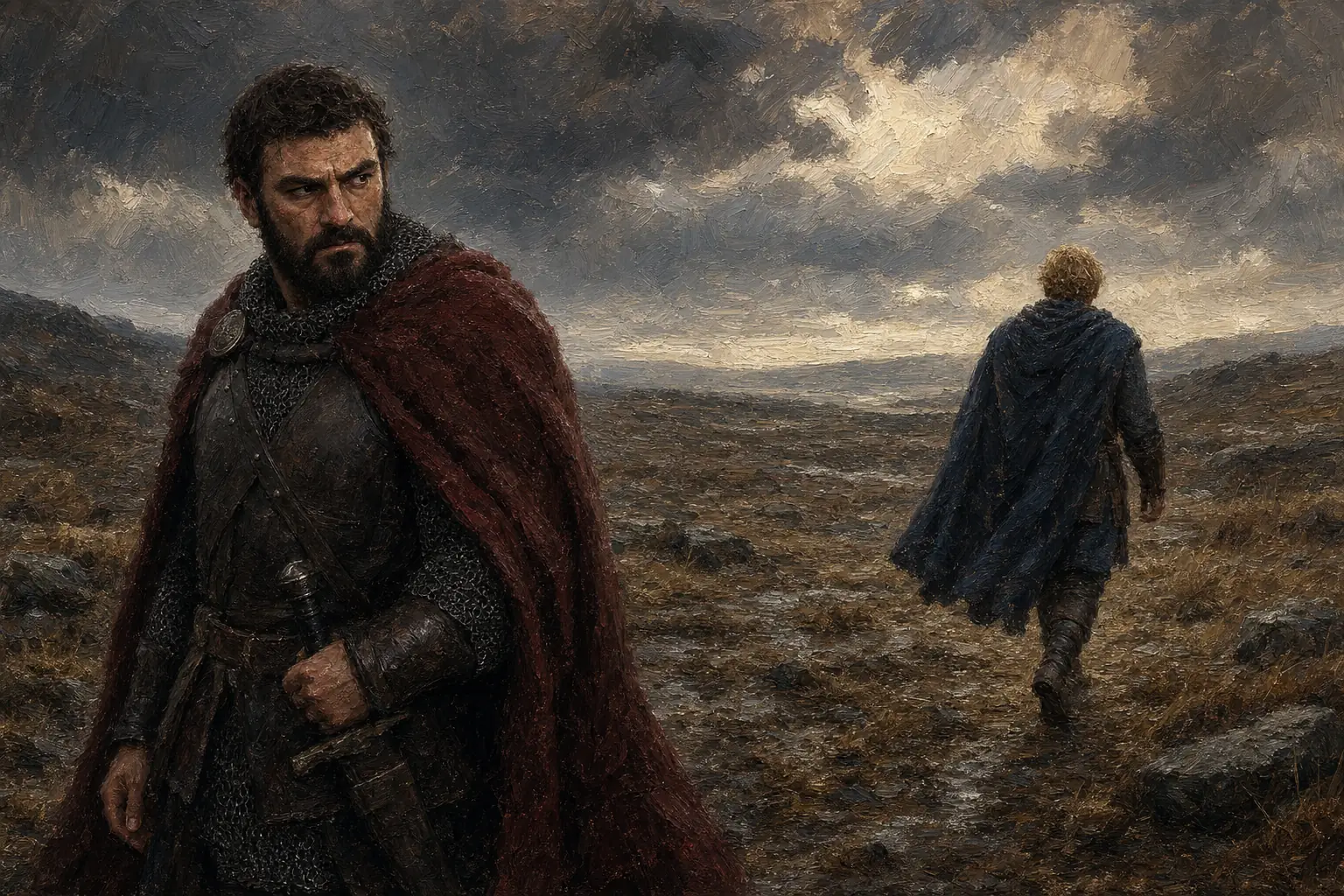
Fate means that the future is fixed, while free will means people can choose their actions. The witches correctly predict Macbeth's kingship, but Shakespeare also shows the decisions that lead him there.
Examples from the play:
- Macbeth considers waiting - He hopes to become king without acting: "chance may crown me / Without my stir." The prophecy doesn't tell him to murder Duncan, and he later chooses to do so despite his objections (Act 1, Scenes 3 and 7).
- Macbeth tries to resist a prediction - By targeting Banquo and Fleance, he attempts to prevent Banquo's descendants from inheriting the throne. Fleance escapes, leaving that possibility open, but the play doesn't show Banquo's descendants becoming kings (Act 3, Scenes 1 and 3).
Gender and masculinity
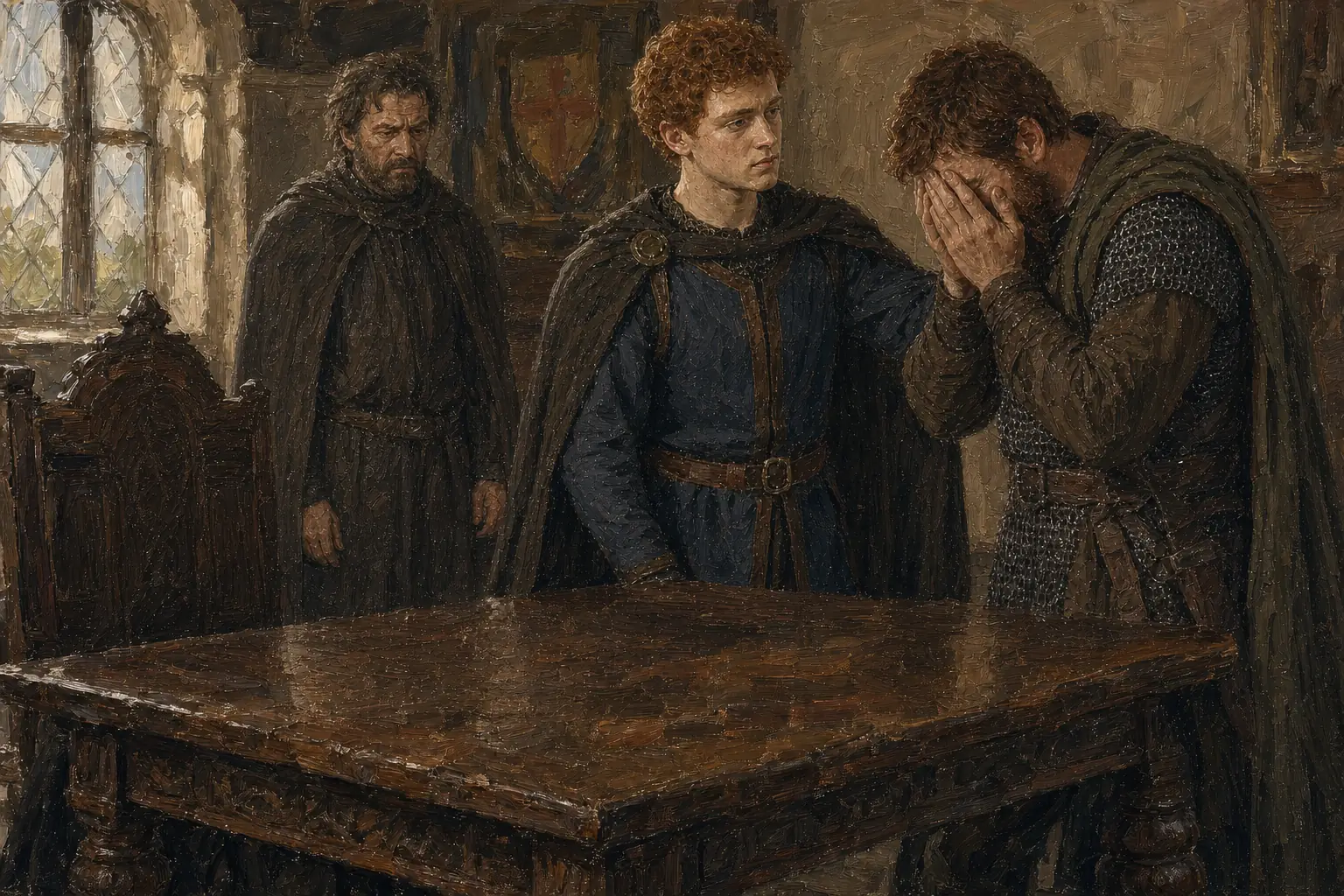
Gender concerns the qualities and behaviour a society expects of men and women. Characters disagree about masculinity: Lady Macbeth treats murder as a test of manhood, while Macduff insists that grief belongs to it too.
Examples from the play:
- Murder as a test of manhood - When Macbeth abandons the plan to kill Duncan, Lady Macbeth tells him, "When you durst do it, then you were a man". She turns the question of whether murder is right into a question of whether he is a coward (Act 1, Scene 7).
- Grief as part of manhood - After hearing that his wife and children have been murdered, Macduff answers Malcolm's call to "Dispute it like a man" with "I shall do so, / But I must also feel it as a man." He insists that a man can both fight and grieve (Act 4, Scene 3).