The Periodic Table - exam practice
The Periodic Table
Question 1 of 4
In the 1860s scientists were trying to organise elements.
Figure 1 shows the table published by John Newlands in 1865.
Newlands arranged the elements in order of their atomic weights.
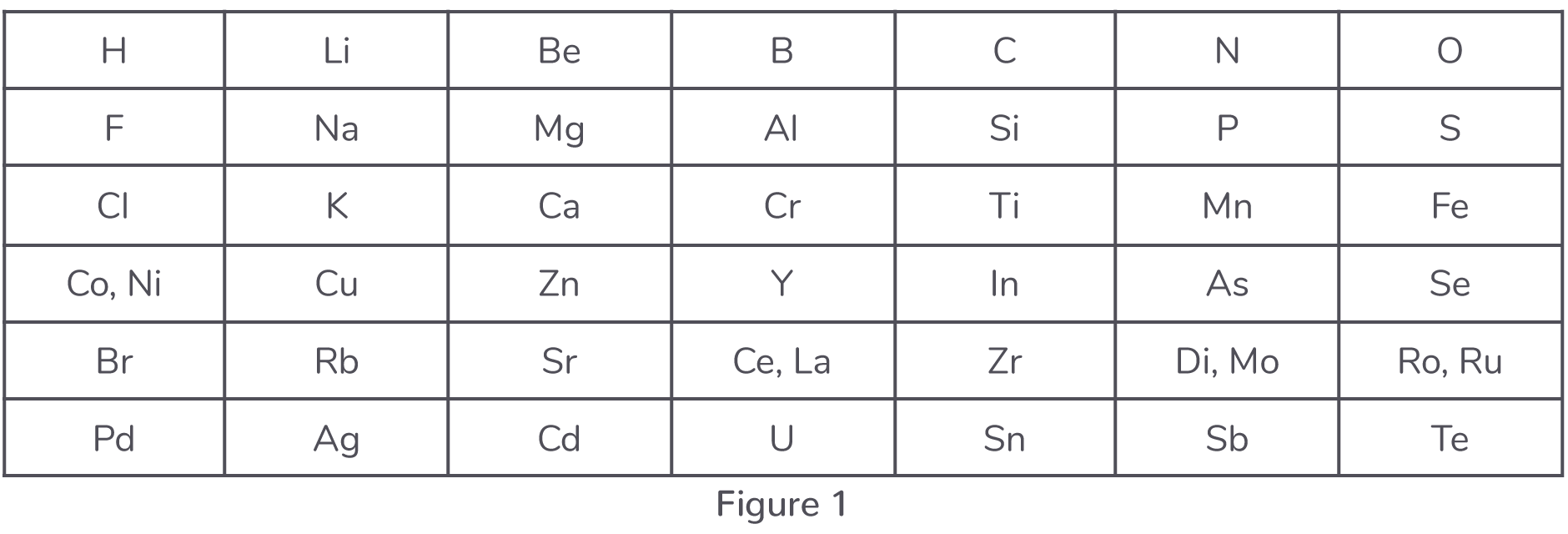
Figure 2 shows the table published by Dimitri Mendeleev in 1869.
Mendeleev's table became accepted by other scientists, but Newland's table was not.

What is the modern name for atomic weight?
Complete the sentence.
In the modern periodic table, the elements are arranged in order of number.
Use the two figures and your own knowledge to:
- compare and contrast Newlands’ and Mendeleev’s tables
- explain why Mendeleev’s table was more acceptable
This question is about the periodic table.
The image below shows an early version of the periodic table.
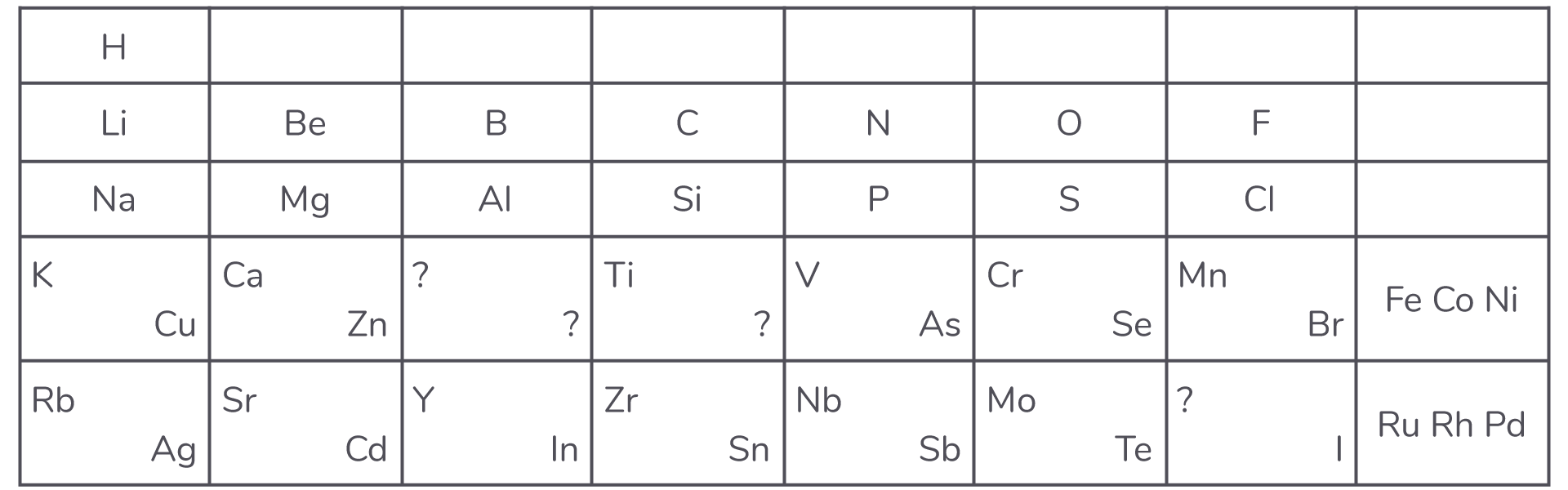
Which scientist published this periodic table?
Name two elements in Group 1 of this periodic table which are not found in Group 1 of the modern periodic table.
Which group of elements in the modern periodic table is missing on Mendeleev’s table?
There are several gaps in this version of the periodic table.
Each gap is represented by a question mark (?).
Give one reason why the scientist left gaps in this periodic table.
In the 20th century, the arrangement of elements in the periodic table was explained in terms of atomic structure.
Describe two links between atomic structure and the periodic table.
The image below shows some of the elements of the periodic table.
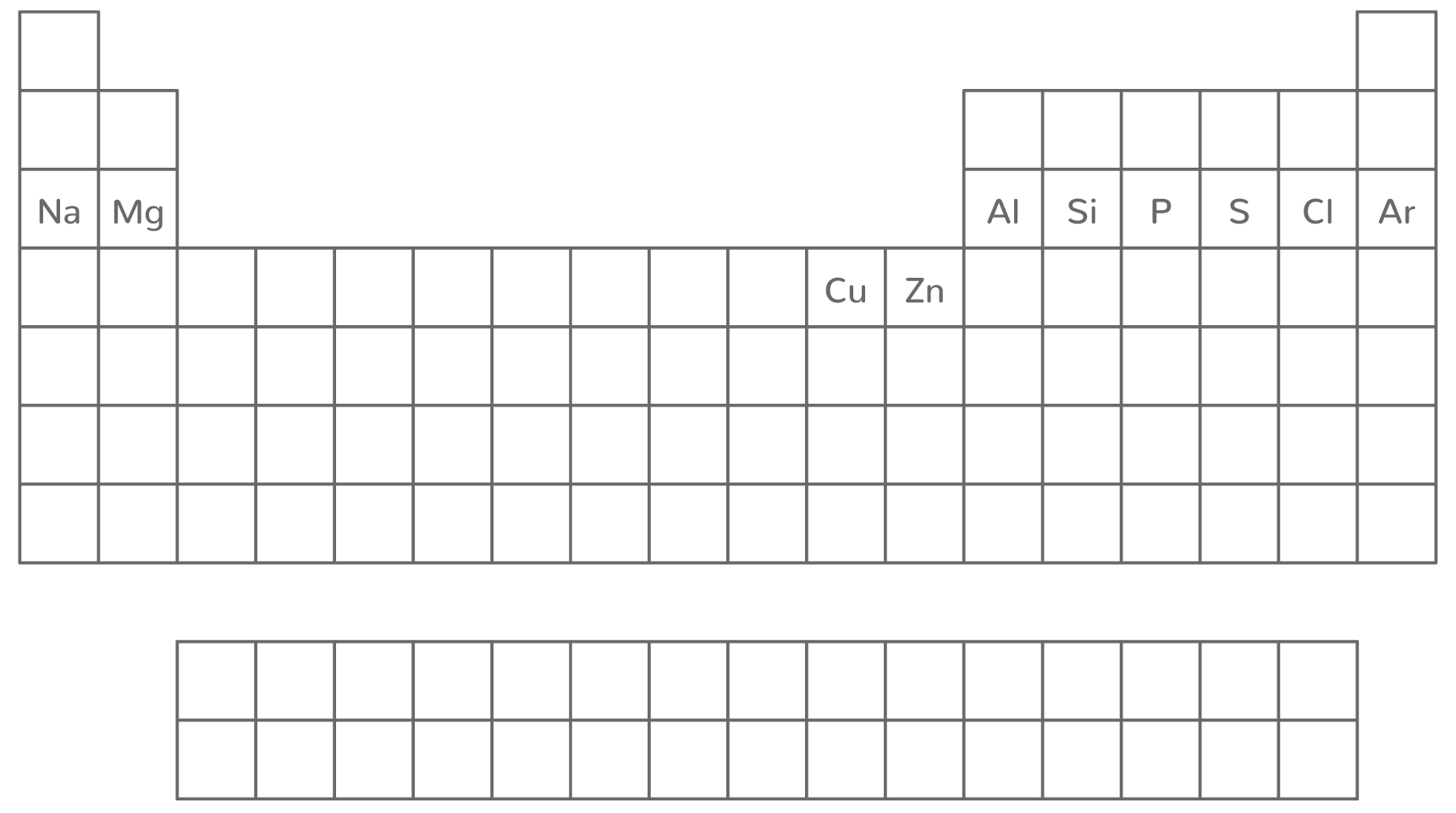
Identify, from the elements in the table, an alkali metal.
Identify, from the elements in the table, a transition metal.
Identify, from the elements in the table, a halogen.
Identify, from the elements in the table, a noble gas.
Identify, from the elements in the table, a group 5 element.
Magnesium and calcium are metals in group 2 of the periodic table.
The diagrams show their electronic structures.
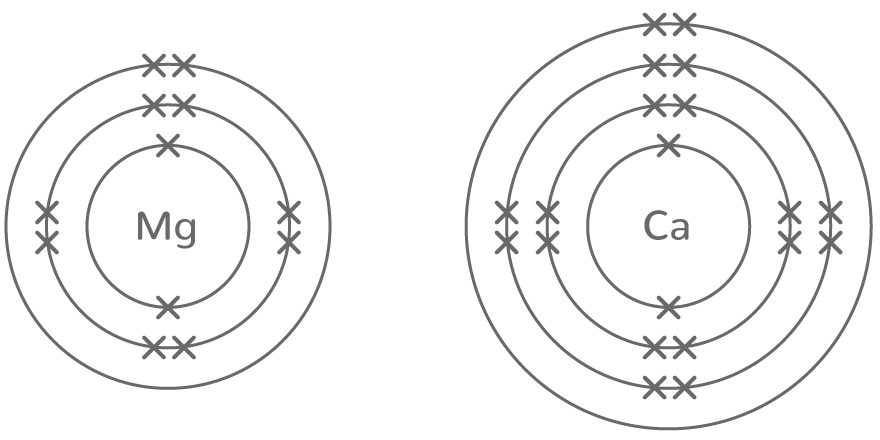
Why do magnesium and calcium have similar chemical properties?
Calcium is more reactive than magnesium.
Suggest an explanation for this in terms of the electronic structure of the two elements.
Beryllium is the first element in group 2.
Beryllium has an atomic number of 4.
Draw the electronic structure of beryllium.