10.7 - Fuels
Biofuels
- A biofuel is a renewable fuel made from plant material (biomass).
- Common examples are biodiesel and ethanol.
Making ethanol
- Ethanol is produced by the fermentation of plant sugars (like sugar cane) using yeast at 20 °C to 35 °C.
- Fermentation produces a dilute solution of ethanol in water, which must be concentrated by fractional distillation before use as a fuel.
Benefits of biofuels
- Renewable - Crops can be regrown each season, so supplies won't run out.
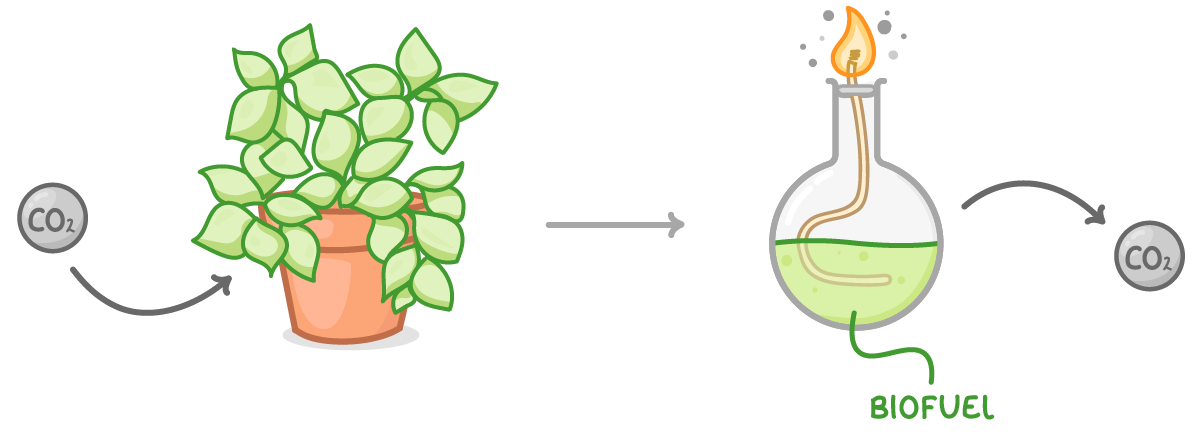
- Carbon neutral potential - The carbon dioxide released when burned is roughly equal to the carbon dioxide absorbed by the plants during photosynthesis.
- Economic benefits - Can be cheaper to produce and creates agricultural jobs.
Drawbacks of biofuels
- Land use - Takes up land that could otherwise be used for food crops, potentially driving up food prices.
- Not strictly carbon neutral - Energy used in planting, harvesting, refining, and transporting generates carbon dioxide emissions.
- Weather dependent - Crop yields depend on climate and seasonal weather.
TermDefinition
Biofuel
Fermentation