1.11 - Fuel Cells
The hydrogen-oxygen fuel cell
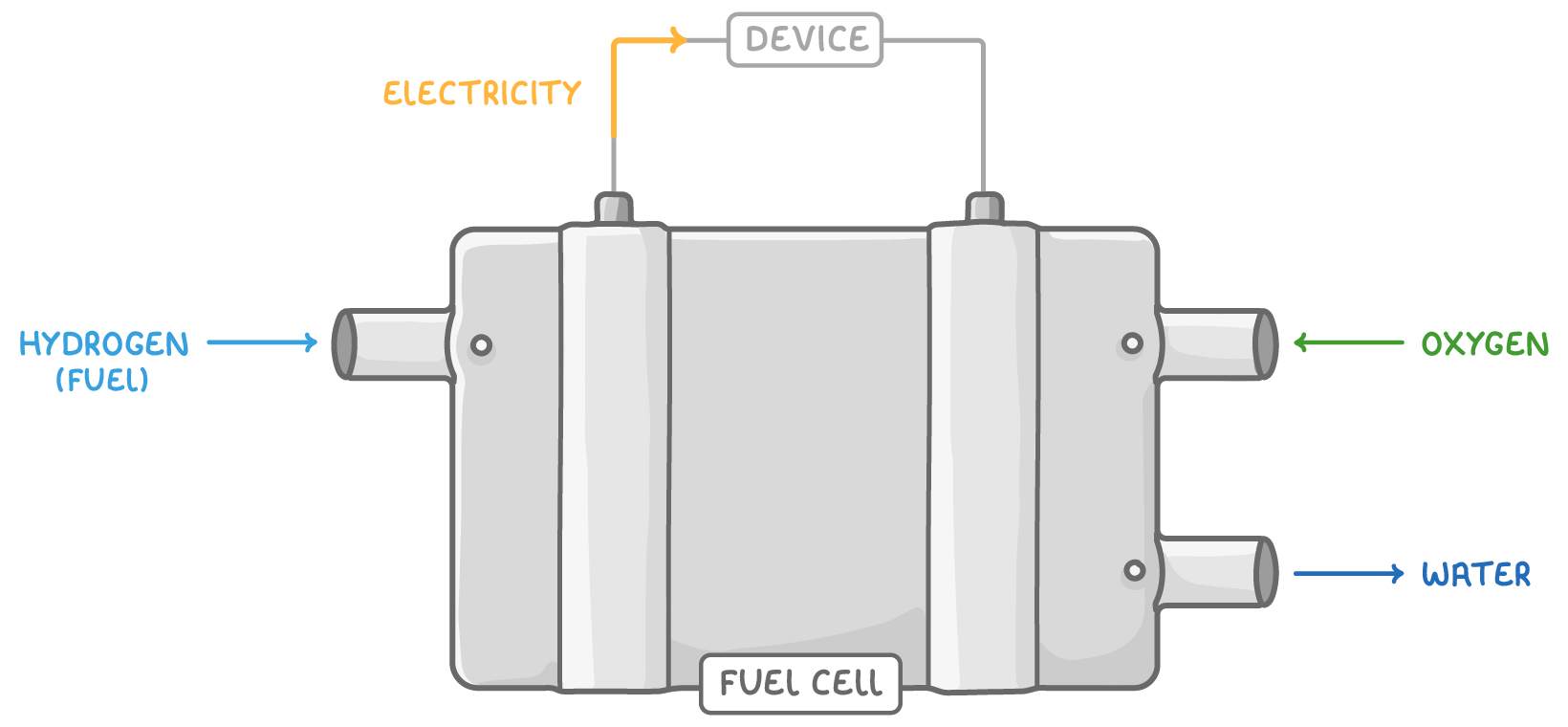
- A fuel cell produces electricity directly from a chemical reaction between a fuel and oxygen.
- The fuel and oxygen are supplied continuously from outside the cell, so it produces electricity for as long as it's supplied with fuel.
- Inside the cell, the fuel is oxidised, setting up a potential difference (voltage) that drives an electric current through a circuit.
The hydrogen-oxygen reaction
In a hydrogen-oxygen fuel cell, hydrogen reacts with oxygen to produce water:
hydrogen + oxygen → water
2H2 + O2 → 2H2O
- Unlike burning hydrogen, which releases energy as heat, a fuel cell converts the chemical energy directly into electricity.
- Water is the only chemical product - No carbon dioxide or other polluting exhaust gases are released.
Evaluating hydrogen-oxygen fuel cells
Advantages
- Only produces water and heat - No carbon dioxide or polluting exhaust gases are released during use.
- High efficiency - Electricity is produced directly from the reaction with almost no moving parts, so little energy is lost to heat or friction.
- Quick to refuel and doesn't lose capacity - Refilling a hydrogen tank takes minutes compared to hours for recharging a battery, and fuel cells don't lose their ability to hold charge over time.
Disadvantages
- Hydrogen takes up a lot of storage space - Hydrogen is a gas at room temperature, so it must be stored at high pressures or low temperatures to fit enough in a vehicle.
- Hydrogen is flammable and explosive when mixed with air, making storage and transport hazardous.
- Hydrogen production often creates pollution - It's typically obtained from hydrocarbons (fossil fuels) or electrolysis powered by fossil fuels.
- High cost - Fuel cells and hydrogen refuelling infrastructure are expensive to build.
TermDefinition
Fuel cellA cell that produces electricity directly from a chemical reaction between a continuously supplied fuel and oxygen.
Key points to remember
How were these notes?