4.10 - Corrosion & Rusting
Corrosion, rusting, and what rusting needs
- Corrosion is the gradual destruction of a material by chemical reaction with substances in its surroundings.
- When a metal corrodes, it reacts with substances such as oxygen and water, and the metal is oxidised.
- Rusting is the corrosion of iron and steel. Other metals corrode, but only iron and steel rust.
Why rusting is a problem
- Iron and steel are used for bridges, ships and the frames of buildings because they are strong.
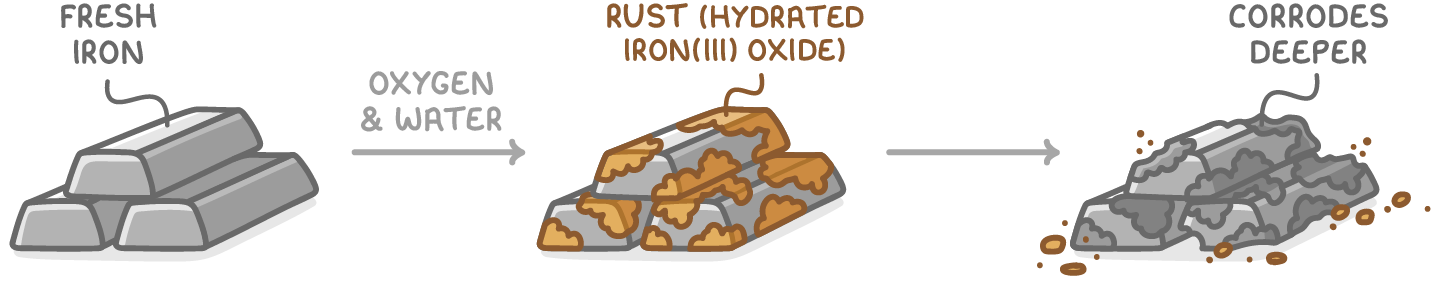
- Rust is a soft, crumbly solid that flakes away from the surface.
- This exposes fresh iron underneath, so an iron object can corrode the whole way through.
What rusting needs
Iron rusts only when both oxygen and water are present. The product is hydrated iron(III) oxide (rust):
Iron + oxygen + water → hydrated iron(III) oxide
Salt and acid speed up rusting (e.g. cars rust faster on salted winter roads, and ships corrode faster in seawater).
Showing that both air and water are needed
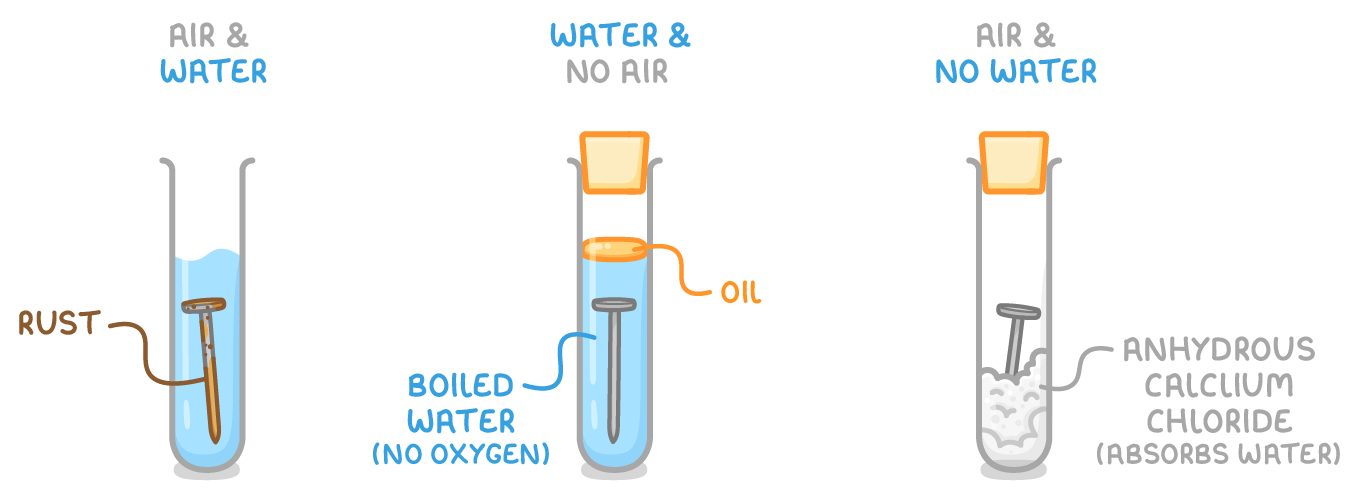
An experiment uses three boiling tubes, each containing an iron nail, left for several days:
- Tube 1 (air and water) - Nail in ordinary water, open to the air.
- Tube 2 (water, no air) - Nail in boiled water (to remove dissolved oxygen), sealed with a layer of oil.
- Tube 3 (air, no water) - Nail in a dry tube containing anhydrous calcium chloride (to absorb water vapour), sealed with a rubber bung.
The result
- Only the nail in tube 1 rusts, showing that rusting requires both oxygen and water.
- A rusted nail has a greater mass than the original nail because oxygen and water from the surroundings have combined with the iron.
Keeping air and water out
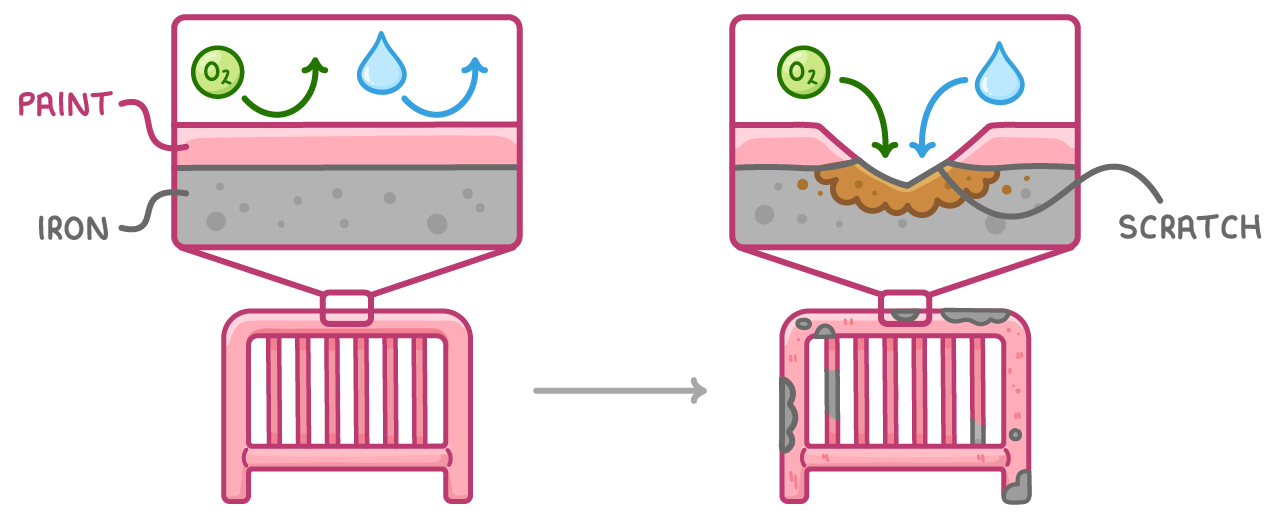
Barrier methods coat iron or steel to prevent oxygen and water from reaching the surface.
Common barrier methods
- Painting - Used on bridges, cars and railings.
- Oiling or greasing - Used on moving machinery parts (such as bicycle chains).
- Plastic coating - Used on garden furniture and dish racks.
- Electroplating or coating with another metal - e.g. coating steel food cans with tin.
Limitations of barriers
- If the coating is scratched or chipped, air and water reach the exposed iron and rust spreads underneath.
- Coatings such as paint or grease must be renewed as they wear away.
Aluminium protects itself
- Aluminium reacts with oxygen to form a thin layer of aluminium oxide.
- This oxide layer sticks firmly to the surface and doesn't flake off, protecting the metal underneath from further corrosion.
Sacrificial protection, and galvanising
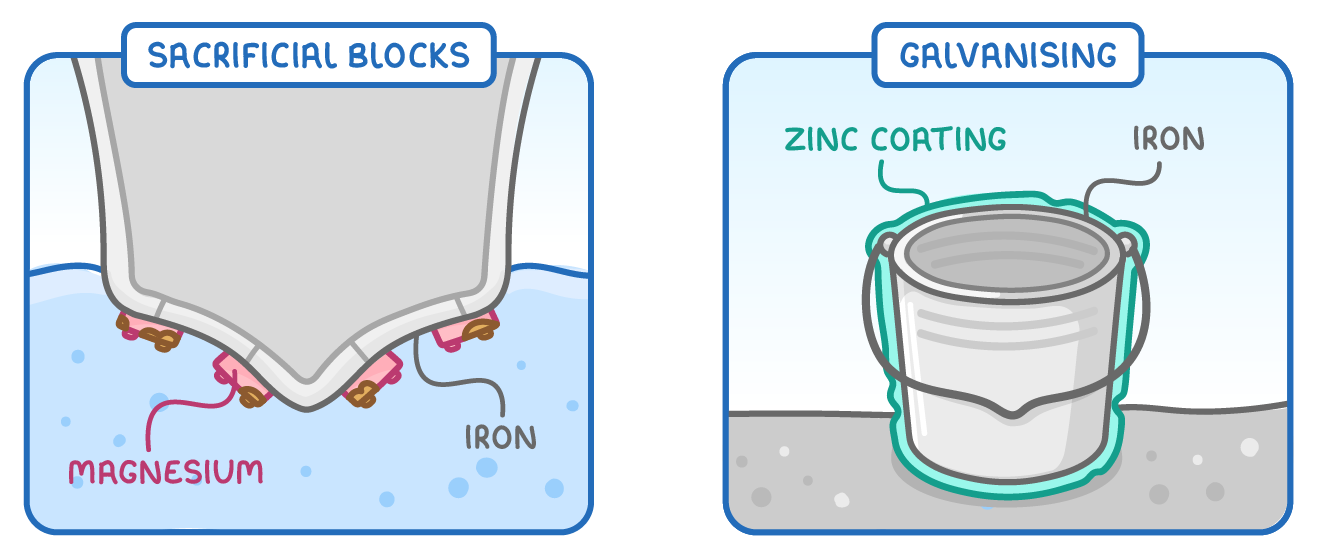
- Sacrificial protection prevents iron from rusting by attaching a metal that is higher in the reactivity series than iron (such as magnesium or zinc).
- The more reactive metal reacts with oxygen and water in preference to the iron, corroding instead and leaving the iron intact.
- A metal below iron (such as copper) provides no protection.
How it's used
- Sacrificial blocks - Blocks of magnesium or zinc are bolted to ships' hulls, oil rigs and underground pipelines, and replaced once eaten away.
- Galvanising - Coating iron or steel with zinc.
Galvanising
Zinc protects the iron in two ways:
- It acts as a barrier, keeping air and water away.
- If the zinc layer is scratched, it acts as a sacrificial protector because zinc is more reactive than iron, so the iron still doesn't rust.
TermDefinition
CorrosionThe gradual destruction of a material by chemical reaction with substances in its surroundings.
RustingThe corrosion of iron or steel by reaction with oxygen and water.
Sacrificial protectionPreventing iron from rusting by attaching a more reactive metal that corrodes in its place.
GalvanisingCoating iron or steel with zinc to prevent it from rusting.
Key points to remember
How were these notes?