6.12 - Polymer Disposal
Polymers that do not break down
Most addition polymers are inert because the carbon-to-carbon bonds along their chains are strong and there are no reactive groups.
Why being inert is useful in use
- Polymer containers can store food, water, or corrosive chemicals without reacting with them.
- Polymer pipes and sheets do not corrode when exposed to air and water.
Problems with disposal
- Microbes cannot break down the strong carbon chains, making addition polymers non-biodegradable.
- Landfill - Polymer waste does not rot and permanently occupies space in landfill sites.
- Incineration - Burning polymers destroys the solid waste but releases carbon dioxide and potentially toxic gases.
Polymers that do break down
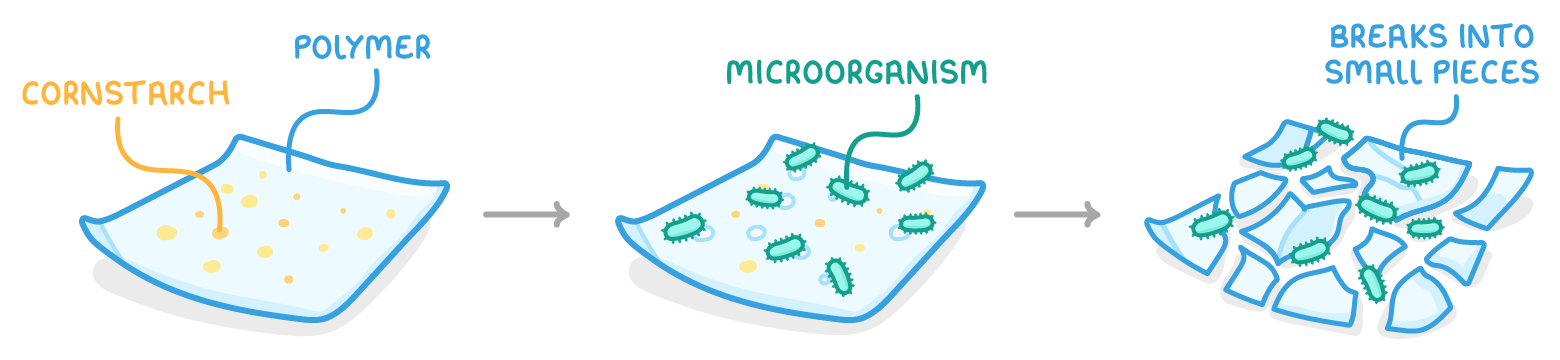
A biodegradable polymer can be broken down by microorganisms in the environment.
Cornstarch plastic bags
- Made by mixing polymer chains with cornstarch.
- Microorganisms digest the cornstarch, causing the plastic to break into small pieces and decompose much faster than ordinary plastics.
Biopolyesters
Biopolyesters are polyesters that can be broken down and decomposed by bacteria and other organisms over time, reducing long-term environmental pollution.
TermDefinition
BiodegradableAble to be broken down by microorganisms in the environment.