2.6 - Potable Water
What drinking water is, and where it comes from
Potable water (water safe to drink) must meet three conditions:
- The level of dissolved substances is low enough to do no harm
- The pH is between 6.5 and 8.5
- It carries no harmful microbes
Safe to drink is not the same as pure
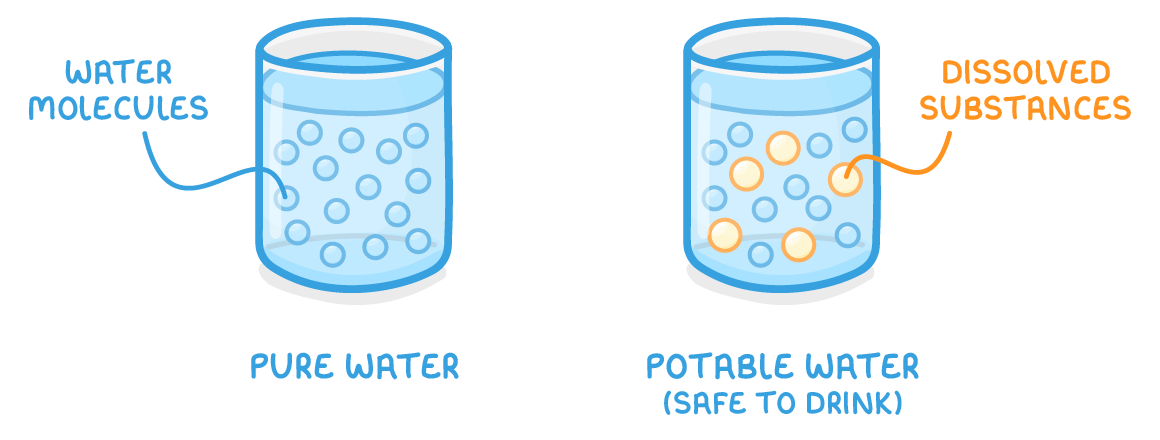
- Pure water contains only H2O molecules.
- Potable water is not pure because it contains low levels of dissolved substances (such as dissolved salts).
- Tap water carries dissolved ions (such as calcium, iron, and copper) that can interfere with chemical reactions, so experiments use distilled water (or deionised water).
Where water comes from
- Surface water - Collects in lakes, rivers, and reservoirs. Easy to reach, but exposed to the open air so it picks up solids and microbes and needs more treatment.
- Ground water - Trapped in permeable underground rock (aquifers). The rock acts as a natural filter, so it needs the least treatment.
- Waste water - Water contaminated by human activity that must undergo multiple treatment stages before reuse.
- Sea water - Contains very high concentrations of dissolved salts that cannot be removed by filtering, making it the most energy-intensive to treat.
Treating water so it is safe to drink
- Untreated fresh water contains suspended solids and disease-causing microbes.
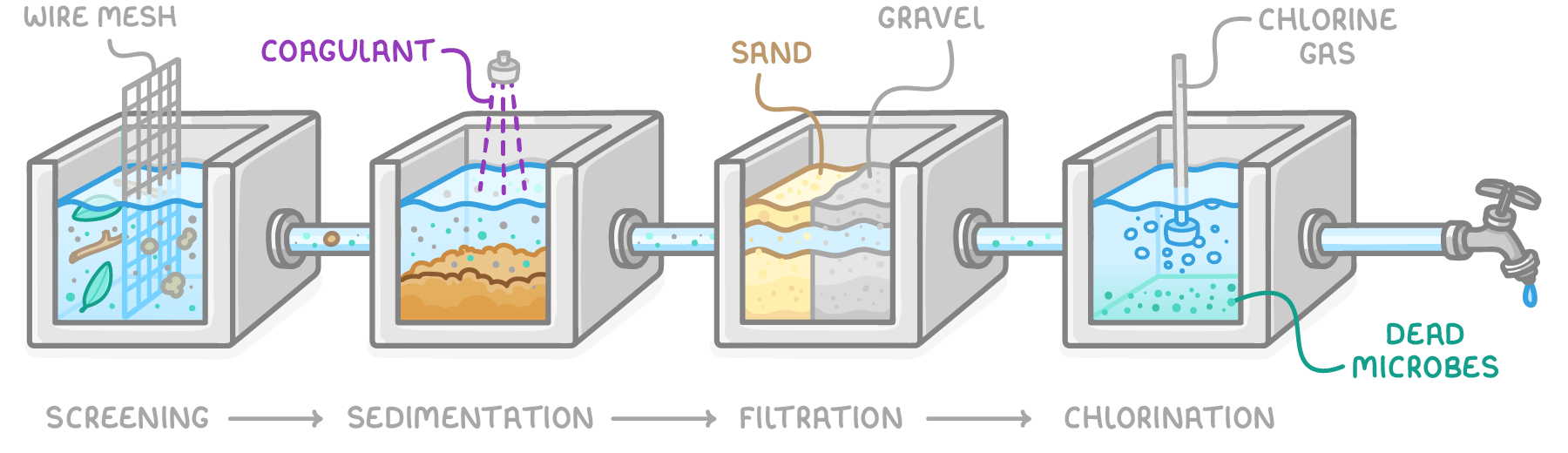
- It is first passed through a wire mesh to screen out large debris such as twigs and leaves.
Sedimentation
- The water is held in a large sedimentation tank where denser solid particles sink to the bottom under gravity.
- A coagulant chemical (such as aluminium sulfate) is added to make tiny particles clump together into larger lumps that settle out.
Filtration
- Clearer water from the top of the sedimentation tank is passed through beds of sand and gravel.
- These trap the remaining fine suspended solids.
Chlorination
- Chlorine gas is bubbled through the filtered water to kill harmful bacteria and other microbes.
- This step sterilises the water, making it safe to drink.
What these stages do not remove
Dissolved substances remain in the water after sedimentation, filtration, and chlorination.
Getting drinking water from sea water
- Where fresh water supplies are limited, potable water can be produced by desalination of sea water.
- The high level of dissolved salt cannot be removed by settling or filtration, so the water must be separated from the salt by distillation.
How distillation works
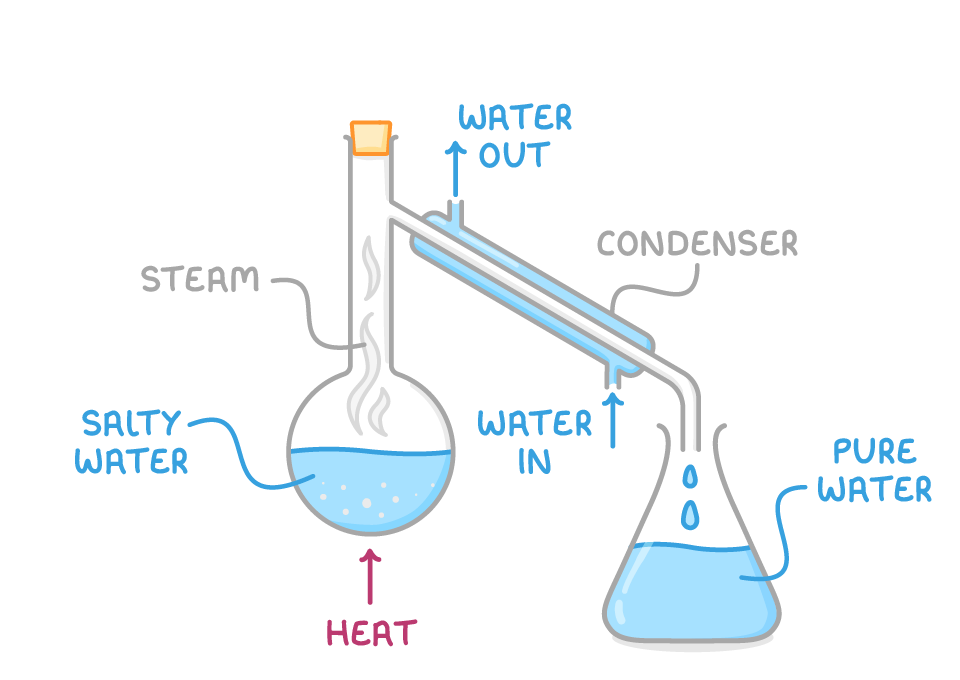
- Sea water is heated until it boils.
- Water evaporates into steam, leaving the dissolved salts behind.
- The steam is cooled and condensed into pure liquid water and collected.
Limitations
- Boiling large volumes of water requires a very large amount of energy, making distillation expensive for large-scale public supply.
- It is mainly used in arid countries with abundant energy supplies, or on ships where no fresh water is available.
TermDefinition
Potable waterWater that is safe and suitable for drinking.
Pure waterWater that contains only water molecules and no dissolved substances.
Surface waterWater found above ground in lakes, rivers, and reservoirs.
Ground waterWater trapped in permeable underground rock.
DesalinationThe removal of dissolved salts from water.
Key points to remember
How were these notes?