Energetics (Enthalpy) - exam practice
Energetics (Enthalpy)
Question 1 of 7
This question is about reaction profiles and enthalpy.
The diagram below shows a typical reaction profile for the decomposition of hydrogen peroxide.
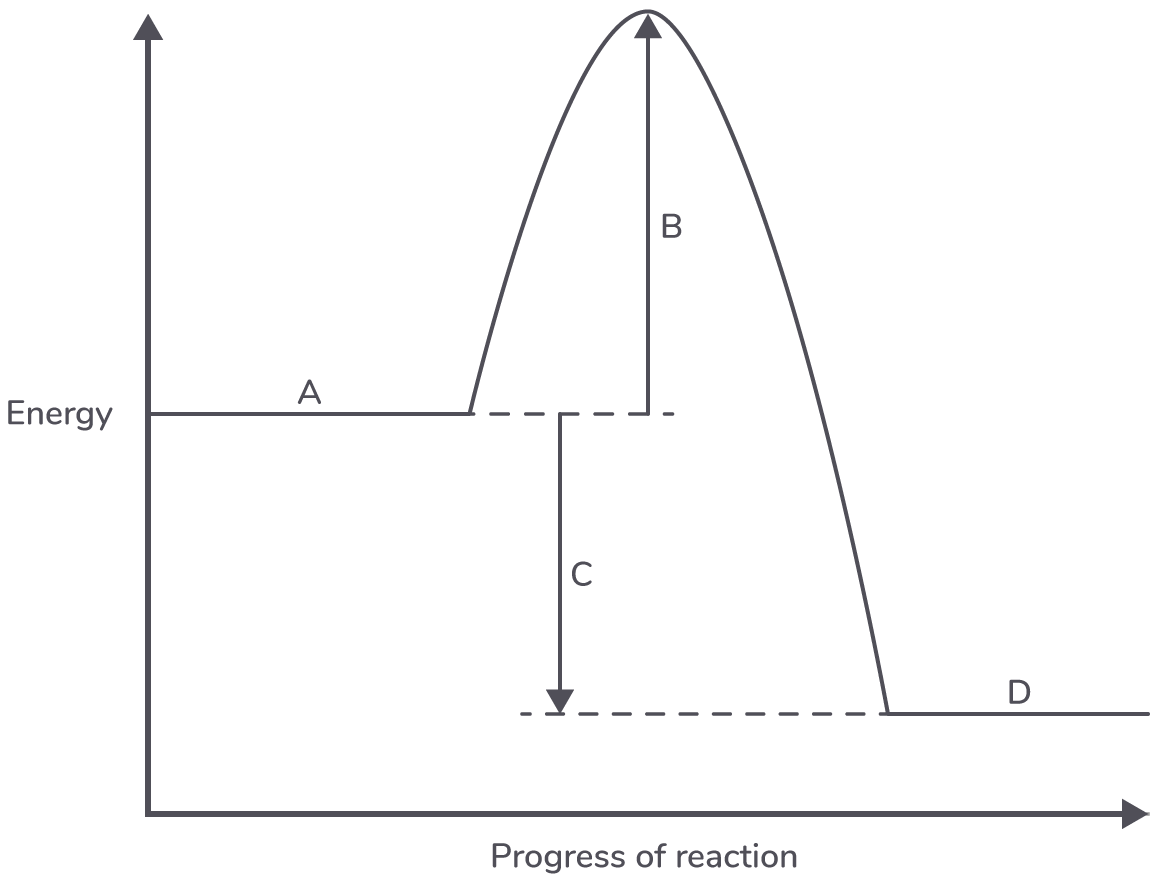
Which letter represents the activation energy?
The decomposition of hydrogen peroxide results in energy being given to the surroundings.
What type of reaction is this?
What does arrow C represent?
Butane (C4H10) reacts with oxygen in the air when combusted to form carbon dioxide and water.
Complete the balanced chemical equation to show the combustion of butane.
Draw the structure of butane C4H10 to show all the covalent bonds.
The table below shows the bond energies for the bonds.
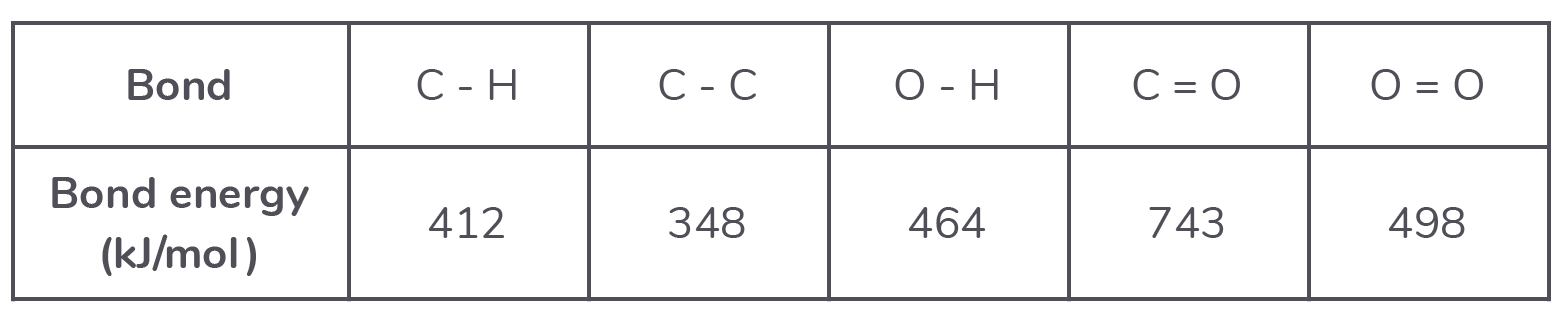
Calculate the energy required to break all the bonds in the reactants.
Calculate the energy released when all the bonds in the products are formed.
Calculate the molar enthalpy change (ΔH) in kJ/mol, for the combustion of butane.
Include a sign in your answer.
A student is investigating the temperature change during a chemical reaction.
This is the method the student used:
- Measure 25 cm3 of sodium hydroxide solution and pour into a beaker.
- Measure 10 cm3 of dilute hydrochloric acid.
- Measure the temperature of the sodium hydroxide using a thermometer.
- Pour the acid into the beaker and stir. Start the timer.
- Record the temperature every 20 s until the temperature stops changing.
The table below shows how the temperature varied during the reaction.
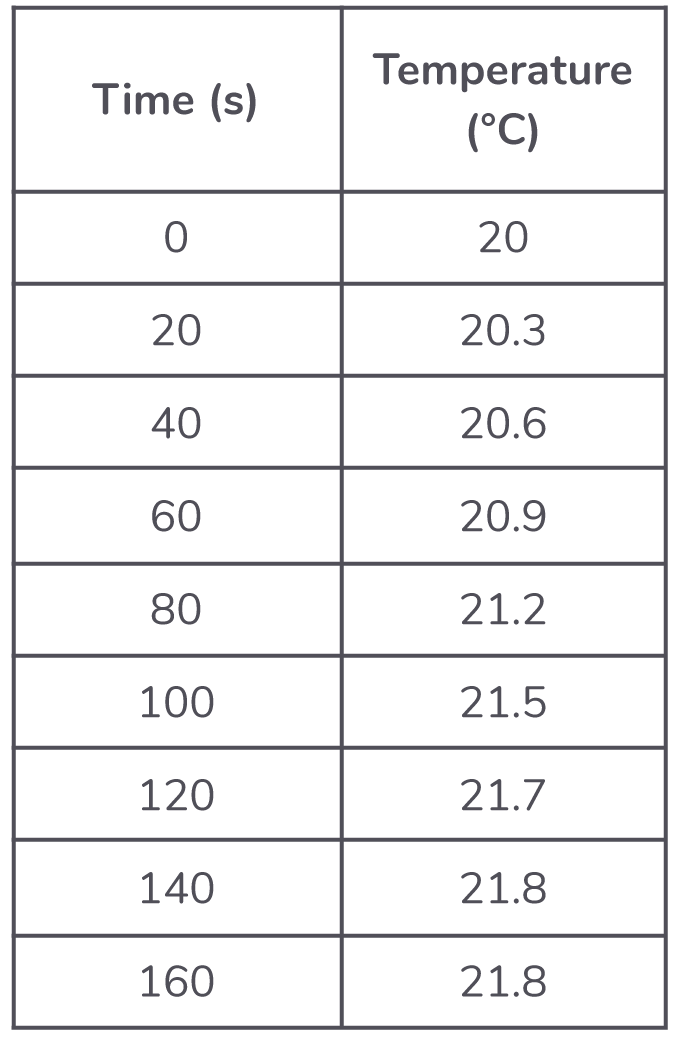
The student repeats the experiment with 5 cm3 of dilute hydrochloric acid.
Draw how the temperature would vary with time.
The temperature increased during the reaction.
State whether the reaction is endothermic or exothermic.
Sketch the reaction profile for the reaction between hydrochloric acid and sodium hydroxide.
Your diagram should include:
- profile shape
- activation energy labelled A
- energy change labelled ΔH
A student is investigating the energy change when a piece of magnesium ribbon is dropped into hydrochloric acid.
Write a balanced chemical equation for the reaction between magnesium and hydrochloric acid (HCl) to form magnesium chloride and hydrogen.
The reaction results in energy being transferred to the surroundings.
Draw a reaction profile for the reaction between magnesium and hydrochloric acid.
This question is about the reaction between methane and steam to produce hydrogen.
Write a balanced symbol equation for the reaction between methane and steam.
Include state symbols.
The table below shows the bond energies for the reaction between methane and steam.
Calculate the energy change for the forward reaction.
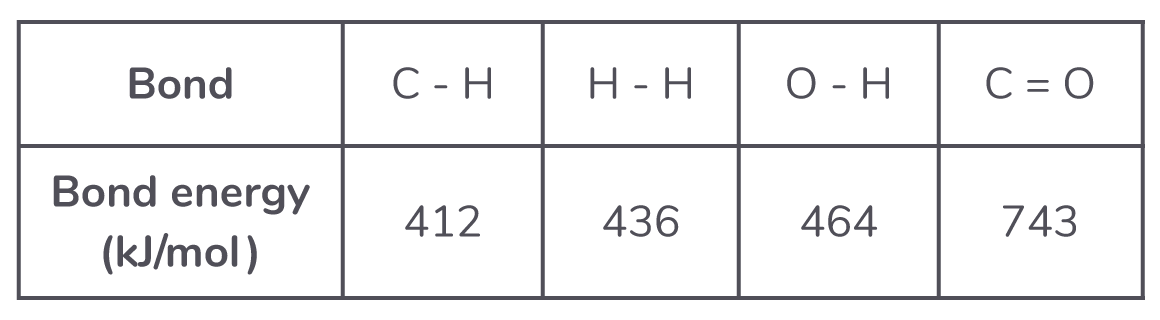
Complete the reaction profile for the reaction between methane and steam to form hydrogen and carbon monoxide.
The reaction is reversible.
State the effect of increasing the temperature on the yield of hydrogen.
This question is about the combustion of propane.
State what is meant by the term activation energy.
Sketch the structure of propane to show all the covalent bonds.
Write a balanced symbol equation for the combustion of propane.
The table below shows the bond energies for the reaction.
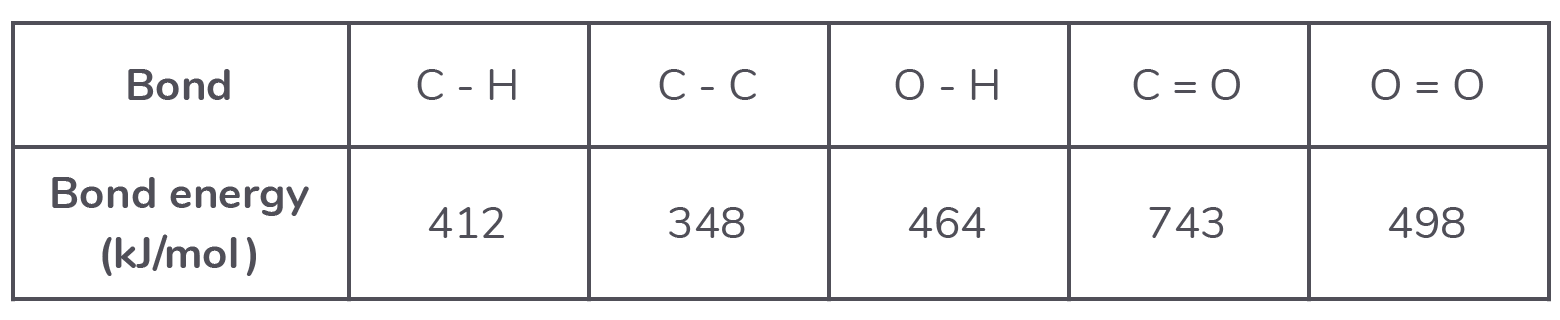
Calculate the energy change for the reaction and state whether the reaction is endothermic or exothermic.
A student is investigating the reactivity of group 1 metals.
The student's method is below:
- Measure 25 cm3 of water using a measuring cylinder and pour into a beaker.
- Measure the initial temperature of the water.
- Add a 1 g sample of group 1 metal to the water.
- Record the highest temperature reached.
- Repeat using other group 1 metals.
State the name of the piece of equipment used to measure temperature.
Suggest two variables the student would need to control during this investigation.
The table below shows the student's results.
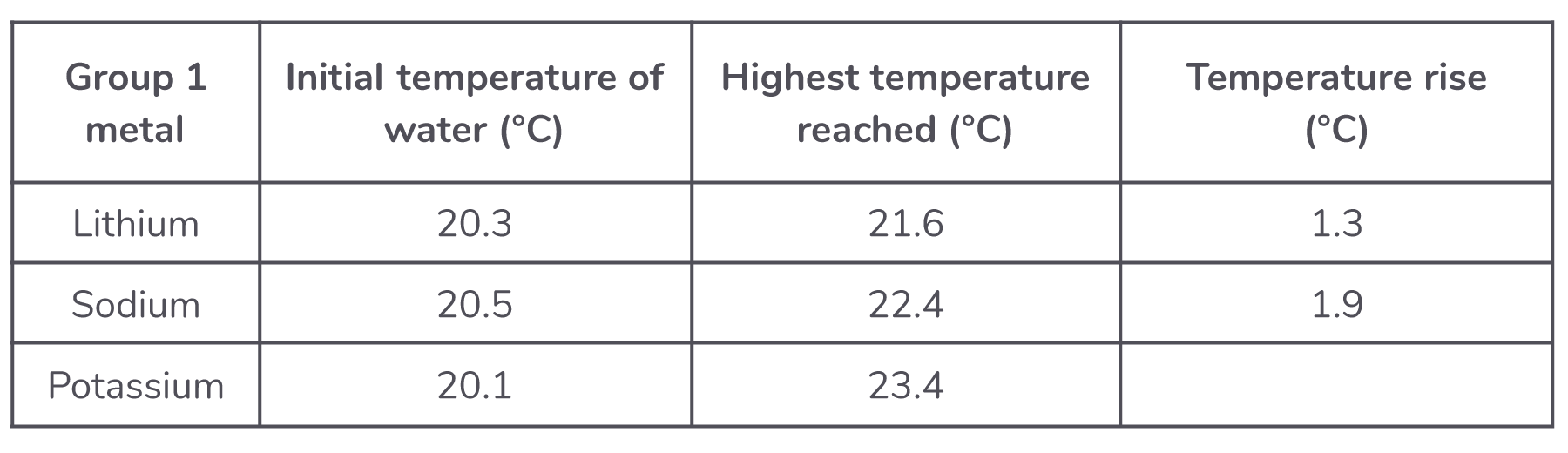
Calculate the temperature rise for the reaction between potassium and water.
Describe the pattern shown by the student's results and explain how this shows the trend in reactivity as you go down group 1.
The student draws a reaction profile for the reaction between group 1 metals and water.
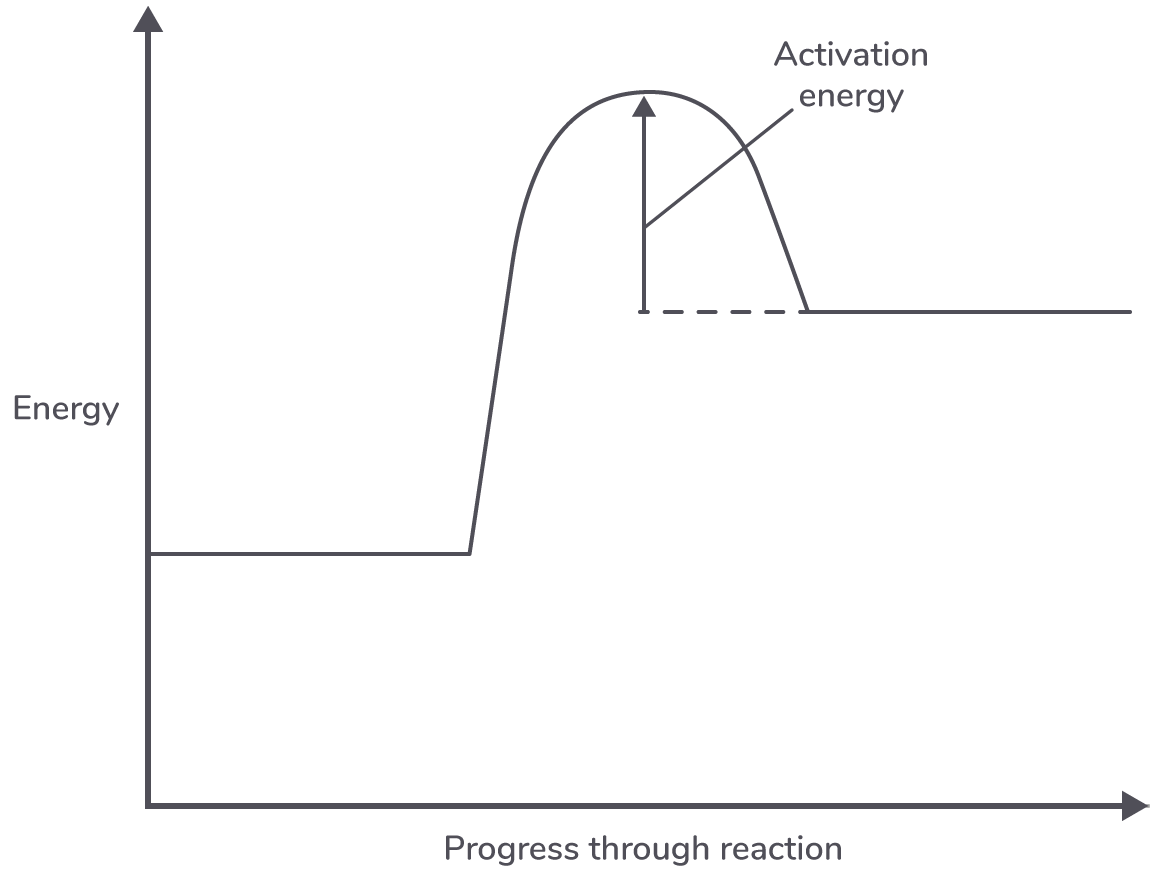
The reaction profile is incorrect.
State two errors in the reaction profile.