Polymers - exam practice
Polymers
Question 1 of 11
Many molecules of ethene join together to produce poly(ethene).
What is the name given to a molecule, like ethene, that can be bonded to other identical molecules to form a polymer?
Complete the structure of the polymer in the equation below.
Poly(ethene) is the only product of the polymerisation reaction.
What type of polymer is poly(ethene)?
Poly(ethene) can be made with different properties.
The properties depend on the conditions used when poly(ethene) is made.
Suggest two conditions which could be changed when poly(ethene) is made.
Some carrier bags are made from poly(ethene).
Some carrier bags are made from cornstarch.
Suggest two benefits of using cornstarch instead of poly(ethene) to make carrier bags.
Which of the statements below is an advantage of burning used plastic bags?
Small molecules, called alkenes, are used to make polymers.
The image below shows a butene molecule.
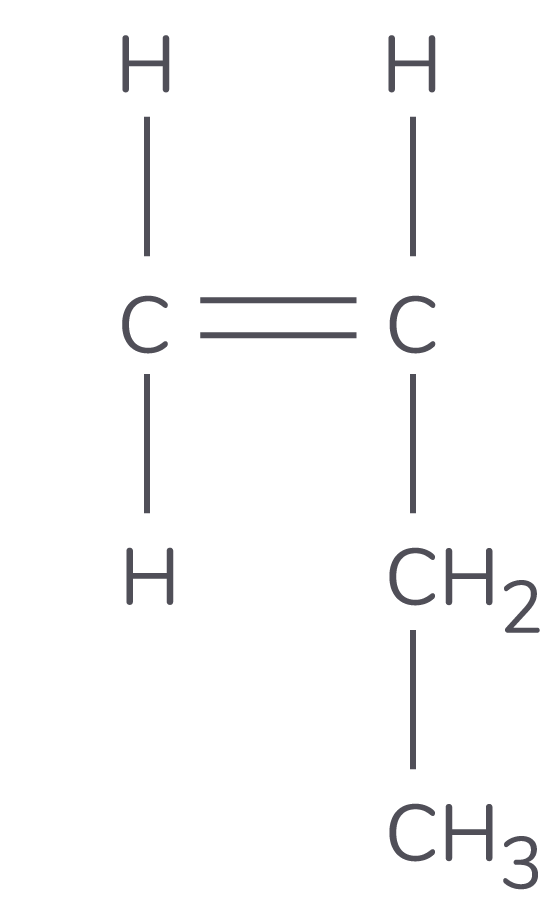
Name the polymer made from butene.
Butene is an alkene.
What is the general formula for an alkene?
Draw a diagram to represent the polymer made from butene.
Alkanes, such as butane (C4H10), do not form polymers.
Alkenes, such as butene (C4H8), form polymers.
Explain why.
Polystyrene is a plastic.
Plastics are polymers which are made by the process of polymerisation.
What is meant by polymerisation?
Complete the table with the missing information about monomers and their respective polymers.
The disposal of most addition polymers is a problem because they do not biodegrade.
What is meant by the term biodegrade?
Identify the property that prevents addition polymers from easily biodegrading.
Addition polymerisation and condensation polymerisation are two types of polymerisation.
Describe two differences between addition polymerisation and condensation polymerisation.
Ethanediol reacts with butanedioic acid to produce a polyester and a small molecule.
The image below shows the structural formulae of ethanediol and butanedioic acid.

Give the functional group present in:
- ethanediol
- butanedioic acid
The image below shows part of the structure of the polyester.
Complete the box in the image.
Name the small molecule produced when ethanediol reacts with butanedioic acid.
What type of polymerisation results in polyester?
Many parts of our homes can be made from either polymers or natural materials.
- Carpets can be made from poly(propene), wool, or a mixture of poly(propene) and wool.
- Window frames can be made from poly(chloroethene), HDPE, or wood.
Poly(propene) is produced from propene.
Complete the structure of poly(propene) in the equation.
Poly(propene) wears out more slowly than wool.
A mixture of poly(propene) and wool to make carpets is more sustainable than using just poly(propene) or just wool.
Give two reasons why.
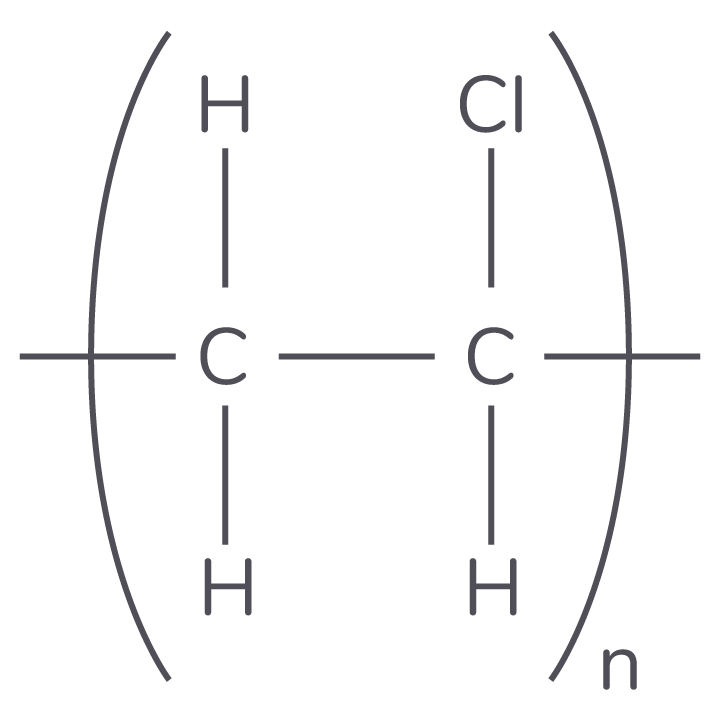
The image below shows the displayed structural formula of poly(chloroethene).
Draw the monomer used to make poly(chloroethene).
Wood can be used instead of polymers to make window frames.
Read the information below:
- Polymers are unreactive.
- Polymers are produced from crude oil.
- Wood breaks down in wet conditions.
- Wood is produced from trees.
Suggest one advantage of using polymers and one advantage of using wood to make window frames.
Polymer fibres are used to make firefighter uniforms.
The table below shows some properties of two polymer fibres.
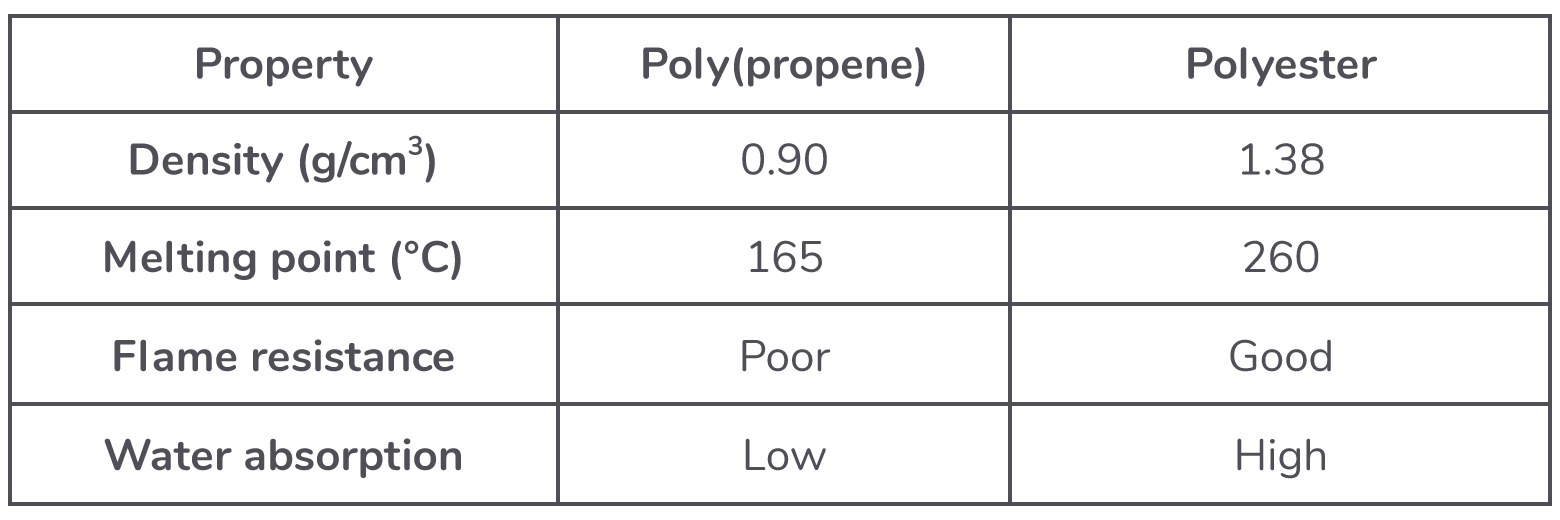
Evaluate the suitability of poly(propene) and polyester for firefighter uniforms.
Two monomers, A and B, are needed to make the polyester.
The image below shows a representation of the two monomers.

Name the functional group in monomer B.
Monomers A and B join together to produce a polyester and a small molecule.
Name the small molecule.
Like polyesters, polyamides are condensation polymers.
Which statement explains why polyamides are condensation polymers?
Starch, proteins and DNA are naturally occurring polymers.
Name the monomers from which starch and proteins are produced.
State the types of synthetic polymers that contain the same linkage as:
- fats
- proteins
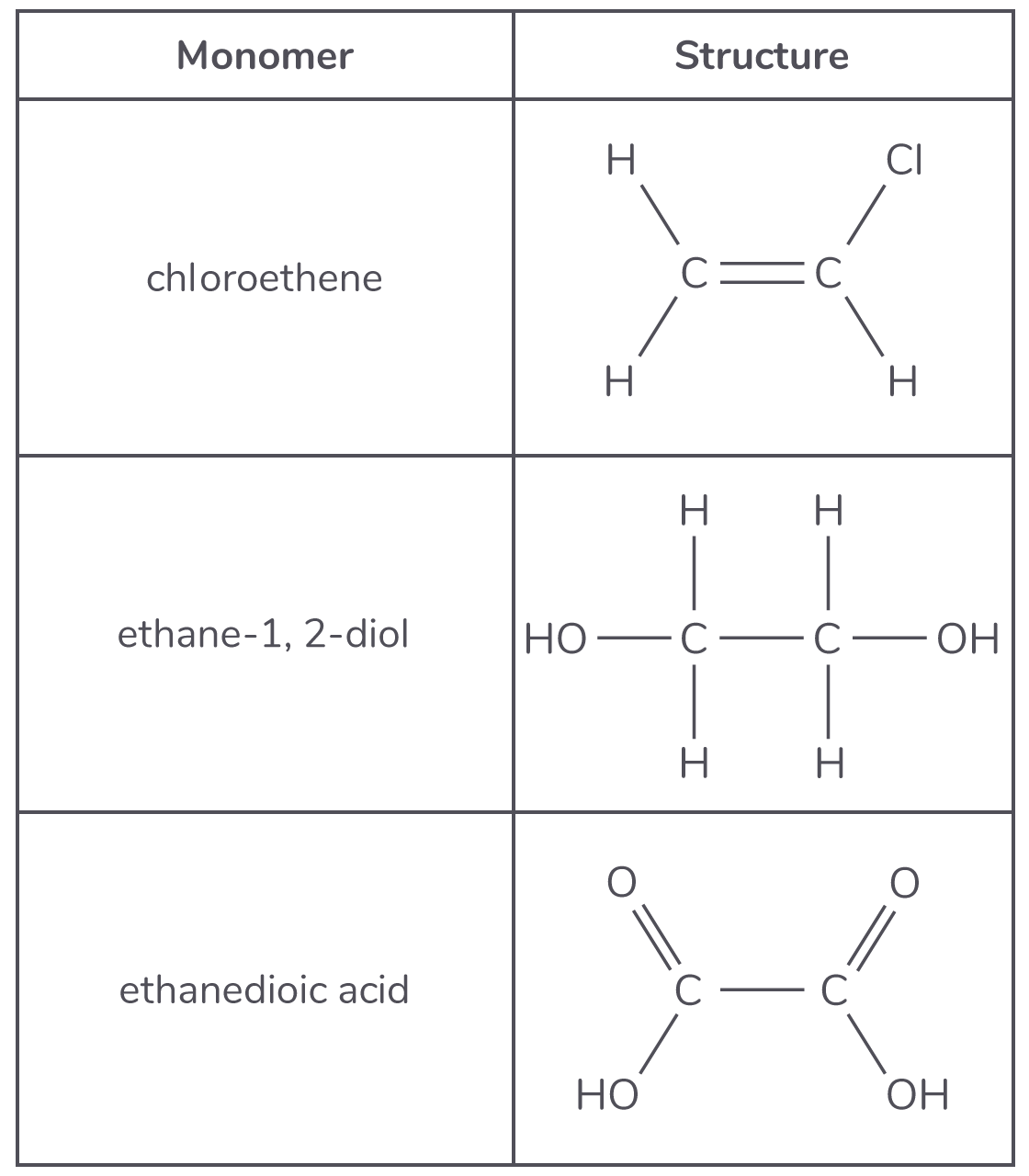
Different polymers can be formed by using the monomers shown in the image below.
Explain how two different polymers can be formed from monomers in the image.
The structure of a polymer is shown in the image below.

Which type of polymer is shown in the image?
Name the process by which the polymer above is formed.
Compare the polymerisation reaction used to produce poly(ethene) with the polymerisation reaction used to produce a polyester.
This question is about condensation polymers.
What is the minimum number of functional groups that a monomer must have to form a condensation polymer?
Condensation polymers can be made from a carboxylic acid and an alcohol.
Complete the block diagram to show the formation of this polymer.
State the functional groups in a:
- alcohol molecule
- carboxylic acid molecule
Which term describes a polymer made from a carboxylic acid and an alcohol?
Nylon is a polyamide, formed in a condensation polymerisation reaction.
Complete the diagram to show the structure of nylon.
Show all of the atoms and all of the bonds present in the linkages.
Nylon can be made from hexanedioyl dichloride and hexane‑1,6‑diamine.
Both chemicals are highly corrosive.
A solvent is needed which is highly flammable.
Describe how to make nylon in a laboratory.
Describe and explain three precautions needed to control the hazards in this experiment.
Polymers are long-chain molecules made from small molecules linked together.
Some polymers are natural, and others are synthetic.
Four polymers or types of polymer are listed.
Which of these polymers or types of polymer are synthetic?
The image below shows the structure of glycine.
Glycine is a monomer that reacts to form proteins.
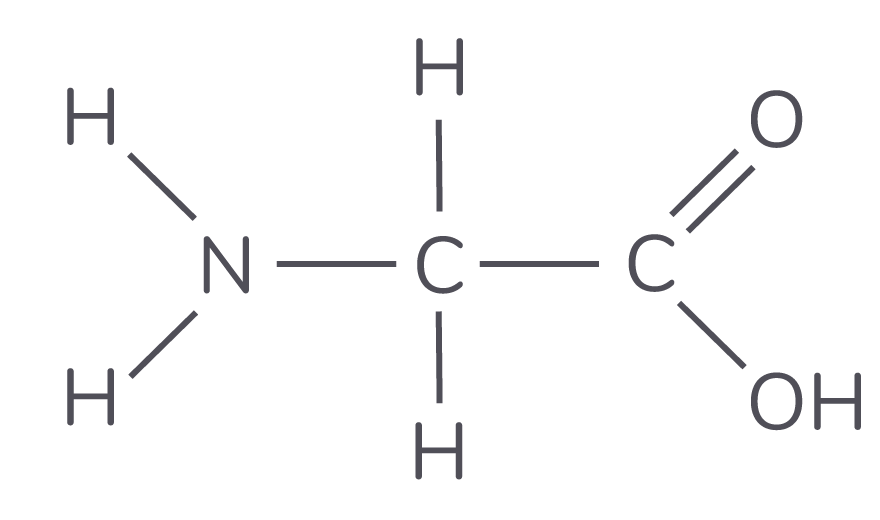
What monomers are proteins made of?
Glycine contains two different functional groups that allow it to undergo polymerisation.
What are the two functional groups?
The diagram below shows an incomplete structural formula of a protein.
Complete the diagram by drawing the linkages between the protein monomers.
Include the name of this type of linkage in your diagram.
Proteins are biodegradable.
What is meant by the term biodegradable?
Proteins can be chemically broken down to produce amino acids.
What is the name of this chemical process?