7.9 - Exothermic & Endothermic Reactions
Exothermic and endothermic reactions
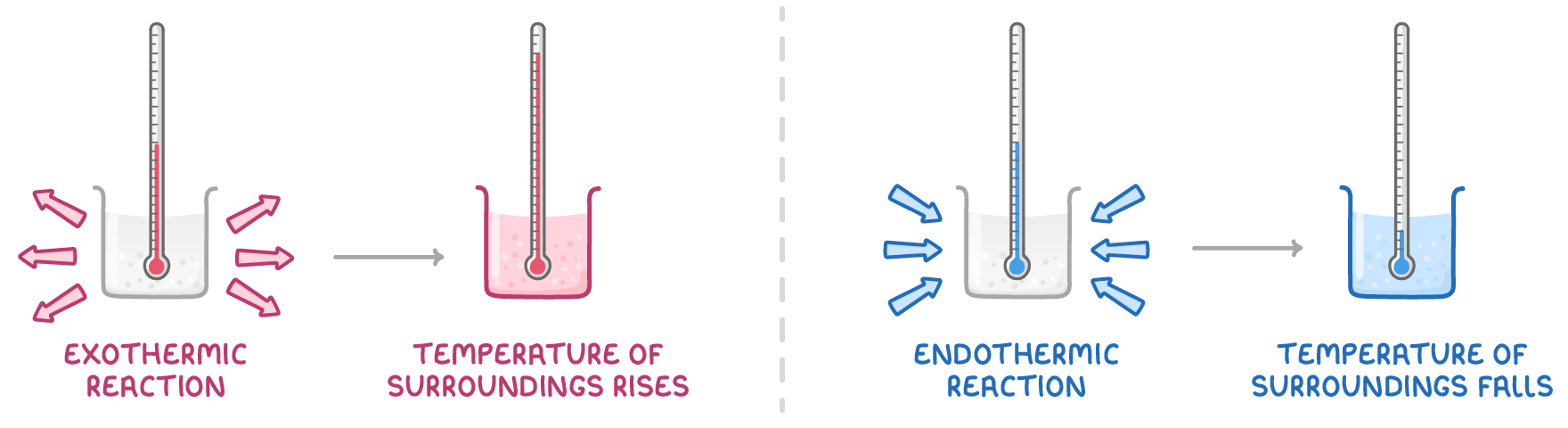
- In an exothermic reaction, energy is transferred to the surroundings, so the temperature of the surroundings rises.
- In an endothermic reaction, energy is taken in from the surroundings, so the temperature of the surroundings falls.
Energy is conserved
- Energy can't be created or destroyed, only transferred.
- In an exothermic reaction, the products hold less energy than the reactants because energy was released to the surroundings.
- In an endothermic reaction, the products hold more energy than the reactants because energy was taken in from the surroundings.
Sign of the energy change
- Negative (−) - Energy given out (exothermic).
- Positive (+) - Energy taken in (endothermic).
| Exothermic reaction | Endothermic reaction | |
|---|---|---|
| Energy is | transferred to the surroundings | taken in from the surroundings |
| Temperature of the surroundings | rises | falls |
| Compared with reactants, products | hold less energy | hold more energy |
Exothermic and endothermic examples
Exothermic reactions
- Combustion - Burning a substance in oxygen gives out a large amount of energy.
- Oxidation - Reactions such as iron rusting in air give out energy.
- Neutralisation - An acid reacting with a base or an alkali gives out energy.
Endothermic reactions
- Thermal decomposition - Breaking down a compound by heating (e.g. calcium carbonate decomposing into calcium oxide and carbon dioxide).
- Citric acid and sodium hydrogencarbonate - Reacting these together causes the temperature of the surroundings to fall.
Everyday uses
- Hand warmers - Use the exothermic oxidation of iron in air to release heat.
- Self-heating cans - Use an exothermic reaction in the base to warm a drink.
- Cold packs - Use an endothermic reaction to cool an injury immediately without needing a freezer.
TermDefinition
Exothermic reaction
Endothermic reaction