3.4 - Air Pollution
Incomplete combustion - Carbon monoxide and particulates
When a fuel burns without enough oxygen, incomplete combustion releases carbon monoxide and particulates.
Carbon monoxide
- A toxic gas produced by incomplete combustion.
- It's colourless and odourless, so it isn't easily detected.
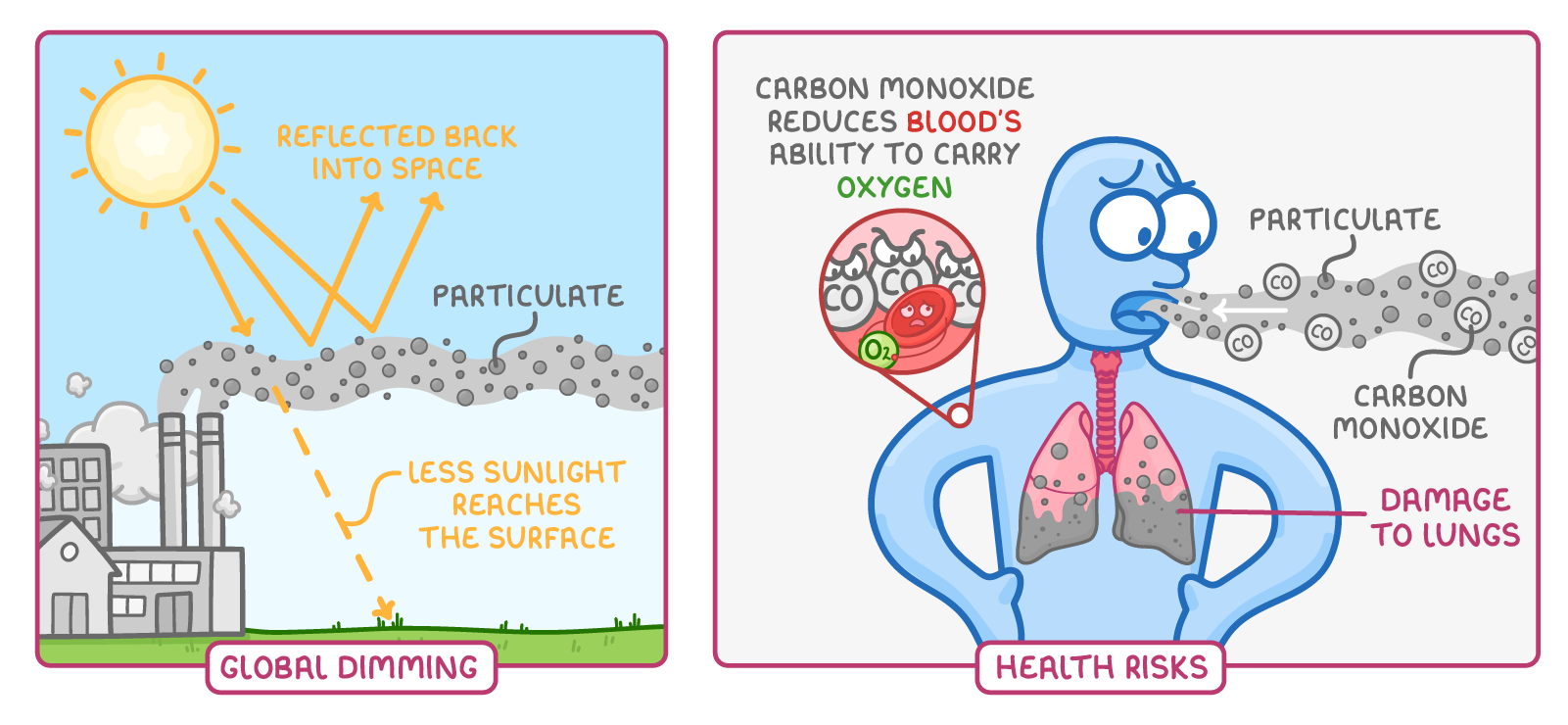
- Once breathed in, it reduces the blood's ability to carry oxygen around the body.
- This can cause tiredness, breathing difficulties and, in severe cases, death.
Particulates
- Fine particles of carbon (soot) and unburnt fuel.
- Breathing them in can damage the lungs - worsening respiratory problems and increasing the risk of cancer - and reduces air quality generally.
- In the atmosphere, particulates reflect sunlight back into space, reducing the light reaching Earth's surface (global dimming).
Acid rain
- Sulfur impurities in a fuel burn to release sulfur dioxide into the atmosphere.
- Breathing sulfur dioxide in can cause respiratory problems, and it's the main cause of acid rain.
- Sulfur dioxide dissolves in water droplets in clouds, forming a dilute acid that falls as acid rain.
Effects of acid rain
- Acidifies lakes and rivers, killing fish and other aquatic life.
- Damages trees and other plants.
- Damages buildings and statues made from limestone.
- Corrodes metal.

Reducing air pollution
- Catalytic converter - Fitted to a vehicle's exhaust system, it changes harmful gases produced by the engine into less harmful ones before they leave the exhaust.
- Low-sulfur fuel - Using fuel with a lower sulfur content reduces the sulfur dioxide produced when it's burned.
- Flue-gas desulfurisation (sulfur scrubbing) - At a power station, sulfur dioxide is removed from waste gases before release, often by reacting them with calcium oxide.
- Treating acidified land and water - Soil and lakes affected by acid rain can be treated with a base, such as powdered limestone or lime, to neutralise the acidity.

TermDefinition
Particulates
Global dimming
Catalytic converter
Flue-gas desulfurisation