1.6 - Air Pollution
Incomplete combustion - Carbon monoxide and particulates
When a fuel burns without enough oxygen, incomplete combustion releases carbon monoxide and particulates.
Carbon monoxide
- A toxic gas produced by incomplete combustion.
- It's colourless and odourless, so it isn't easily detected.
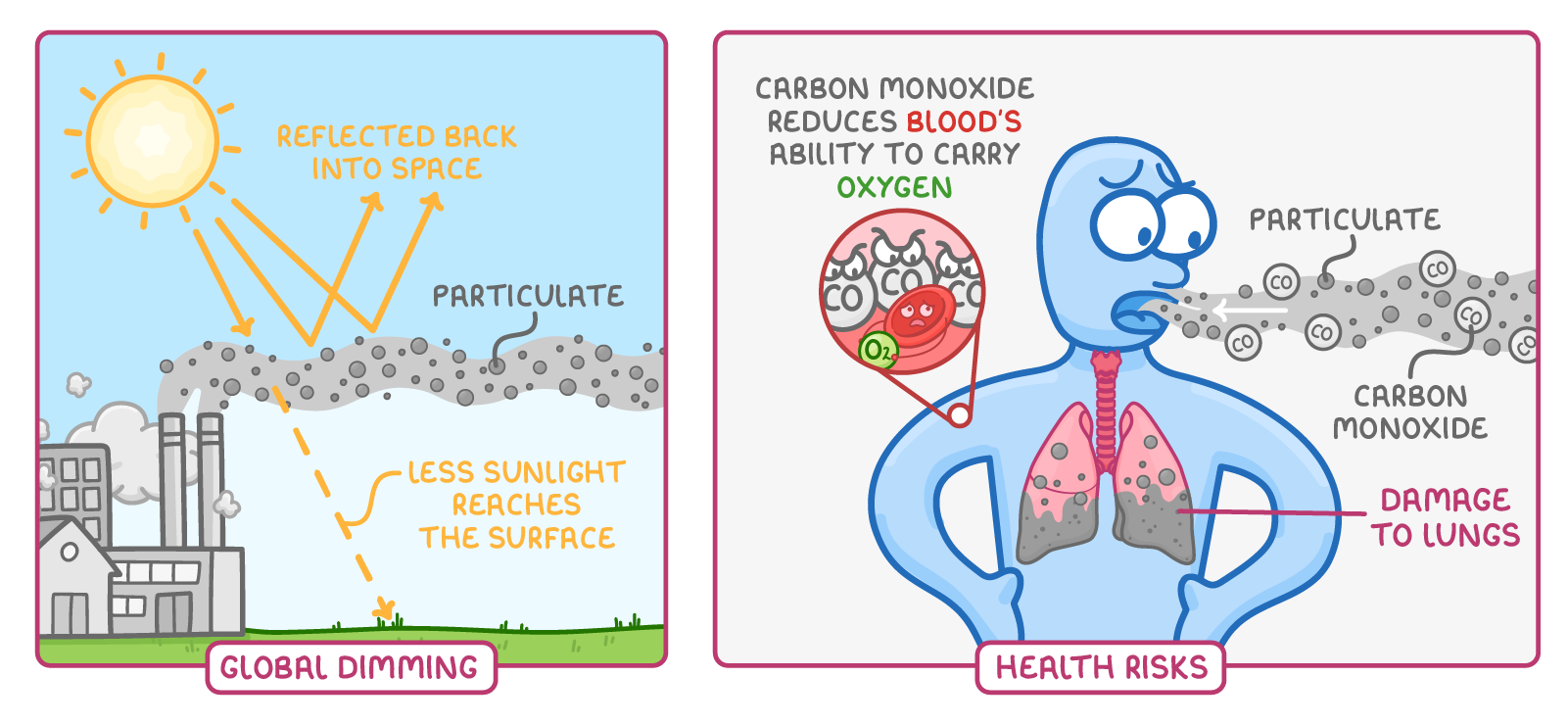
- Once breathed in, it reduces the blood's ability to carry oxygen around the body.
- This can cause tiredness, breathing difficulties and, in severe cases, death.
Particulates
- Fine particles of carbon (soot) and unburnt fuel.
- Breathing them in can damage the lungs - worsening respiratory problems and increasing the risk of cancer - and reduces air quality generally.
- In the atmosphere, particulates reflect sunlight back into space, reducing the light reaching Earth's surface (global dimming).
Acid rain
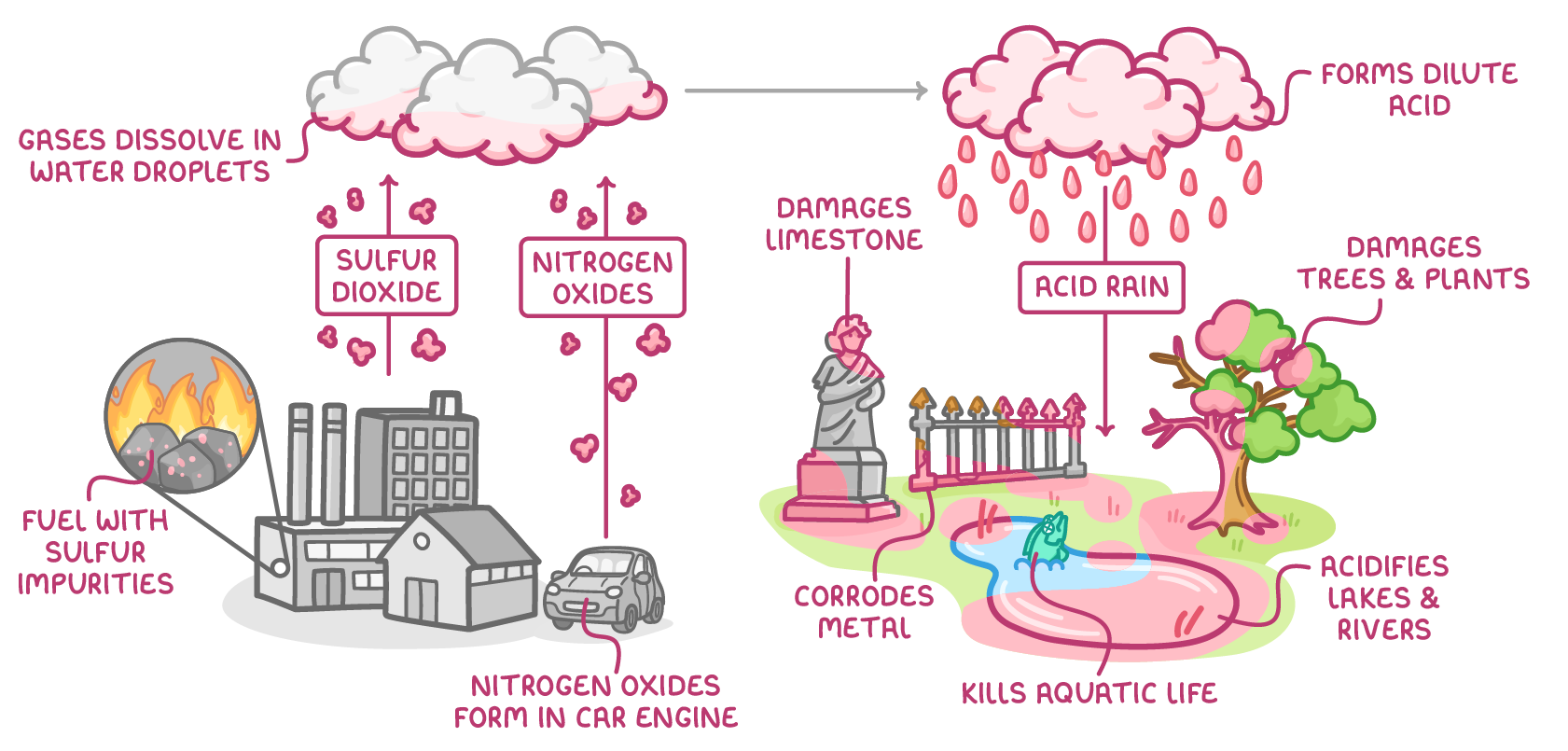
- Sulfur impurities in a fuel burn to release sulfur dioxide into the atmosphere.
- Breathing sulfur dioxide in can cause respiratory problems, and it's the main cause of acid rain.
- Sulfur dioxide dissolves in water droplets in clouds, forming a dilute acid that falls as acid rain.
Effects of acid rain
- Acidifies lakes and rivers, killing fish and other aquatic life.
- Damages trees and other plants.
- Damages buildings and statues made from limestone.
- Corrodes metal.
Oxides of nitrogen
- Form inside car engines, where high combustion temperatures cause nitrogen and oxygen from the air to react.
- Like sulfur dioxide, they dissolve in cloud water to form acid rain, and can cause respiratory problems.
- At ground level, they react with sunlight to produce ozone, forming photochemical smog, which can cause breathing difficulties, headaches and tiredness.
Reducing air pollution
- Low-sulfur fuel - Using fuel with a lower sulfur content reduces the sulfur dioxide produced when it's burned.
- Flue-gas desulfurisation (sulfur scrubbing) - At a power station, sulfur dioxide is removed from waste gases before release, often by reacting them with calcium oxide.
- Treating acidified land and water - Soil and lakes affected by acid rain can be treated with a base, such as powdered limestone or lime, to neutralise the acidity.
Catalytic converter
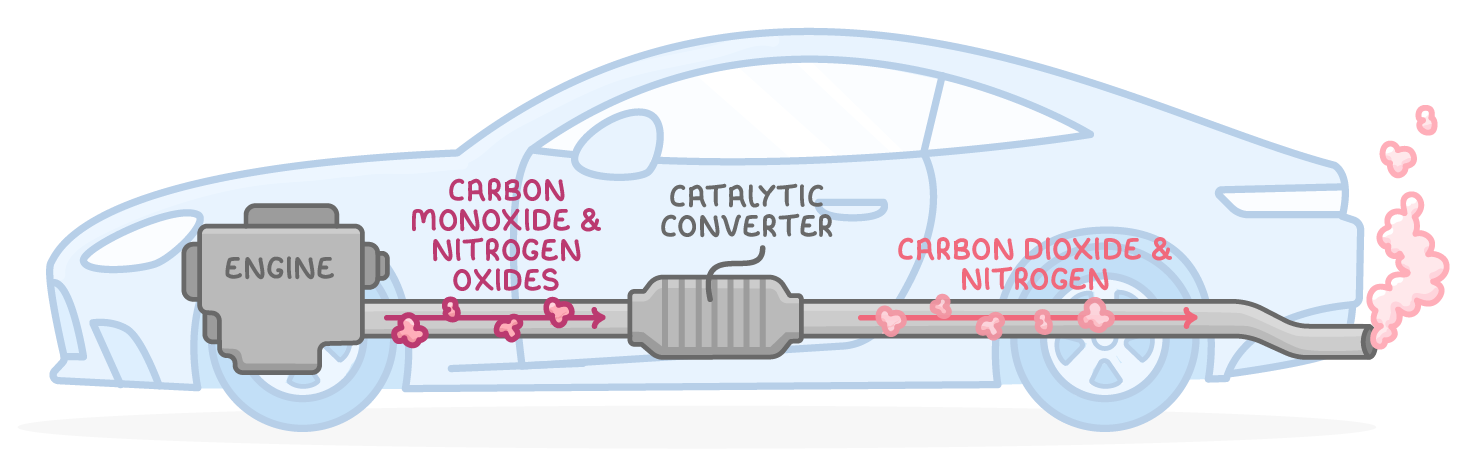
- Fitted to a vehicle's exhaust system, it changes harmful gases produced by the engine into less harmful ones before they leave the exhaust.
- It removes oxides of nitrogen using carbon monoxide, turning both into less harmful gases, nitrogen and carbon dioxide, although carbon dioxide is still a greenhouse gas:
- 2CO(g) + 2NO(g) → 2CO2(g) + N2(g)
TermDefinition
ParticulatesTiny solid particles, such as carbon (soot) and unburnt fuel, released into the air when fuels burn incompletely.
Global dimmingA reduction in the amount of sunlight reaching Earth's surface caused by particulates in the atmosphere.
Photochemical smogAir pollution formed at ground level when oxides of nitrogen react in sunlight to produce ozone.
Flue-gas desulfurisationThe removal of sulfur dioxide from the waste gases of power stations before they are released.
Catalytic converterA device fitted to a vehicle's exhaust system that changes harmful gases into less harmful ones.
Key points to remember
How were these notes?