3.15 - Redox
Oxidation and reduction as oxygen transfer
- Oxidation is the gain of oxygen by a substance.
- Reduction is the loss of oxygen from a substance.
Examples
- When magnesium burns in oxygen to form magnesium oxide, the magnesium gains oxygen, so it has been oxidised:
- 2Mg + O2 → 2MgO
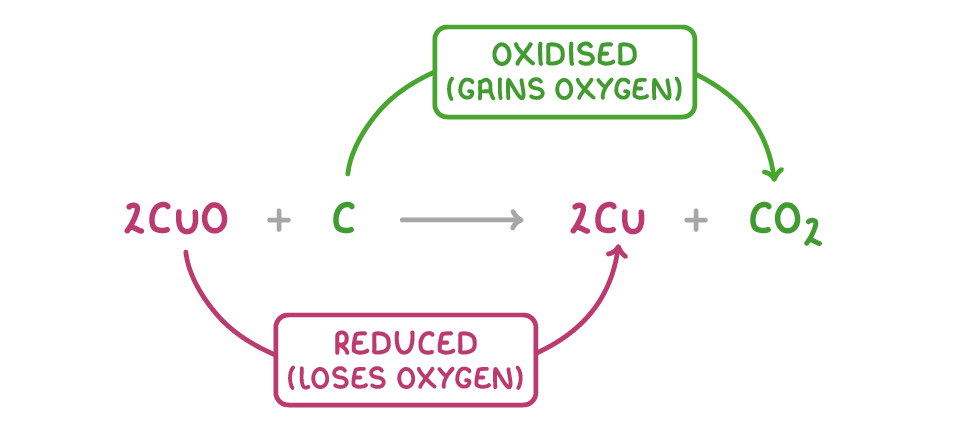
- When copper(II) oxide reacts with carbon, the copper(II) oxide loses oxygen and is reduced, while the carbon gains oxygen and is oxidised:
- 2CuO + C → 2Cu + CO2
- A reaction where oxidation and reduction happen together is a redox reaction.
Following hydrogen instead
- Losing hydrogen is oxidation, gaining hydrogen is reduction.
- When hydrogen and chlorine react, the chlorine gains hydrogen, so it has been reduced:
- H2 + Cl2 → 2HCl
Oxidising and reducing agents
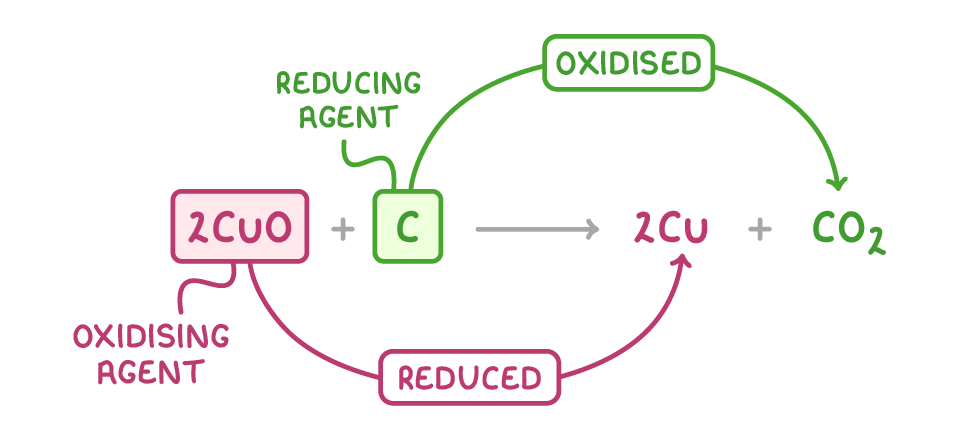
- Oxidising agent - A substance that oxidises another substance, and is itself reduced.
- Reducing agent - A substance that reduces another substance, and is itself oxidised.
- In summary:
- The substance that is reduced is the oxidising agent.
- The substance that is oxidised is the reducing agent.
Worked example - Copper(II) oxide and carbon
2CuO + C → 2Cu + CO2
- Copper(II) oxide loses oxygen, so it is reduced; the carbon took its oxygen away, so carbon is the reducing agent.
- Carbon gains oxygen, so it is oxidised; the copper(II) oxide supplied that oxygen, so copper(II) oxide is the oxidising agent.
Oxidation and reduction as electron transfer
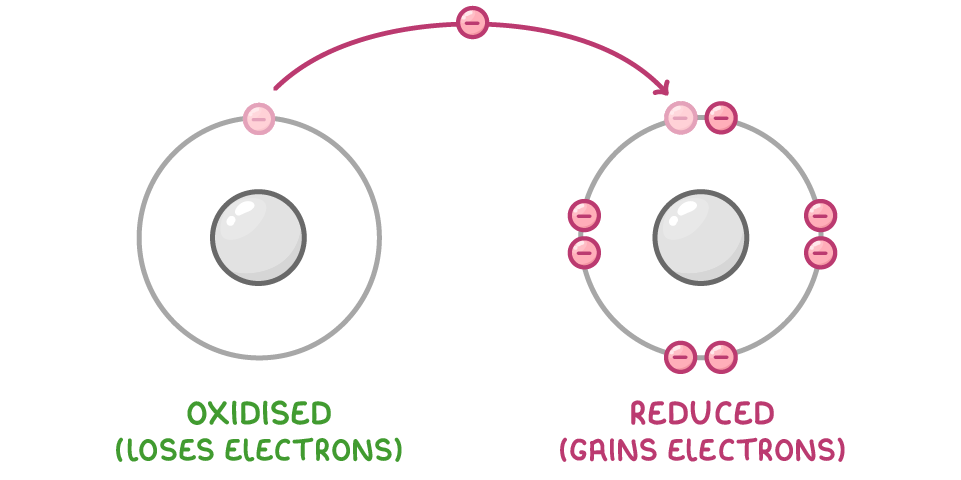
- Oxidation is the loss of electrons.
- Reduction is the gain of electrons.
- Remember: OIL RIG (Oxidation Is Loss, Reduction Is Gain).
- Electrons are transferred from one substance to another, so oxidation and reduction always occur together in a redox reaction.
Worked example - Sodium and chlorine
2Na + Cl2 → 2NaCl
- Each sodium atom starts neutral and becomes Na+ (loses one electron), so sodium is oxidised.
- Each chlorine atom starts neutral and becomes Cl- (gains one electron), so chlorine is reduced.
Identifying oxidation and reduction from charges
- An atom that becomes a positive ion loses electrons: oxidised.
- An atom that becomes a negative ion gains electrons: reduced.
- A positive ion that becomes an atom gains electrons: reduced.
TermDefinition
OxidationThe gain of oxygen by a substance. In terms of electrons, it is the loss of electrons.
Redox reactionA reaction where oxidation and reduction happen together.
ReductionThe loss of oxygen by a substance. In terms of electrons, it is the gain of electrons.
Oxidising agentA substance that oxidises another substance, and is itself reduced.
Reducing agentA substance that reduces another substance, and is itself oxidised.
Key points to remember
How were these notes?