6.11 - Greenhouse Gases & Climate Change
The greenhouse effect
- Gases in the atmosphere trap some of the heat radiated from the Earth's surface, keeping the planet warm enough to support life. This warming is called the greenhouse effect.
- The main greenhouse gases are carbon dioxide, methane, and water vapour.
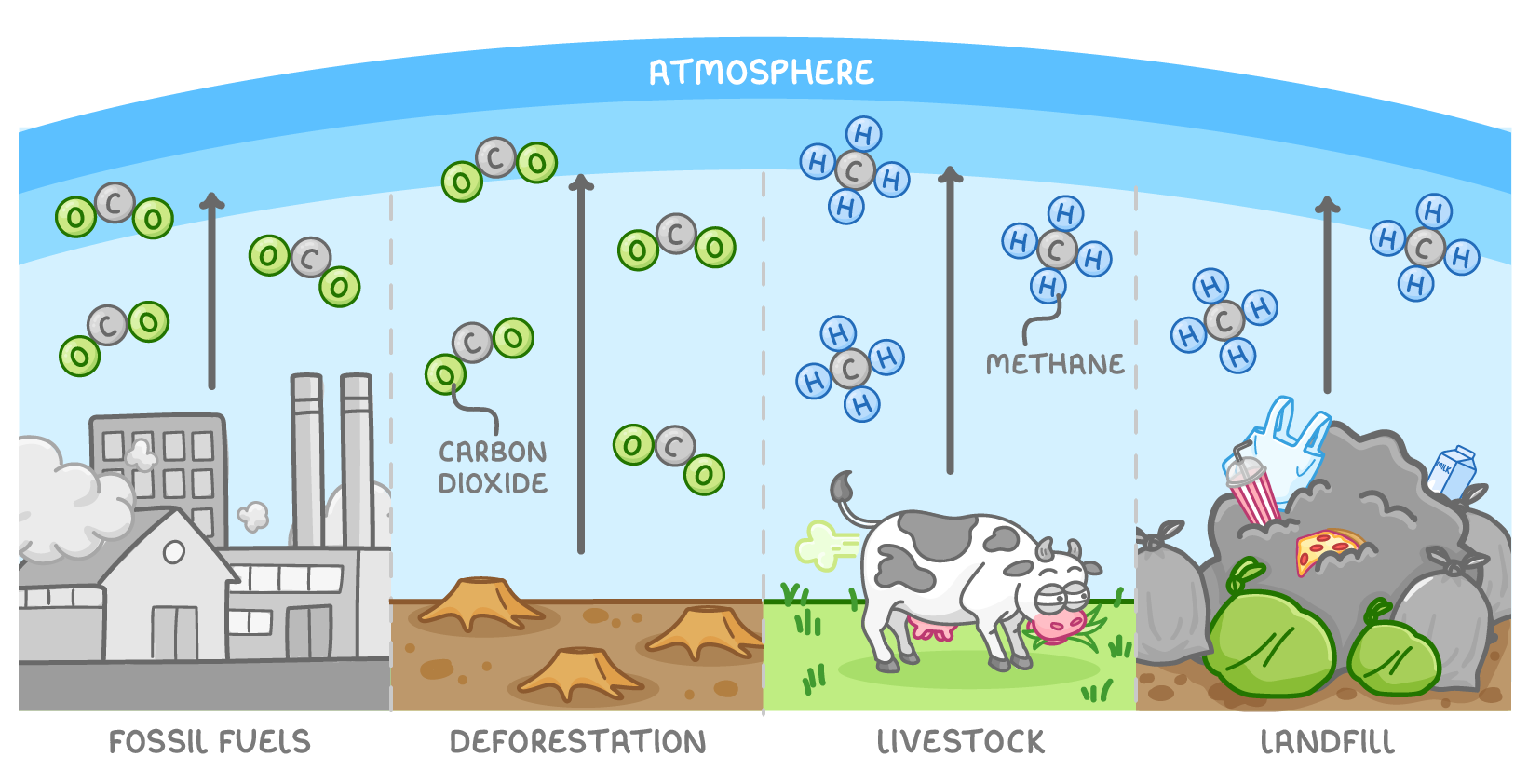
- Methane is released into the atmosphere by:
- Decomposing vegetation
- Digestion in animals
More greenhouse gas means more warming
- An increase in carbon dioxide or methane traps more heat in the atmosphere.
- This drives climate change: as average global temperatures rise, wider weather and climate patterns change with them.
How the greenhouse effect works
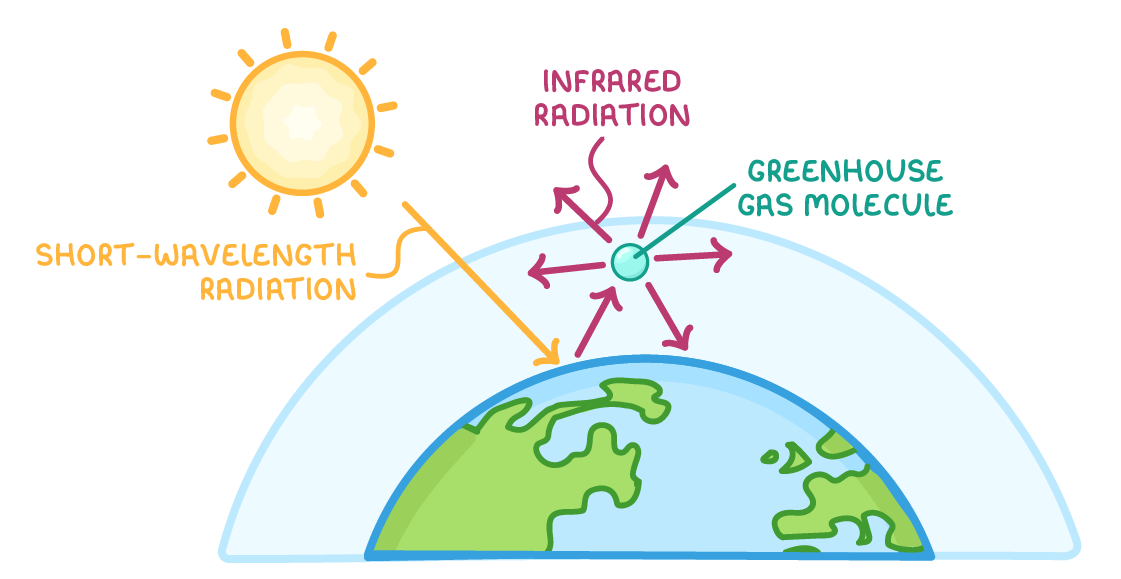
- Energy from the Sun reaches the Earth mostly as short-wavelength radiation, which passes through the atmosphere and warms the surface.
- The warmed surface radiates energy back out as longer-wavelength infrared radiation.
- Greenhouse gas molecules absorb this longer-wavelength radiation and re-emit it in all directions, including back towards the surface.
- This reduces the thermal energy lost to space, so heat energy stays in the atmosphere and keeps the Earth's surface warmer.
Human activity, evidence, and uncertainty
Human activities increase greenhouse gas levels in the atmosphere:
- Burning fossil fuels - Releases carbon dioxide that had been locked underground for millions of years.
- Deforestation - Felling trees releases stored carbon and stops them removing carbon dioxide by photosynthesis.
- Livestock farming - Releases methane from digestion in farm animals.
- Waste in landfill - Releases methane from the decomposition of organic waste.
Evidence and uncertainty
- Rising levels of atmospheric carbon dioxide correlate closely with increased fossil-fuel consumption, providing strong evidence that human activity is driving climate change.
- The Earth's climate is a complex system, so predictive models are simplified and can give different results.
- Measurements taken in different places, and older records that are less accurate than modern ones, add further uncertainty.
- Media reports can give simplified or one-sided accounts of the data.
Peer review and communication
- Peer review - Before findings are published, other scientists who are experts in the same field check the methods, data and conclusions, which helps to catch mistakes and false claims.
- Communication - Findings must be clearly communicated to governments and the public so they can make informed decisions.
Effects of climate change
A rise in average global temperature brings wide-ranging effects:
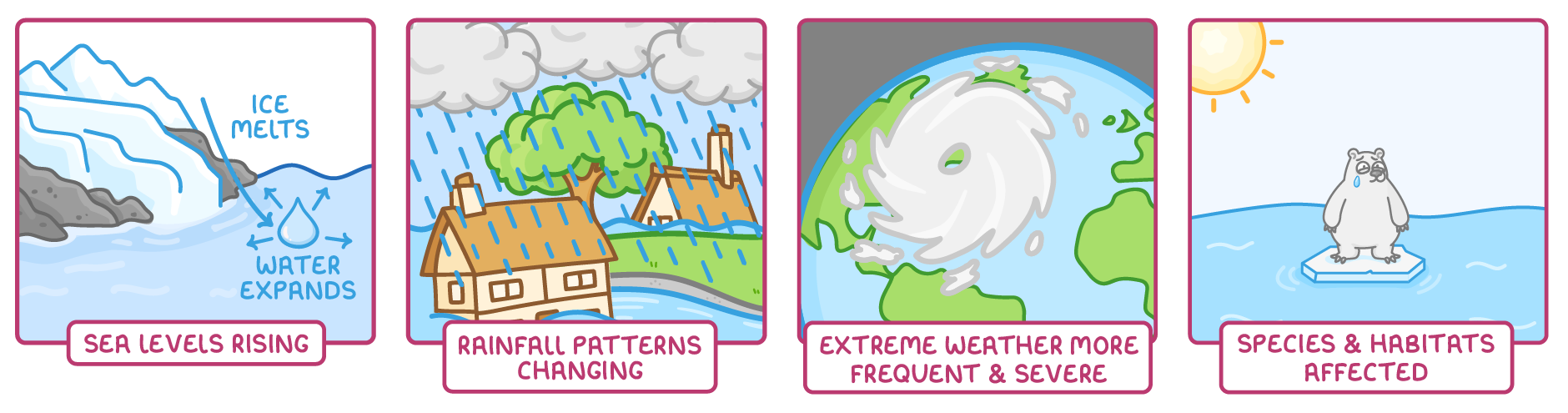
- Sea levels are rising - Polar ice and glaciers melt, and seawater expands as it warms, increasing coastal flooding.
- Rainfall patterns are changing - Some regions face more droughts, while others get heavier rainfall and flooding.
- Extreme weather is more frequent and severe - Storms, heatwaves, droughts, and floods happen more often.
- Species and habitats are affected - Shifting temperatures and rainfall threaten species that can't adapt or migrate fast enough, putting populations at risk.
Weighing the effects
- Effects differ in scale, likelihood, and environmental impact.
- Sea-level rise and changing rainfall affect entire regions, are already being measured, and are near certain (large scale, high risk).
- Loss of a species or habitat may be local, but it's permanent.
Reducing climate change
- The effects of climate change can be reduced, or mitigated, through deliberate action.
- Deciding what action to take means weighing the scale of the measure against its risk and wider environmental implications.
Strategies that reduce climate change
- Decreasing fossil fuel use - Cuts the carbon dioxide released from burning it.
- Increasing hydrogen and renewable energy - Generates energy without releasing carbon dioxide.
- Planting trees - Increases the carbon dioxide absorbed by plants as they grow.
- Reducing livestock farming - Lowers the methane released from animal digestion.
TermDefinition
Greenhouse effectThe warming of the Earth caused by greenhouse gases absorbing and re-emitting radiation back towards the surface.
Climate changeA long-term shift in the planet's temperature and weather patterns.
Peer reviewThe checking of scientific work by other scientists who are experts in the same field before it is published. They make sure the methods and conclusions are sound.
Key points to remember
How were these notes?