5.1 - Exothermic & Endothermic Reactions
Exothermic and endothermic reactions
- In an exothermic reaction, energy is transferred to the surroundings, so the temperature of the surroundings rises.
- In an endothermic reaction, energy is taken in from the surroundings, so the temperature of the surroundings falls.
Energy is conserved
- Energy can't be created or destroyed, only transferred.
- In an exothermic reaction, the products hold less energy than the reactants because energy was released to the surroundings.
- In an endothermic reaction, the products hold more energy than the reactants because energy was taken in from the surroundings.
Sign of the energy change
- Negative (−) - Energy given out (exothermic).
- Positive (+) - Energy taken in (endothermic).
| Exothermic reaction | Endothermic reaction | |
|---|---|---|
| Energy is | transferred to the surroundings | taken in from the surroundings |
| Temperature of the surroundings | rises | falls |
| Compared with reactants, products | hold less energy | hold more energy |
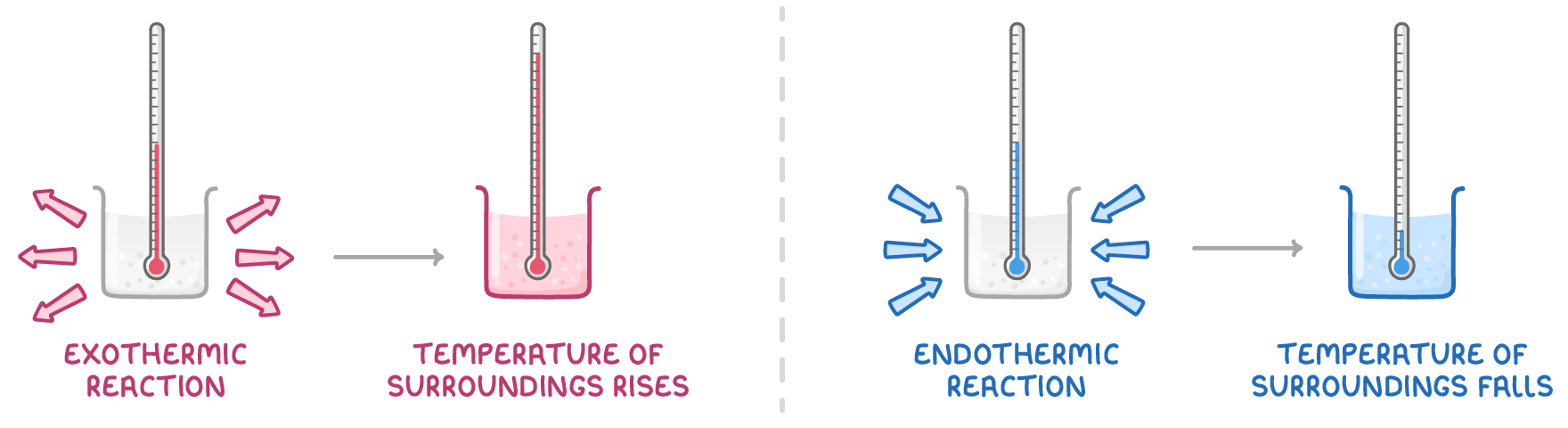
Exothermic and endothermic examples
The four standard changes
- Combustion - Always exothermic. A fuel releases heat energy when burned.
- Neutralisation - Reaction between an acid and a base or alkali; exothermic.
- Displacement - A more reactive element displaces a less reactive element from a compound; exothermic.
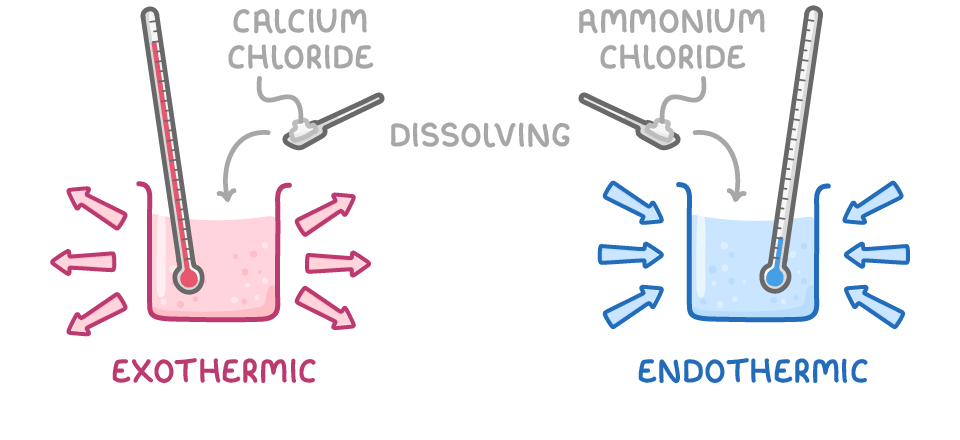
- Dissolving - Can be exothermic or endothermic, depending on the salt used (calcium chloride warms water, ammonium chloride cools it).
Activation energy
- For particles to react, they must collide with sufficient energy.
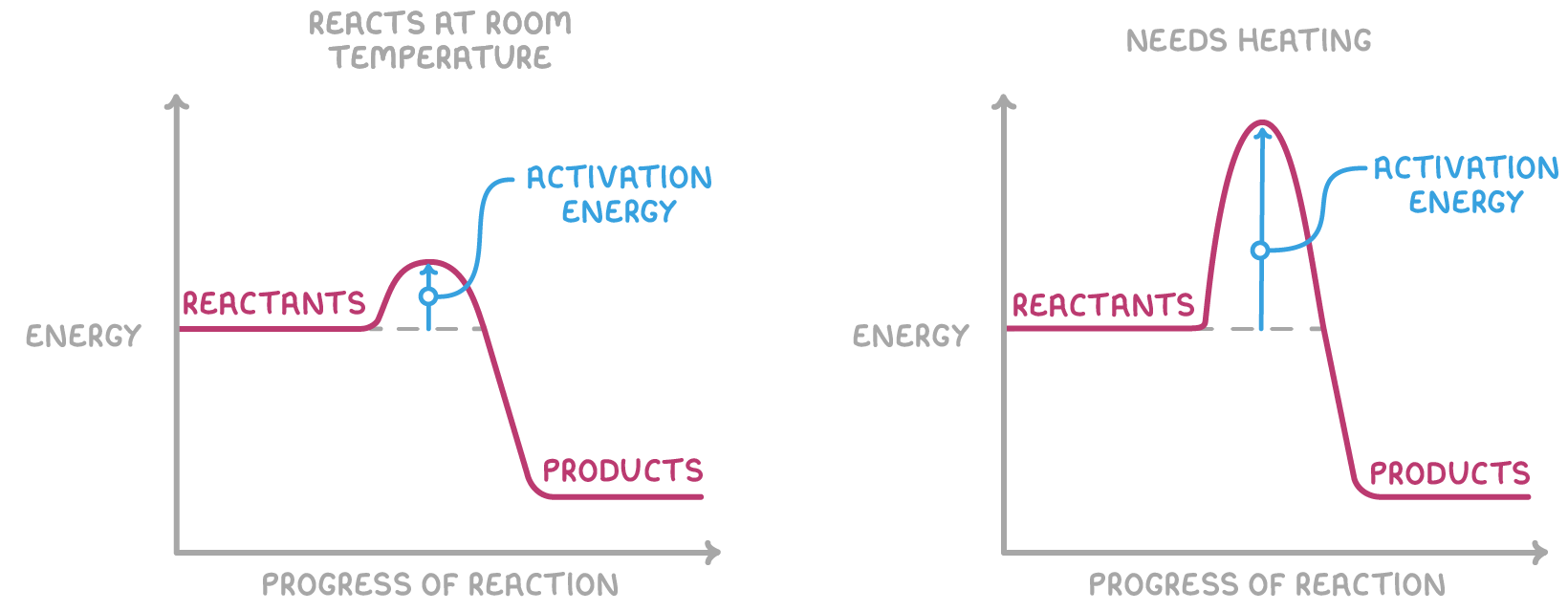
- The activation energy is the minimum amount of energy colliding particles must have for a reaction to occur. In the diagrams below, it's the height of the peak above the reactants' level.
Why there's a minimum energy
Chemical reactions require bonds in the reactants to break, which takes energy.
Size of activation energy
- Small activation energy - Reactions start easily at room temperature because many collisions already carry enough energy.
- Large activation energy - Reactions require energy from outside (usually by heating) so particles collide with enough energy to react.
Enthalpy change and its sign convention
The enthalpy change () is the energy change of a reaction, measured in kJ or kJ/mol.
The sign convention
- is negative for exothermic reactions - Energy is transferred to the surroundings, so the chemicals lose energy.
- is positive for endothermic reactions - Energy is taken in from the surroundings, so the chemicals gain energy.
| Reaction type | sign | Surroundings temperature |
|---|---|---|
| Exothermic | Negative (−) | Rises |
| Endothermic | Positive (+) | Falls |
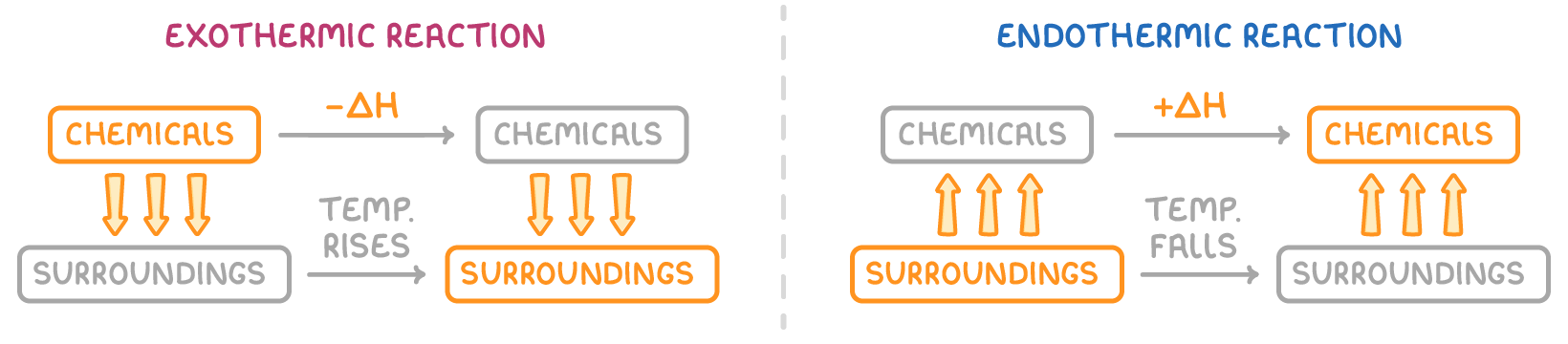
Orange marks where the energy is before and after the reaction.
TermDefinition
Exothermic reactionA reaction where energy is transferred to the surroundings, so the temperature of the surroundings rises.
Endothermic reactionA reaction where energy is taken in from the surroundings, so the temperature of the surroundings falls.
Activation energyThe minimum amount of energy that colliding particles must have to react.
Enthalpy changeThe thermal energy (heat) transferred to or from the surroundings during a reaction. It is given in kJ, or in kJ/mol for each mole that reacts.