Uses, Reactivity & Extraction of Metals - exam practice
Uses, Reactivity & Extraction of Metals
Question 1 of 5
A student reacted two different metals, magnesium and copper, with oxygen in the air.
The image below shows magnesium burning in air.
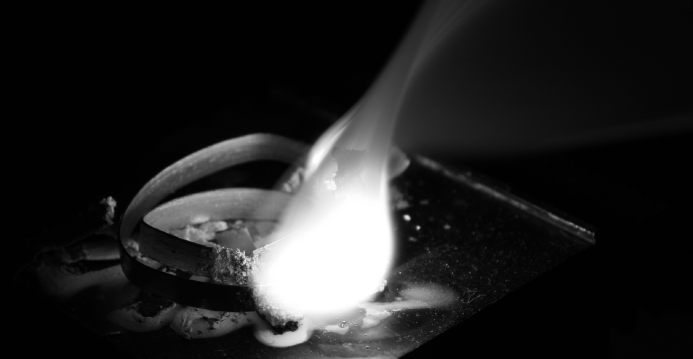
Give one observation that indicates that a chemical reaction is taking place.
Give the balanced symbol equation for the reaction, and name the product of the reaction.
The magnesium needed heating before it would react.
Which of the following statements is a conclusion that can be drawn from this?
A sample of the product was added to water and shaken.
Universal indicator was added.
The universal indicator turned blue.
Give the name of the substance made when the product reacted with water.
What kind of substance is this?
When heated in the presence of oxygen, copper doesn't burn, but its surface is converted to black copper oxide.
Compare the reactivity of magnesium with that of copper.
This question is about the reactions of metals and acids.
A student added four metals to a dilute acid.
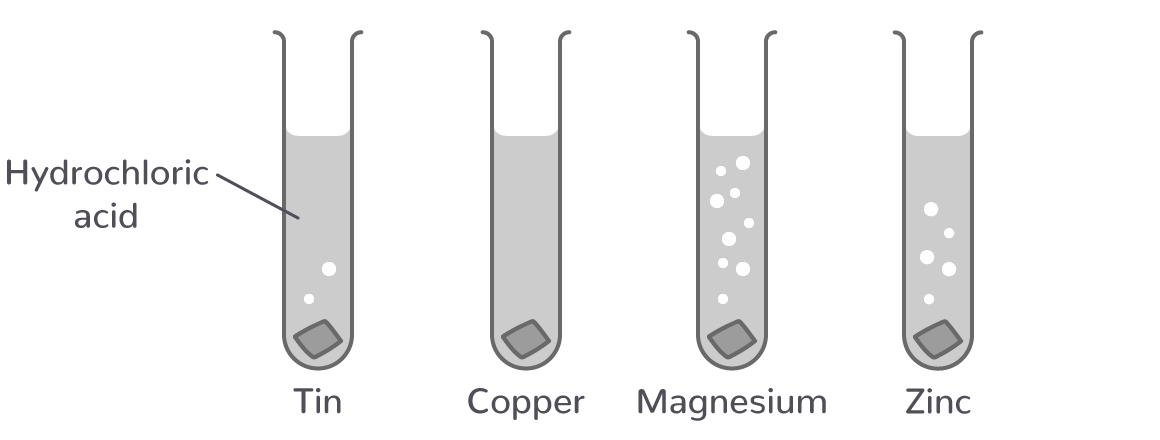
Name:
- the most reactive metal
- the least reactive metal
Zinc reacted with the acid to produce zinc chloride and water.
Give the name of the acid used by the student in his investigation.
The student carried out another investigation.
This is the method she used.
- Measure 50 cm3 of hydrochloric acid into a polysterene cup.
- Measure the initial temperature of the hydrochloric acid.
- Add one spatula of metal powder to the hydrochloric acid and stir.
- Measure the highest temperature the mixture reaches.
- Calculate the temperature change for the reaction.
- Repeat steps 1 to 5 three more times.
- Repeat all the steps above with different metals.
The table below shows the student’s results.
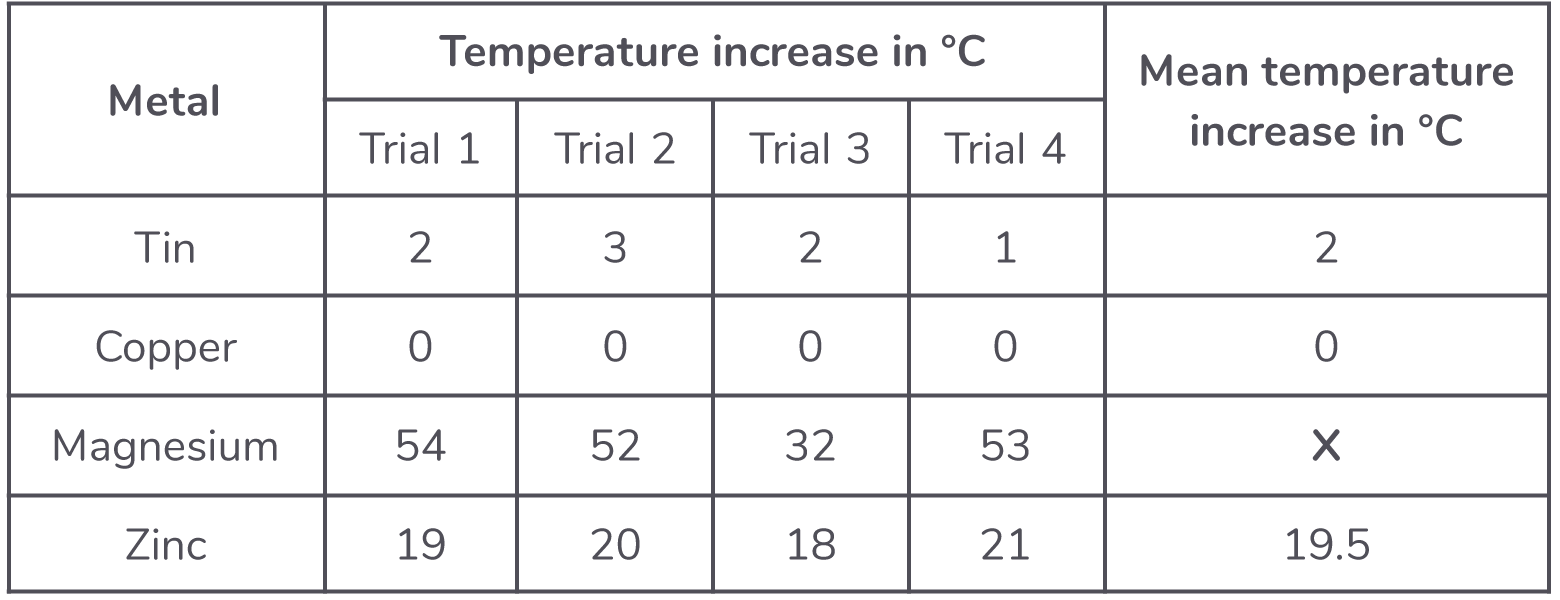
Do the students results in the second experiment agree with her previous results?
Explain your answer.
Calculate the mean temperature increase X for magnesium.
Do not include the anomalous result in your calculation.
What type of variable is the volume of hydrochloric acid in this investigation?
Suggest one way of improving the method to give results which are more repeatable.
The student used a polystyrene cup and not a glass beaker.
Why did this make the investigation more accurate?
A student investigates the reactivity of metals.
A student added copper metal to colourless silver nitrate solution.
The student observed:
- pale grey crystals forming
- the solution turning blue
Explain how these observations show that silver is less reactive than copper.
A student is given three metals, X, Y and Z to identify.
The metals are magnesium, iron and copper.
Plan an investigation to identify the three metals by comparing their reactions with dilute hydrochloric acid.
Your plan should give valid results.
This question is about halogens and their displacement reactions.
The table below shows the colour of different elements in aqueous solution.

A redox reaction takes place when aqueous chlorine is added to potassium iodide solution.
The equation for this reaction is:
Cl2 (aq) + 2KI (aq) ➔ I2 (aq) + 2KCl (aq)
What is the colour of the final solution in this reaction?
Give the ionic equation for the reaction of chlorine with potassium iodide.
Explain why the reaction between chlorine atoms and iodide ions is both oxidation and reduction.
All displacement reactions are examples of redox reactions.
State the meaning of the term redox.
A student investigated the temperature change in displacement reactions between metals and copper sulfate solution.
The table below shows the student’s results.
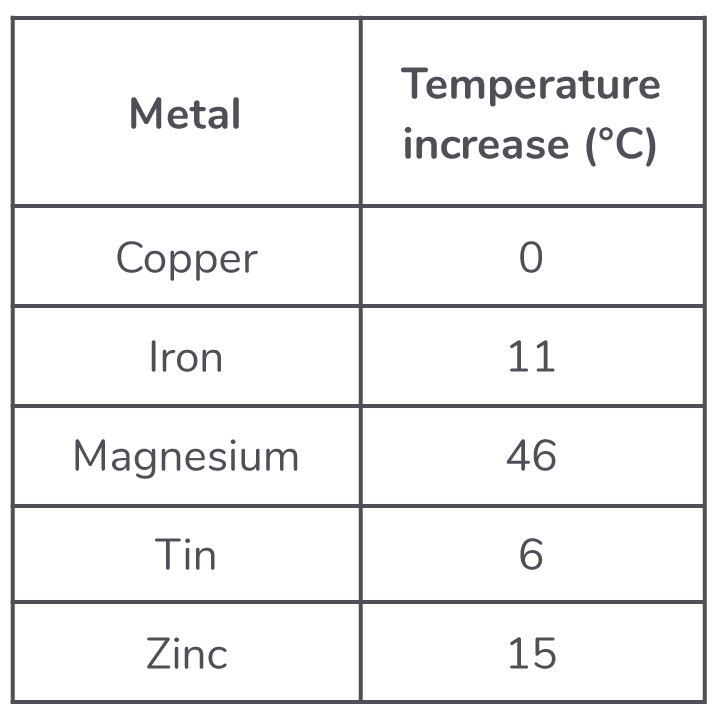
Plot the data from the table above as a bar chart.
The temperature change depends on the reactivity of the metal.
Use the student’s results to place copper, iron, magnesium, tin and zinc in order of their reactivity, from most reactive to least reactive.
Write the balanced symbol equation for the reaction between iron and copper sulfate.
Write the ionic equation for the reaction between magnesium and copper sulfate.
Why is copper described as being reduced in these reactions?
The student repeated the experiment using aluminium.
Aluminum does not react with the solution of copper sulfate.
Suggest why.
Describe a method to find the position of an unknown metal in this reactivity series using a dilute acid.
Your method should give valid results.