Metals & Metallic Bonding - exam practice
Metals & Metallic Bonding
Question 1 of 5
Metals are used in pylons and overhead power cables.
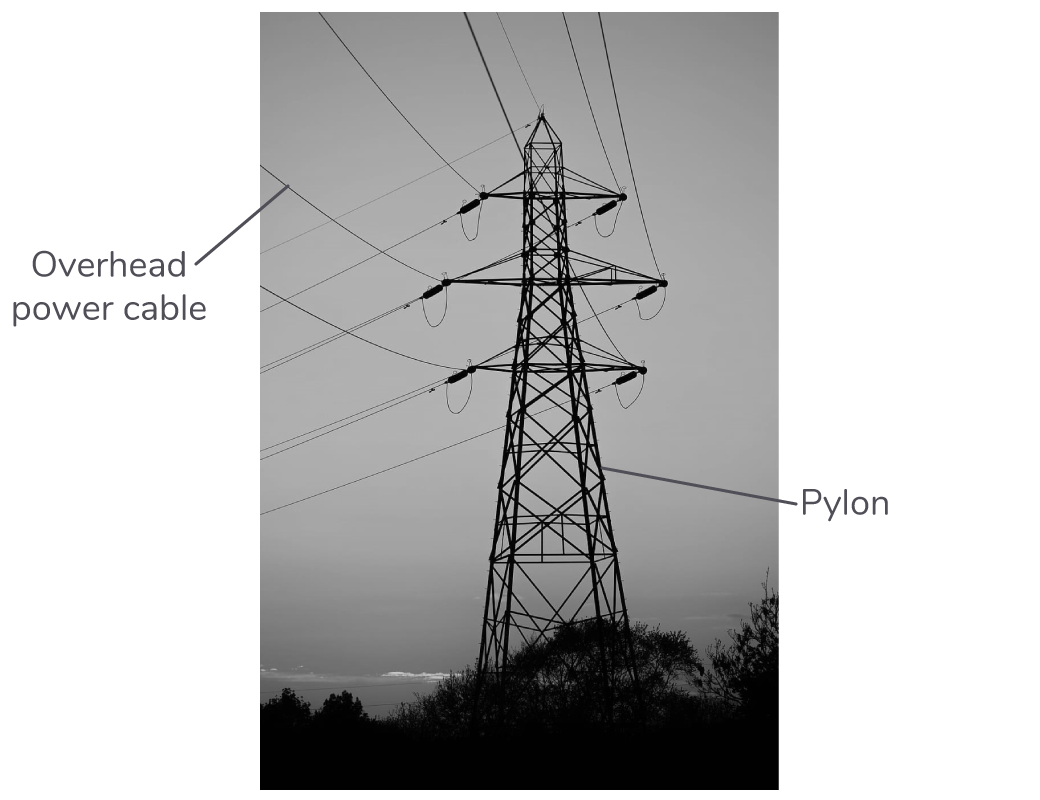
Describe the structure and bonding in metals.
Explain why metals are good conductors of electricity.
Suggest one reason why steel is used to make pylons.
The table shows some of the properties of copper and aluminium.

Use the information in the table to suggest why aluminium and not copper is used to conduct electricity in overhead power cables.
Aluminium is a metal used to make utensils for cooking, and for wrapping and storing food and drinks.
Which of the statements describes metallic bonding?
Aluminium is used to make cans for food and drinks.
Give two properties of aluminium that make it suitable for this use.
Aluminium is also used to make saucepans, which are used for cooking food at high temperatures.
State one property of aluminium that makes it suitable to be used for cooking food at high temperatures.
Magnalium is an alloy of aluminium and magnesium.
The diagram shows the arrangement of atoms in magnalium.
Explain why magnalium is harder than aluminium.
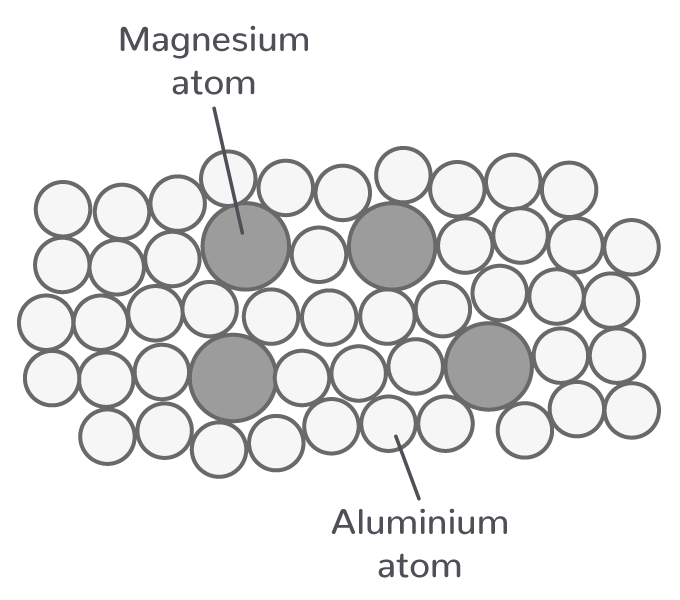
There are 47 atoms of aluminium in the diagram above.
Calculate the percentage of magnesium in the above diagram of magnalium.
Give your answer to 2 significant figures.
Calcium is a metal found in group 2 of the periodic table.
Draw and label a diagram to describe the structure and bonding in calcium.
Calcium is malleable even though metallic bonds are strong.
What is the meaning of the word 'malleable'?
Explain why metals are malleable.
Calcium can conduct electricity in both solid and liquid states.
Explain why metals like calcium can conduct electricity.
By reference to their structure, explain how:
- the particles in a piece of metal are held together and
- the shape of the metal can be changed without it breaking
Metals are good conductors of electricity.
Explain why metals are good conductors of electricity.
Suggest why electrical conductivity increases across the periodic table from sodium in group 1, to magnesium in group 2, and to aluminium in group 3.