Electrolysis - exam practice
Electrolysis
Question 1 of 7
A student passes electricity through solutions of some electrolytes to find out what products are formed at the positive and negative electrodes.
Below is a list of apparatus the student uses to pass electricity through the solutions of dilute electrolytes.
- electrodes
- leads and clips
- a battery
- a beaker
- solutions of different electrolytes
Draw a labelled diagram in the box to show how the student sets up her experiment to pass electricity through the solutions of dilute ionic compounds.
What is the name of the process by which ionic substances are decomposed into simpler substances when an electric current is passed through them?
The student performed the experiment with a solution of copper chloride.
State:
- the product formed at the positive electrode
- the product formed at the negative electrode
Explain your answer.
Explain why copper metal is formed when electricity is passed through dilute copper chloride, but hydrogen gas is formed when electricity is passed through dilute sodium chloride.
Two electrolysis experiments were set up as shown in the image below.
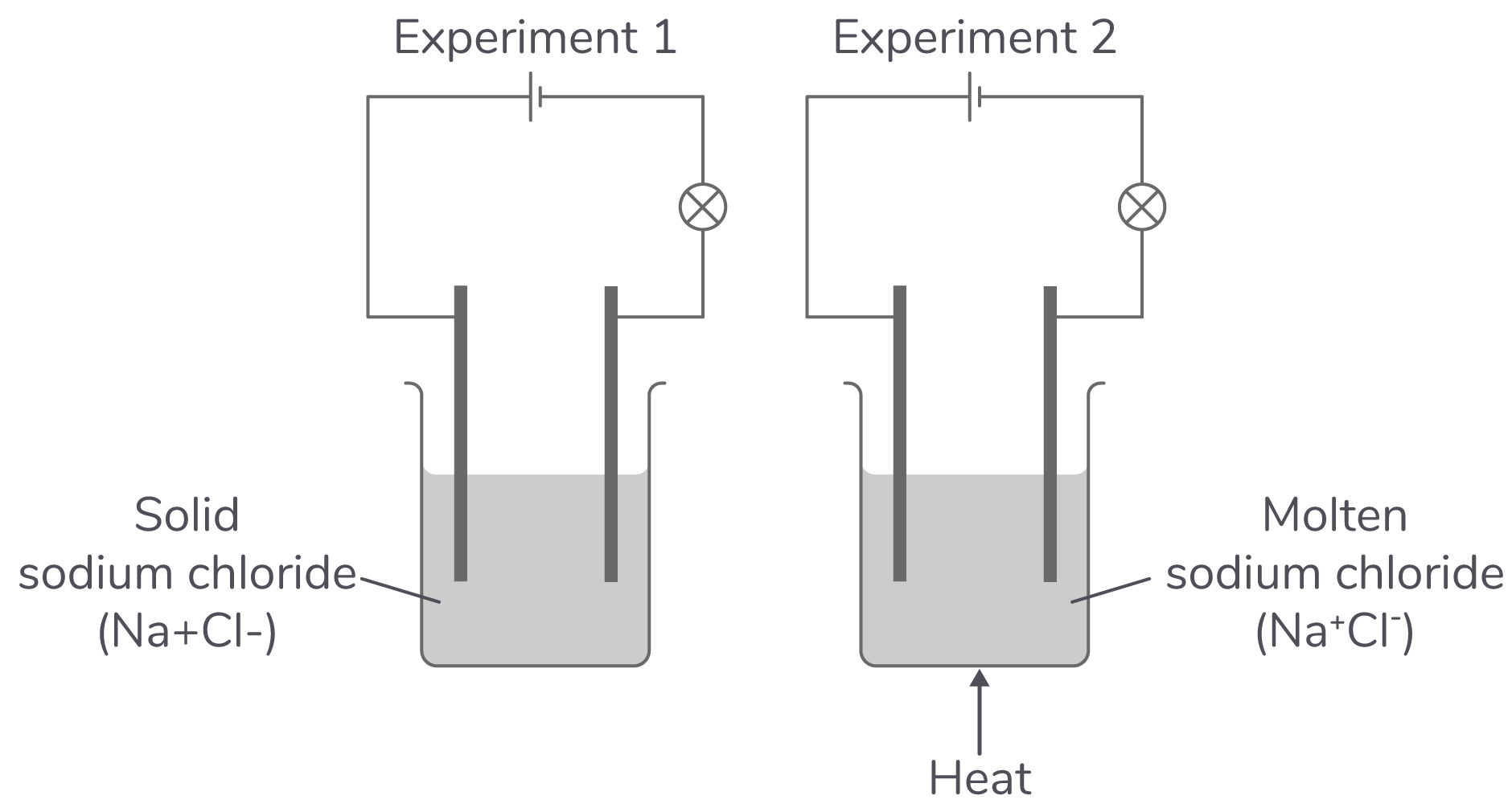
What is meant by electrolysis?
Give two observations which would only be seen in Experiment 2.
Explain why no changes would be seen in Experiment 1.
Electrolysis and chemical cells both involve chemical reactions and electricity.
Explain the difference between the processes in electrolysis and in a chemical cell.
The electrolysis of sodium chloride solution is an important industrial process, during which three useful substances are produced.
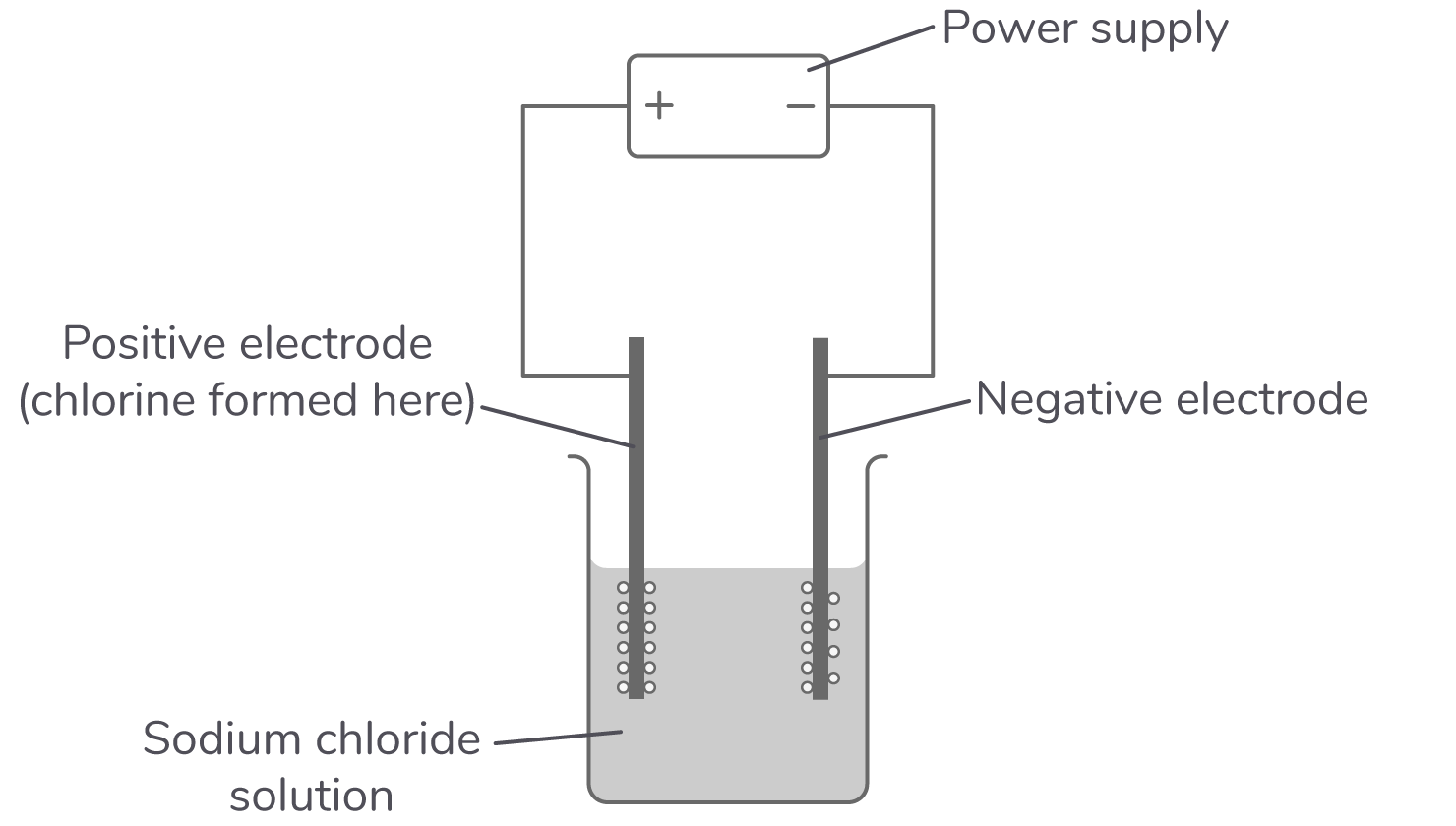
Which gas forms at the negative electrode?
Explain why chloride ions move towards the positive electrode.
Why is the formation of chlorine at this electrode said to be an oxidation reaction?
Which of the following is made from chlorine?
Write the ionic equations that represent the reactions that take place at each of the electrodes.
Name the important alkali which is left in the solution.
Bauxite is a mixture which contains aluminium oxide.
The aluminium oxide is mixed with cryolite and melted.
Aluminium is then extracted from the mixture by electrolysis.
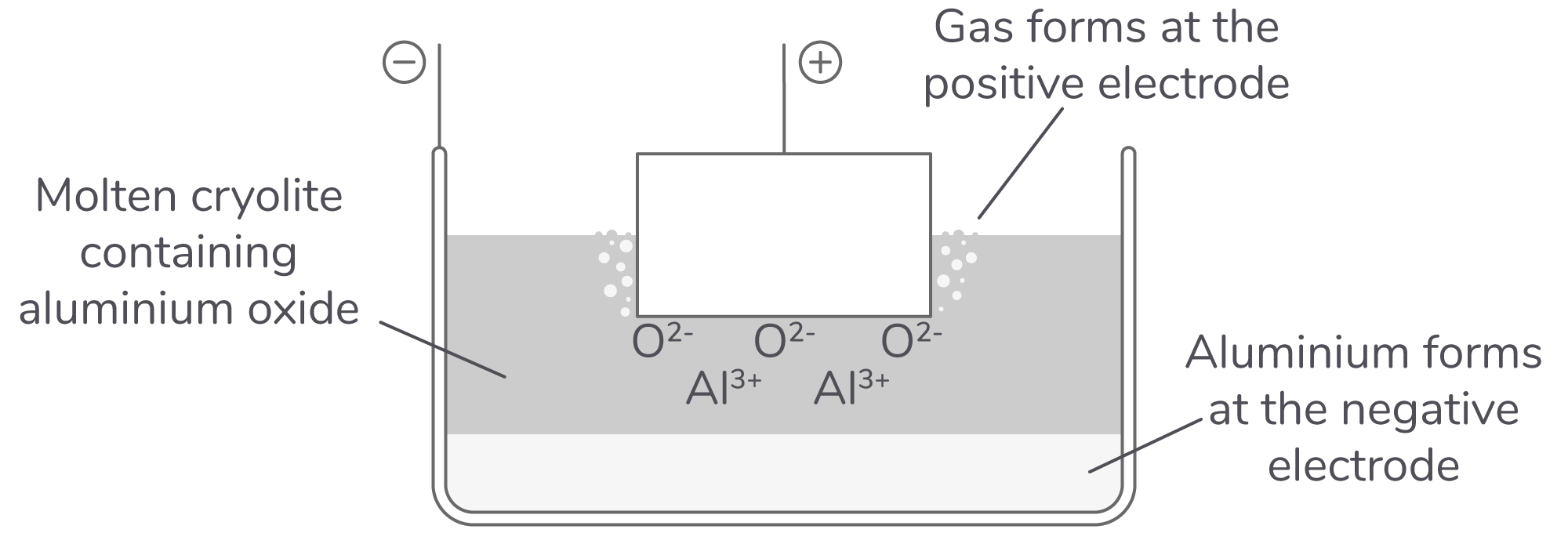
What is the reason for adding cryolite to the aluminium oxide?
Complete the sentences below.
When the molten aluminium oxide and cryolite mixture is electrolysed the product at the positive electrode is .
This product reacts with the positive electrode because the positive electrode is made of .
This results in the production of .
This reaction means that the positive electrode must be continually replaced.
Write the balanced half-equation for the process at the positive electrode.
Explain why the aluminium ions move to the negative electrode.
At the negative electrode, the aluminium ions gain electrons to produce aluminium.
What is this type of reaction called?
A student writes a hypothesis:
‘When different salt solutions are electrolysed with inert electrodes, the product at the negative electrode is always a metal’.
The student’s hypothesis is not always correct.
Explain why the product at the negative electrode is not always a metal.
Describe how the student could test his hypothesis in the laboratory.
Draw a labelled diagram of the apparatus he could use.
Give the independent variable in the experiment.
Describe what the student would see at the negative electrode if his hypothesis was true.
A student investigated the electrolysis of different substances.
Explain why electrolysis would not take place in the apparatus shown in the image below.
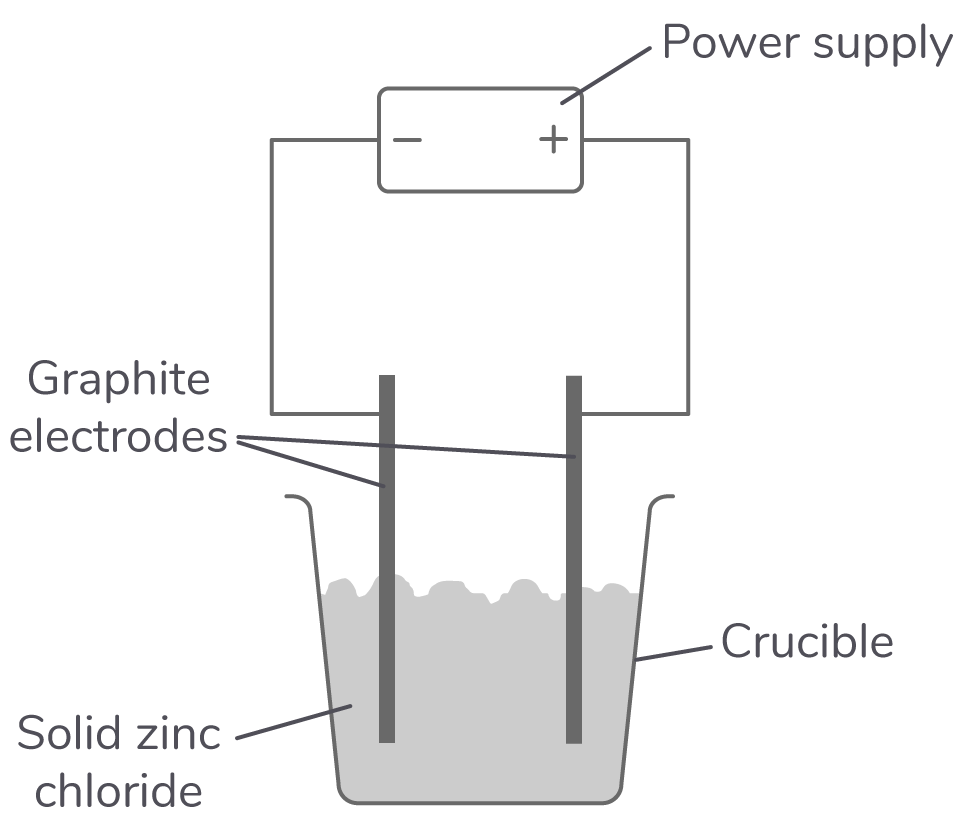
Give two reasons why graphite is used for the electrodes.
The student repeated the investigation using the apparatus shown below.
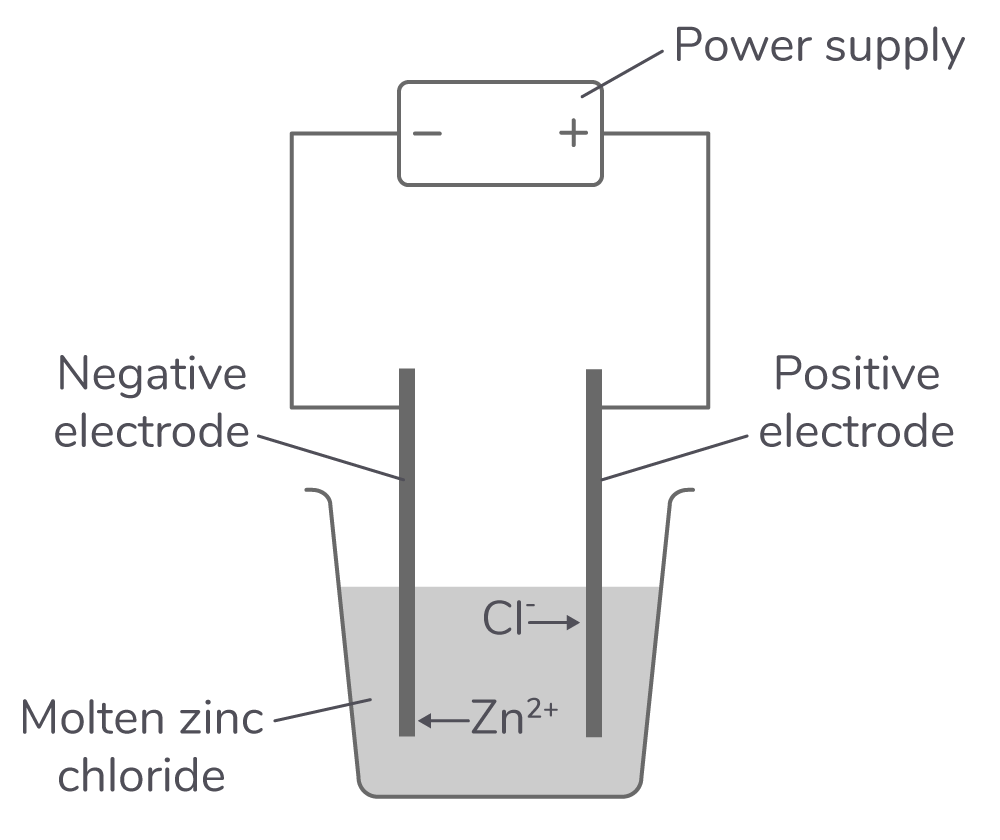
Zinc ions move towards the negative electrode where they gain electrons to produce zinc.
Explain why zinc ions move towards the negative electrode.
What type of reaction occurs when the zinc ions gain electrons?
Name the product formed at the positive electrode.
Copper can be produced from copper sulfate solution by electrolysis.
Copper sulfate solution is an electrolyte.
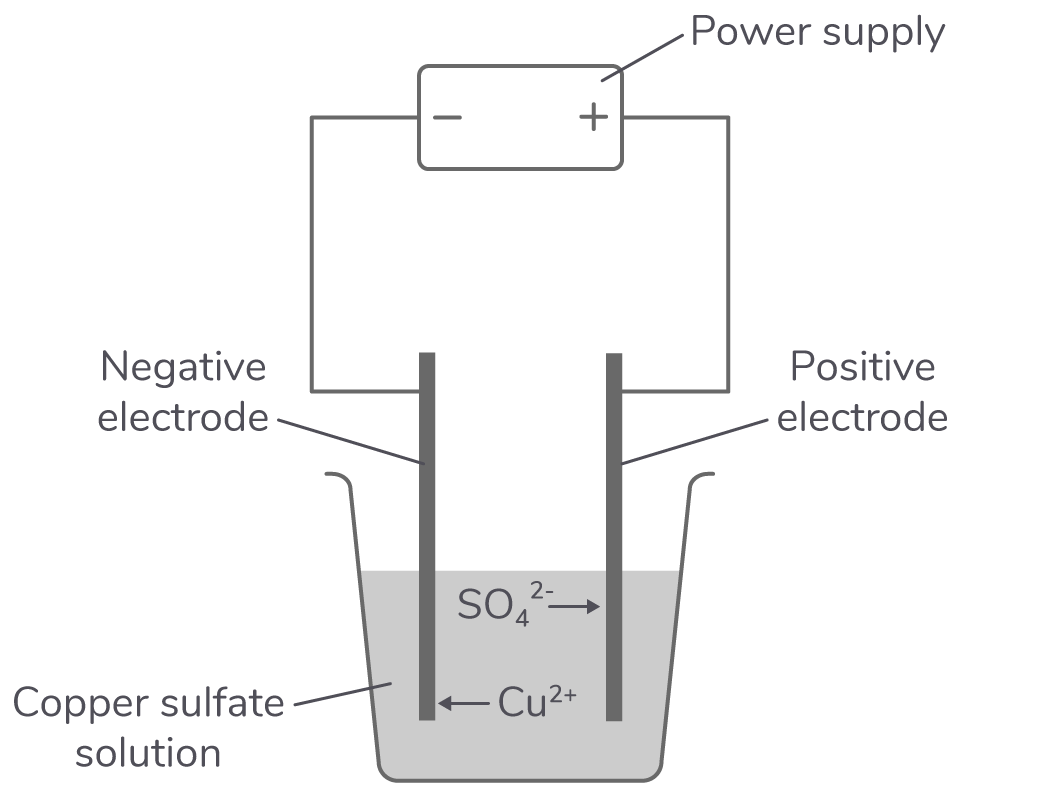
What does 'electrolyte' mean?
Copper forms at the negative electrode, and a gas is given off at the positive electrode.
Why do copper ions go to the negative electrode?
Name the gas given off at the positive electrode and state how a sample of gas can be collected.
Suggest why the blue colour of copper sulphate becomes paler during the investigation.
Suggest two reasons why copper should not be disposed of in landfill sites.