The Periodic Table - exam practice
The Periodic Table
Question 1 of 7
The image below shows some of the elements of the periodic table.
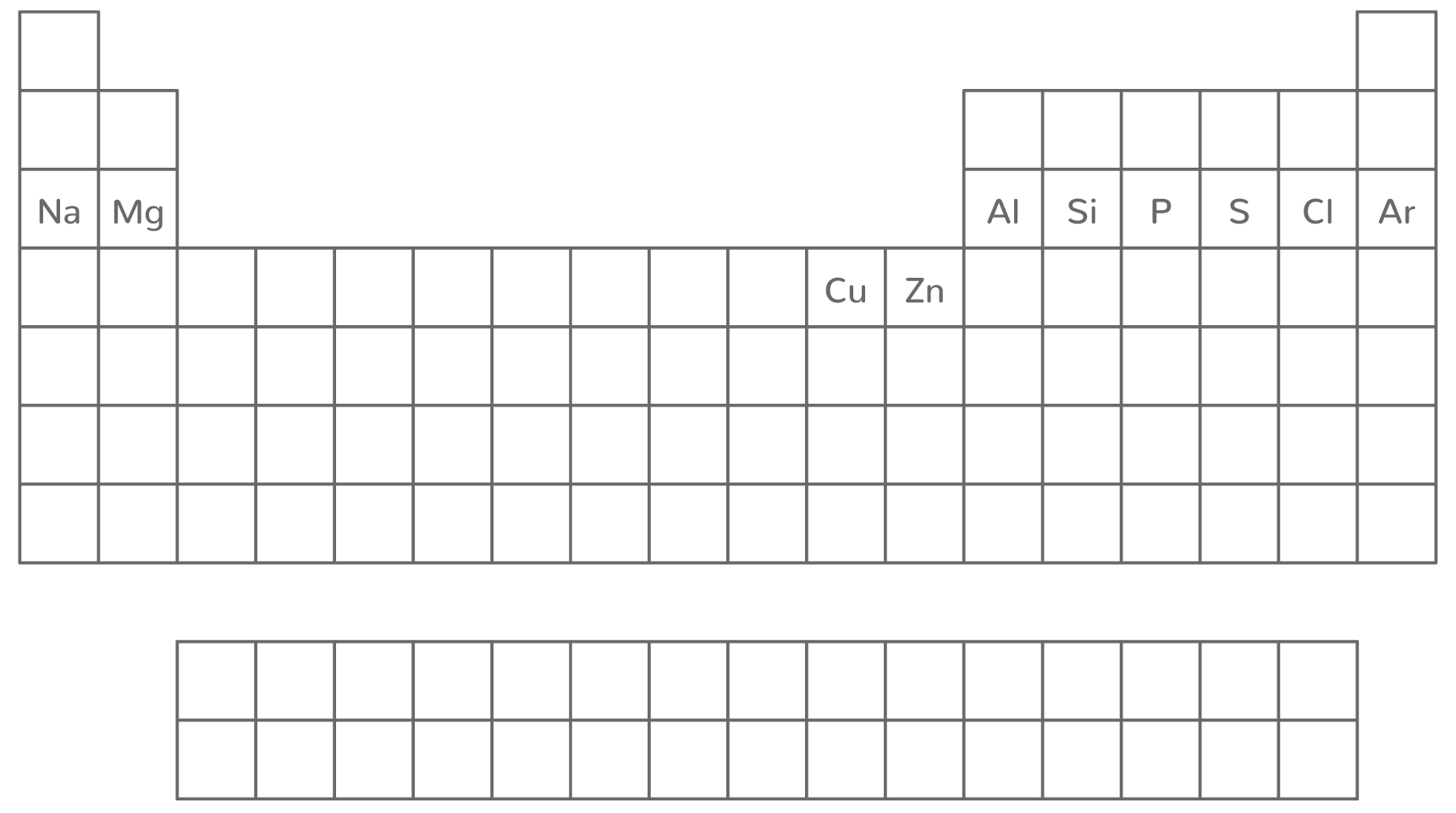
Identify, from the elements in the table, an alkali metal.
Identify, from the elements in the table, a transition metal.
Identify, from the elements in the table, a halogen.
Identify, from the elements in the table, a noble gas.
Identify, from the elements in the table, a group 5 element.
The transition elements are a block of elements between Groups 2 and 3 of the periodic table.
Which three of these statements comparing Group 1 metals and transition metals are correct?
Transition elements have similar properties.
Explain why in terms of electronic structure.
Platinum and gold are transition elements.
Platinum and gold have properties that make them suitable for jewelery.
State two of these properties.
Niobium is a typical transition metal.
Where is niobium in the periodic table?
Choose four properties in the list below that you would expect for niobium.
Give two differences between the physical properties of the elements in group 1 and those of the transition elements.
Transition elements have properties that make them useful.
State a property of copper that allows it to be used for electrical wiring.
Why is iron used to reinforce concrete in buildings?
Transition metals have other useful properties.
Which two of the following are properties of most transition metals?
A student added copper metal to colourless silver nitrate solution.
The student observed pale grey crystals forming and the solution turning blue.
Explain how these observations show that copper is more reactive than silver.
A student is given the task to identify three unlabelled metals, A, B, and C.
The metals are magnesium, copper, and iron.
In order to carry out the investigation, the student is given:
- the three metals, A, B, and C
- dilute hydrochloric acid
Plan an investigation to identify the three metals by comparing their reactions with dilute hydrochloric acid.
Include two control variables in your answer.
In the periodic table, copper and iron are located in a block of metals between groups 2 and 3.
What is the name of this block of metals?
Choose the two phrases that correctly complete the following sentence:
'Compared to magnesium, iron...'
Elements can be divided into two groups, metals and non-metals.
For each of the properties below, state whether they are properties of metals or non-metals.
- brittle
- can be hammered into shape
- dull
- good conductors of electricity
- poor conductors of electricity
- shiny
The image below shows an outline of the periodic table.
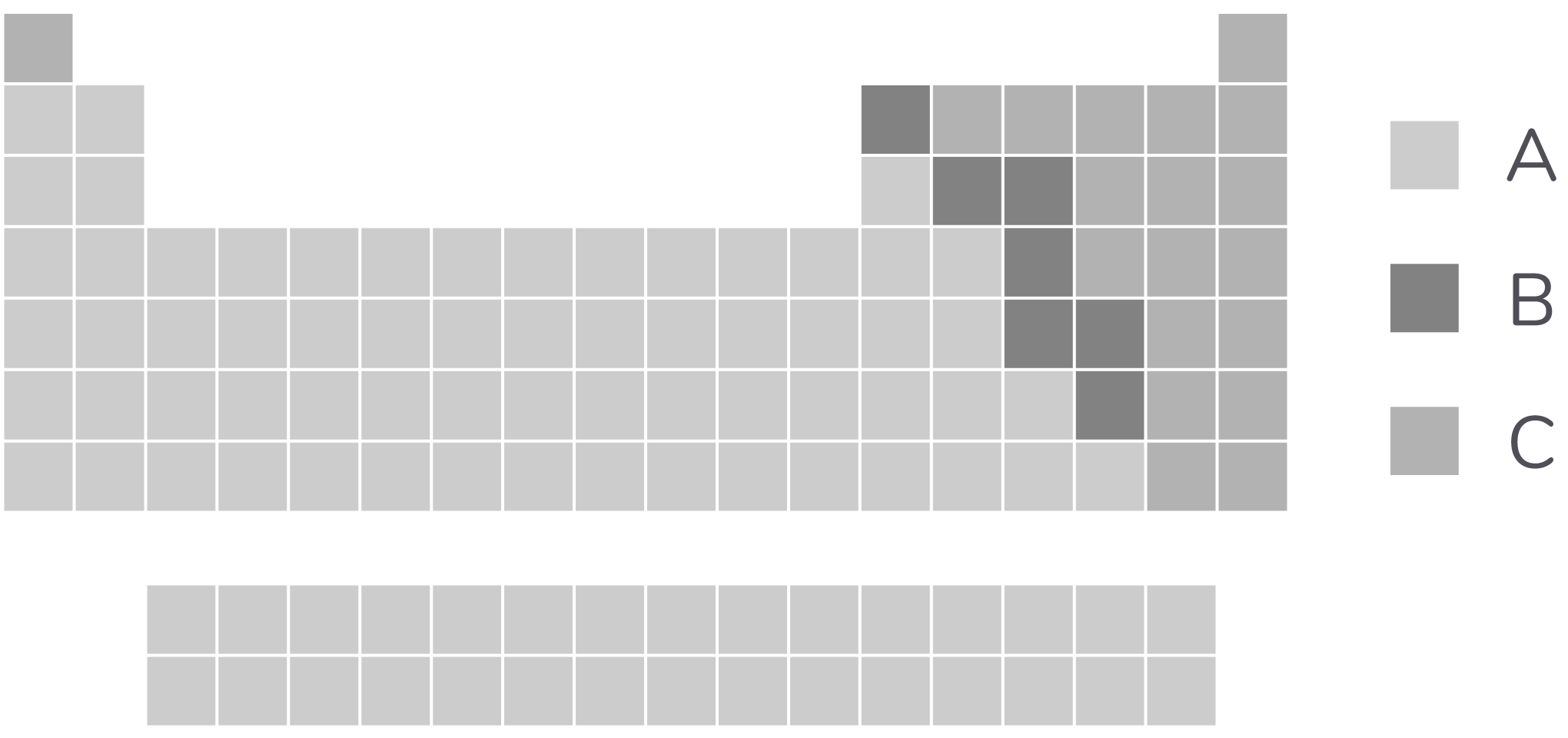
Which section of the periodic table contains metals?
Which section of the periodic table contains non-metals?
Give two differences between the physical properties of the elements in group 1 and those of the transition elements.
Magnesium and calcium are metals in group 2 of the periodic table.
The diagrams show their electronic structures.
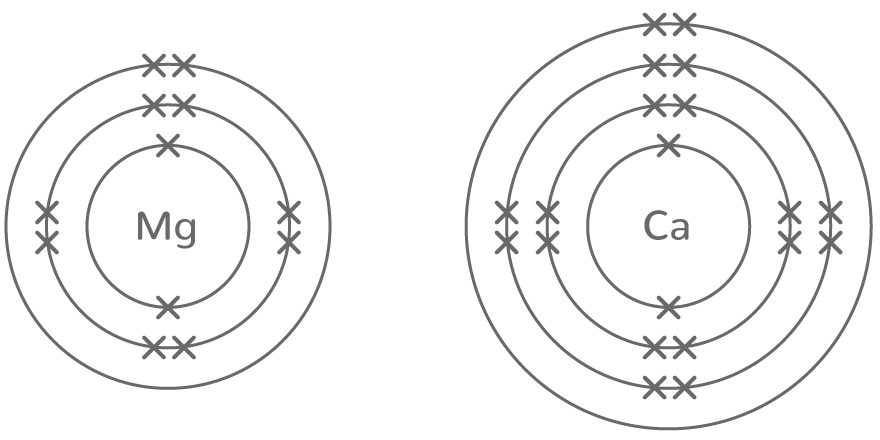
Why do magnesium and calcium have similar chemical properties?
Calcium is more reactive than magnesium.
Suggest an explanation for this in terms of the electronic structure of the two elements.
Beryllium is the first element in group 2.
Beryllium has an atomic number of 4.
Draw the electronic structure of beryllium.