10.1 - Potable Water
What drinking water is, and where it comes from
Potable water (water safe to drink) must meet three conditions:
- The level of dissolved substances is low enough to do no harm
- The pH is between 6.5 and 8.5
- It carries no harmful microbes
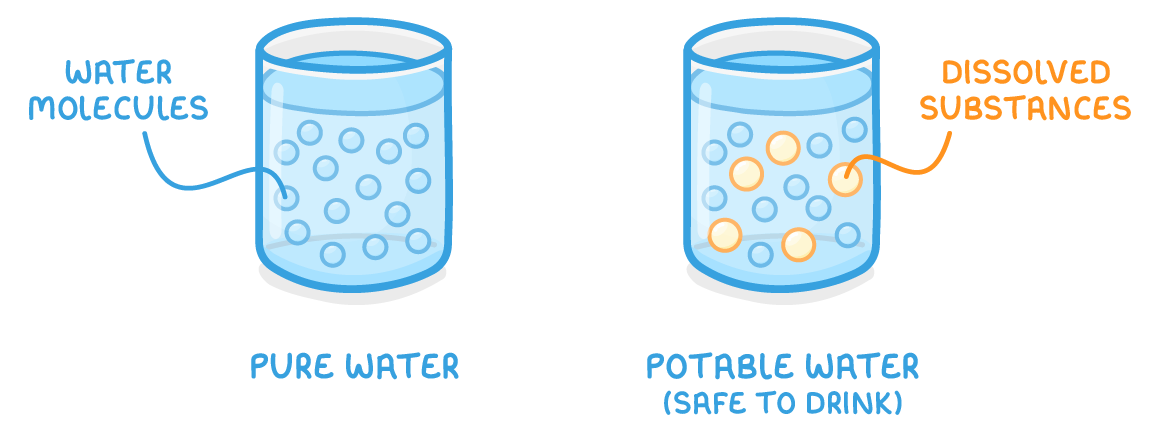
Safe to drink is not the same as pure
- Pure water contains only H2O molecules.
- Potable water is not pure because it contains low levels of dissolved substances (such as dissolved salts).
- Tap water carries dissolved ions (such as calcium, iron, and copper) that can interfere with chemical reactions, so experiments use distilled water (or deionised water).
Where water comes from
- Surface water - Collects in lakes, rivers, and reservoirs. Easy to reach, but exposed to the open air so it picks up solids and microbes and needs more treatment.
- Ground water - Trapped in permeable underground rock (aquifers). The rock acts as a natural filter, so it needs the least treatment.
- Waste water - Water contaminated by human activity that must undergo multiple treatment stages before reuse.
- Sea water - Contains very high concentrations of dissolved salts that cannot be removed by filtering, making it the most energy-intensive to treat.
Treating the domestic water supply
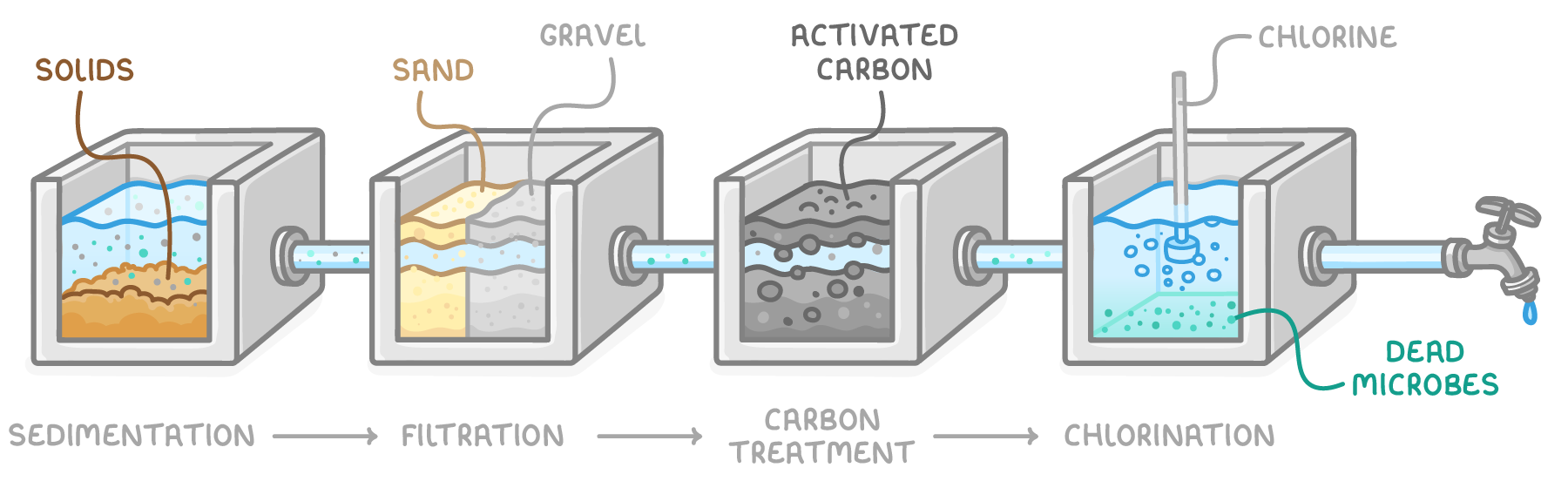
Sedimentation and filtration
- Water sits in a tank so heavy suspended solids sink to the bottom under gravity (sedimentation).
- The water is then passed through beds of sand and gravel to trap smaller solid particles (filtration).
Carbon treatment
- The water passes through a carbon filter.
- The activated carbon adsorbs dissolved substances that cause unpleasant tastes and odours.
Chlorination
Chlorine is added to kill bacteria and other disease-causing microbes.
TermDefinition
Potable water
Pure water
Surface water
Ground water