16.1 - Exothermic & Endothermic Reactions
Exothermic and endothermic reactions
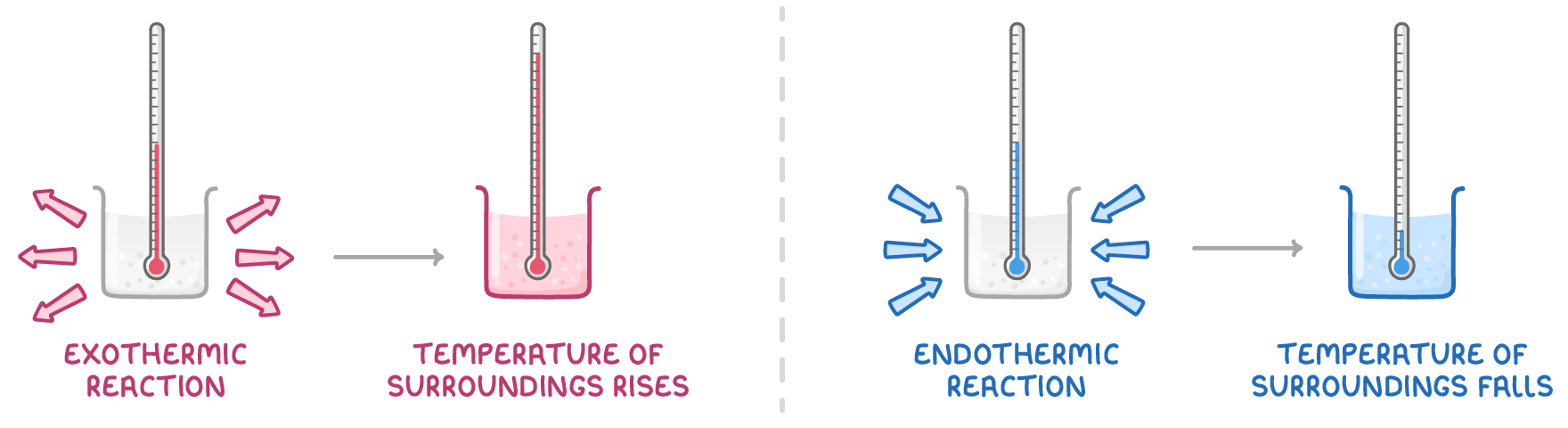
- In an exothermic reaction, heat is given out to the surroundings, so the temperature of the surroundings rises.
- In an endothermic reaction, heat is taken in from the surroundings, so the temperature of the surroundings falls.
Energy is conserved
- Energy can't be created or destroyed, only transferred.
- In an exothermic reaction, the products hold less energy than the reactants because energy was released to the surroundings.
- In an endothermic reaction, the products hold more energy than the reactants because energy was taken in from the surroundings.
Sign of the energy change
- Negative (−) - Energy given out (exothermic).
- Positive (+) - Energy taken in (endothermic).
| Exothermic reaction | Endothermic reaction | |
|---|---|---|
| Energy is | transferred to the surroundings | taken in from the surroundings |
| Temperature of the surroundings | rises | falls |
| Compared with reactants, products | hold less energy | hold more energy |
Neutralisation is exothermic
When an acid reacts with a base or an alkali to produce a salt and water, heat is given out to the surroundings.
Activation energy
- For particles to react, they must collide with sufficient energy.
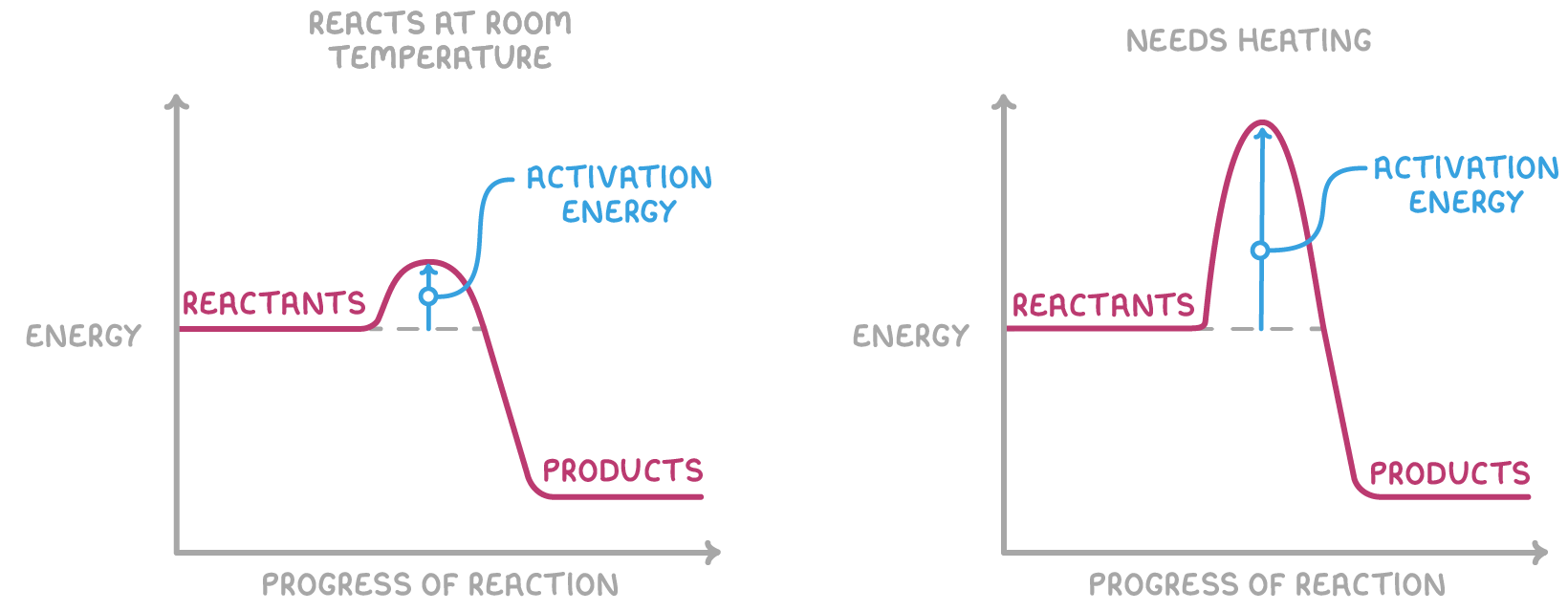
- The activation energy is the minimum amount of energy colliding particles must have for a reaction to occur. In the diagrams below, it's the height of the peak above the reactants' level.
Why there's a minimum energy
Chemical reactions require bonds in the reactants to break, which takes energy.
Size of activation energy
- Small activation energy - Reactions start easily at room temperature because many collisions already carry enough energy.
- Large activation energy - Reactions require energy from outside (usually by heating) so particles collide with enough energy to react.
TermDefinition
Exothermic reaction
Endothermic reaction
Activation energy