10.3 - Waste Water Treatment
Where waste water comes from
Waste water is water that's been used and must be treated before being released into the environment.
Main sources
- Domestic - Waste water from homes (e.g. showers, sinks, and flushing toilets), called sewage.
- Agricultural - Nutrient run-off from fields and animal slurry.
- Industrial - Waste water from chemical processes and factories.
What has to be removed
- Sewage and agricultural waste water contain organic matter and harmful microbes that must be removed so they don't pollute waterways or spread disease.
- Industrial waste water can also contain harmful chemicals (such as toxic metals), requiring extra treatment stages such as:
- Adding chemicals to precipitate dissolved metals out of solution.
- Breaking down harmful chemicals using ultraviolet radiation.
- Using membranes to filter out dissolved substances.
Treating sewage
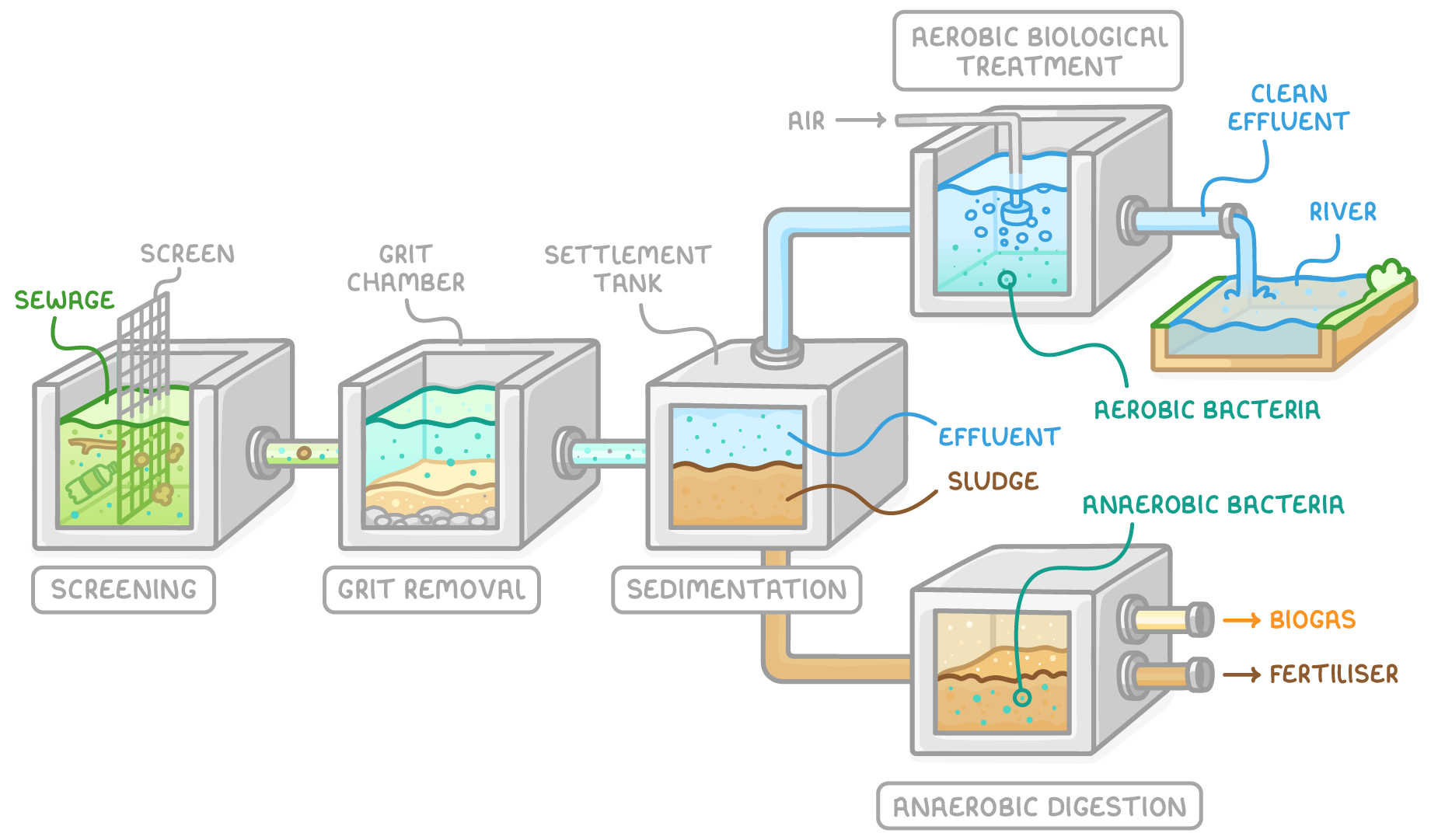
Sewage is cleaned in four stages before it's released back into the environment.
1. Screening and grit removal
- The sewage passes through a screen (a metal mesh) to remove large solids like twigs and plastics.
- It then passes through a grit chamber where grit (sand and small stones) settles out.
2. Sedimentation
- The screened sewage is left to stand in a settlement tank:
- Heavier solids sink to the bottom to form sewage sludge.
- Lighter liquid rises to the top to form the effluent.
- The sludge and effluent are separated and treated differently.
3. Anaerobic digestion of the sludge
- The sludge is transferred to sealed tanks where bacteria break it down by anaerobic digestion (without oxygen).
- This produces:
- Biogas (mainly methane), which can be burned as a fuel to generate electricity.
- Digested waste, which can be dried and used as a fertiliser.
4. Aerobic biological treatment of the effluent
- Air is pumped through the effluent to supply oxygen to aerobic bacteria.
- The bacteria break down remaining organic matter and harmful microbes.
- The treated effluent is then safe to release into rivers or the sea.
TermDefinition
Waste waterWater that's been used and must be treated before being released into the environment.
SewageWaste water from homes, such as showers, sinks, and flushing toilets.
Sewage sludgeThe heavier solids that sink to the bottom of a settlement tank during sewage treatment.
EffluentThe lighter liquid that rises to the top of a settlement tank during sewage treatment.
BiogasA gas, mainly methane, produced by the anaerobic digestion (breakdown by microorganisms without oxygen) of sewage sludge.
Key points to remember
How were these notes?