2.1 - DNA & Chromosomes
DNA, chromosomes and genes
- The genetic information an organism inherits and passes on is stored in a molecule called DNA.
- A DNA molecule is extremely long - far too long to sit loosely inside a cell.
- To fit, it's coiled up very tightly and packaged into structures called chromosomes. Each chromosome is a single molecule of DNA wound up compactly.
- Chromosomes are held in the nucleus of the cell.
Chromosomes come in pairs
- In body cells, chromosomes are normally found in pairs.
- One chromosome of each pair came originally from each parent.
- The two chromosomes in a pair carry information for the same characteristics in the same positions (apart from the X and Y chromosomes of a male).
Genes code for proteins
- A gene is a section of DNA on a chromosome.
- Each gene carries the code for making one particular protein: it sets the order in which amino acids are joined together, and that sequence forms a specific protein.
- The proteins a cell makes determine how the cell behaves and what type of cell it is, so the genes an organism carries control its inherited characteristics.
- An organism has thousands of different genes, each a separate section of DNA coding for its own protein.
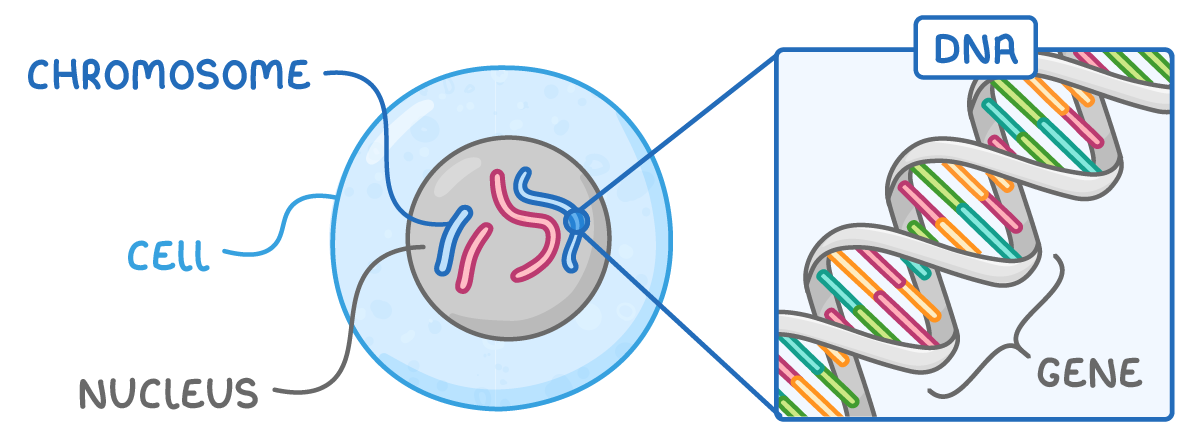
TermDefinition
DNAThe chemical that an organism's genetic material is made from. It stores the information the organism inherits.
ChromosomeA structure made of a long coiled molecule of DNA that carries many genes, found in the nucleus of plant and animal cells.
GeneA section of DNA on a chromosome that codes for a particular sequence of amino acids, to make a specific protein.