4.2 - The Brain
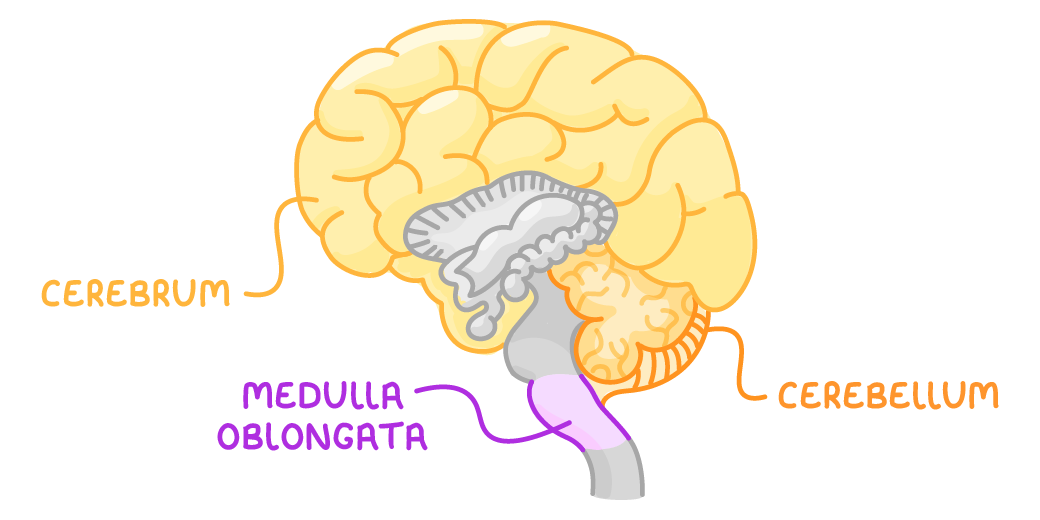
The brain's main regions
- The brain is made up of billions of interconnected neurones. It controls and coordinates everything the body does - from movement and breathing to memory and language.
- Different regions of the brain carry out different functions.
The cerebrum
- The largest part of the brain - the outer, wrinkly layer, whose surface is called the cerebral cortex.
- Divided into two halves called the cerebral hemispheres:
- The right hemisphere controls the muscles on the left side of the body.
- The left hemisphere controls the muscles on the right side.
- Responsible for the most complex behaviours: consciousness, intelligence, memory, and language.
The cerebellum
- A smaller, highly folded structure sitting underneath the cerebrum.
- Responsible for muscle coordination and balance, controlling smooth, coordinated movement.
The medulla
- Also called the medulla oblongata; it is part of the brain stem, found at the top of the spinal cord.
- Controls the unconscious activities of the body - things done automatically, without having to think about them - such as breathing and heart rate.
TermDefinition
CerebrumThe large, outer part of the brain responsible for complex behaviours such as consciousness, intelligence, memory, and language.
CerebellumA folded structure in the brain responsible for muscle coordination.
MedullaA structure in the brain that controls unconscious activities such as breathing and heart rate.