8.5 - Bacterial & Protist Diseases
Chlamydia
- Chlamydia is caused by a bacterium (Chlamydia trachomatis).
- It's a sexually transmitted disease - passed on during sexual intercourse.
- It often causes no symptoms, so it can go untreated. Left untreated, it can lead to infertility.
Treatment and prevention
- Treatment - Antibiotics.
- Prevention - Using a condom during sex reduces its spread.
Malaria
- Malaria is caused by a protist called Plasmodium - a single-celled parasite.
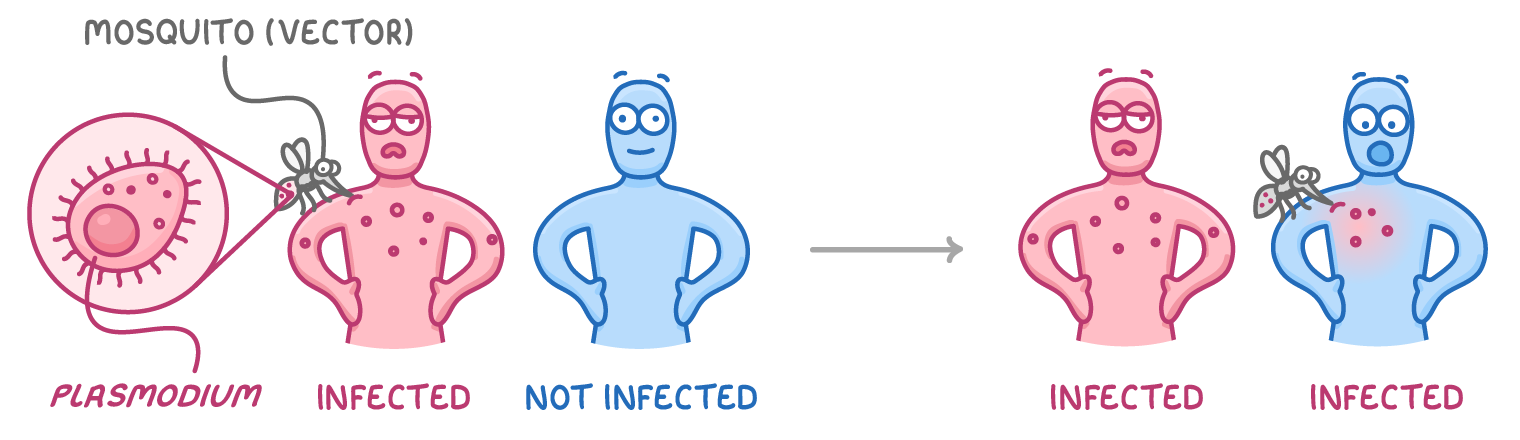
- It's spread from host to host by mosquitoes acting as vectors (organisms that carry a pathogen from one host to another without getting the disease themselves).
How malaria is spread
- A mosquito feeds on the blood of an infected animal and picks up the protist.
- When it next bites, it injects the protist into the blood of a new host.
Effects on the body
- Inside the body, the protist destroys red blood cells.
- In serious cases it also damages the liver.
- This causes recurrent episodes of fever, and malaria can be fatal.
Reducing the spread
- Stopping the mosquitoes breeding.
- Killing them with insecticides.
- Stopping them biting people, using mosquito nets and insect repellent.
TermDefinition
Sexually transmitted infection (STI)
Vector (disease)