1.11 - Oxygen Debt
Oxygen debt and recovery
- During very vigorous exercise, the muscles can't get enough oxygen to meet their energy demand by aerobic respiration alone, so they also respire anaerobically.
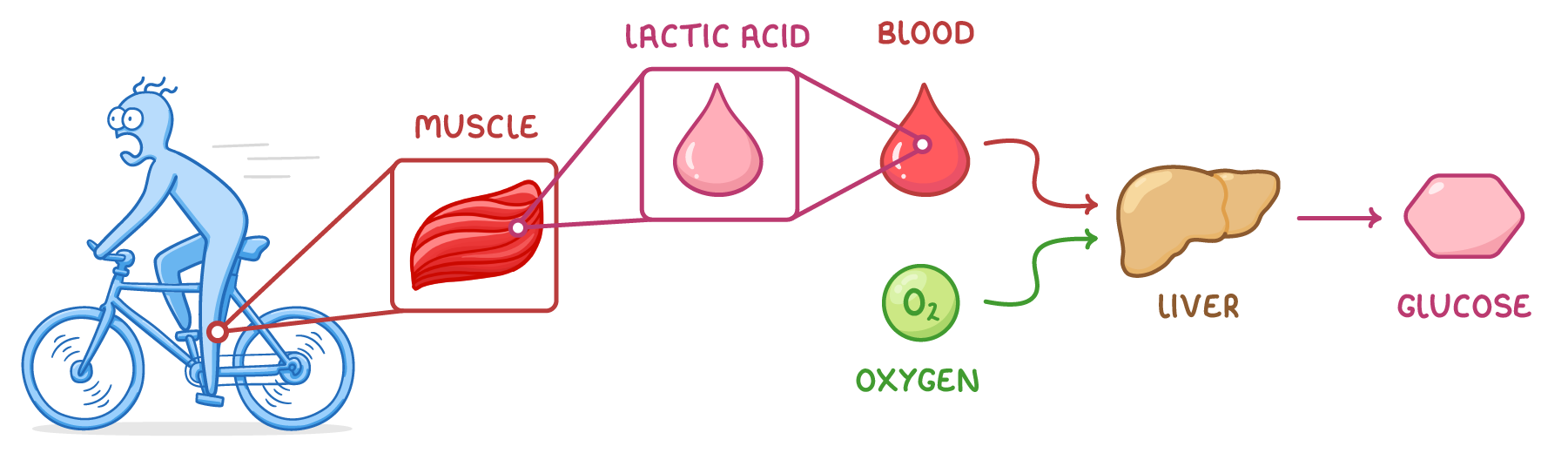
- Anaerobic respiration only partly breaks down glucose and releases far less energy. It produces lactic acid, which builds up in the muscles and in the blood.
- When exercise stops, this build-up has to be cleared - and clearing it needs oxygen.
Oxygen debt
- The oxygen debt is the amount of extra oxygen the body needs after exercise to react with the accumulated lactic acid and remove it from the cells.
- To repay the debt after stopping:
- Breathing rate and depth of breathing stay high for a while, taking in extra oxygen. The deep breathing supplies the oxygen.
- Heart rate also stays high, keeping the blood moving so it carries the lactic acid away from the muscles.
Clearing the lactic acid
- The blood transports the lactic acid to the liver.
- In the liver, the lactic acid is broken down using oxygen (aerobic respiration) and converted back into glucose.
- Pulse and breathing rate stay raised until the lactic acid and the extra carbon dioxide have been cleared, at which point they return to normal.
TermDefinition
Oxygen debt