2.5 - Genetic Engineering
What genetic engineering and GM organisms are
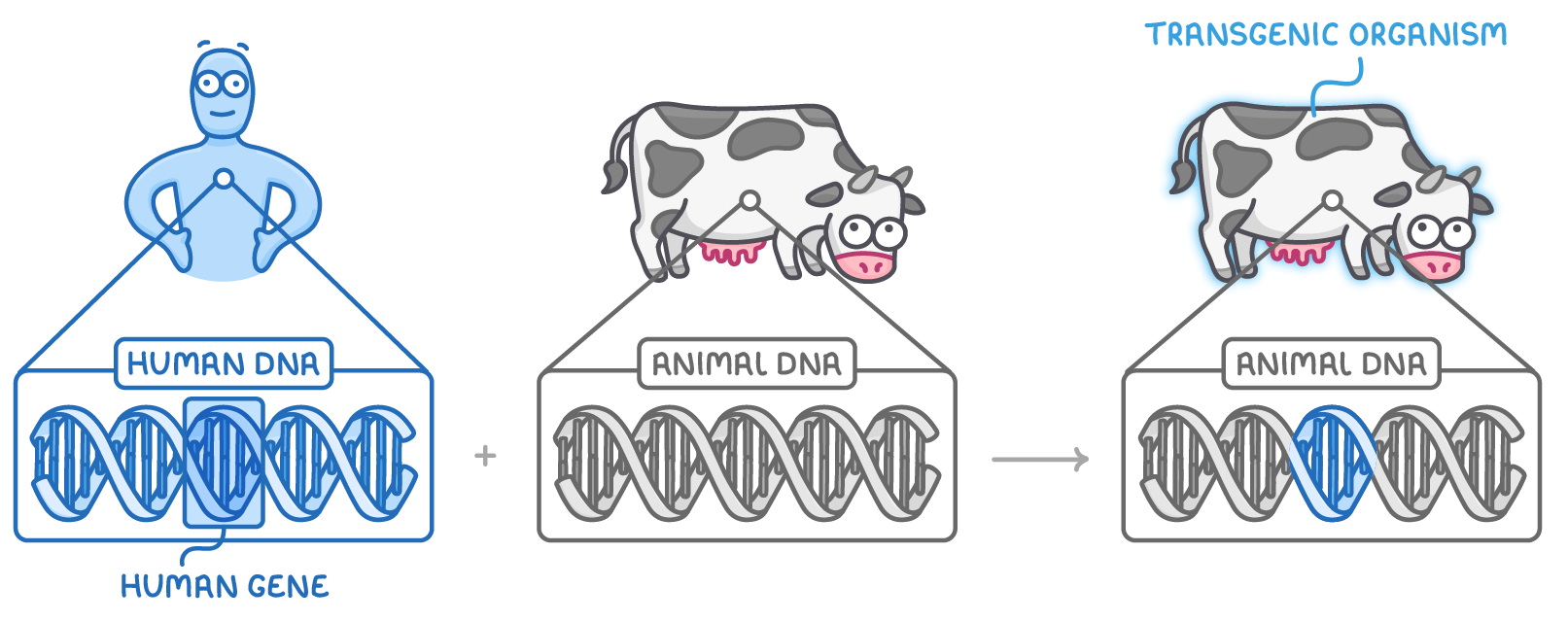
- Genetic engineering (also called genetic modification) is the transfer of a gene for a desirable characteristic from one organism's genome into another organism, so the second organism develops that characteristic.
- The genome is the complete set of genetic material in an organism.
- Genetic engineering changes the genome by removing, changing, or inserting individual genes - most often by adding a gene taken from a different organism.
GM and transgenic organisms
- An organism changed in this way is described as genetically modified (GM).
- Because the gene often comes from a different species, it's also called a transgenic organism - one that contains genes brought in from another type of organism.
- You can have transgenic bacteria, animals, and plants.
- Sometimes the gene is transferred while the organism is at an early stage of development (such as an egg or embryo), so the whole organism grows with the new characteristic in all its cells.
How genetic engineering is used
- Bacteria - Modified to make human insulin to treat diabetes
- Crops - Modified to resist insects, herbicides, or disease, or to improve the size and quality of their fruit
- Sheep - Modified to make useful substances such as drugs in their milk
The genetic-engineering process
- Genetic engineering transfers a gene from one organism into another, following a set sequence of stages.
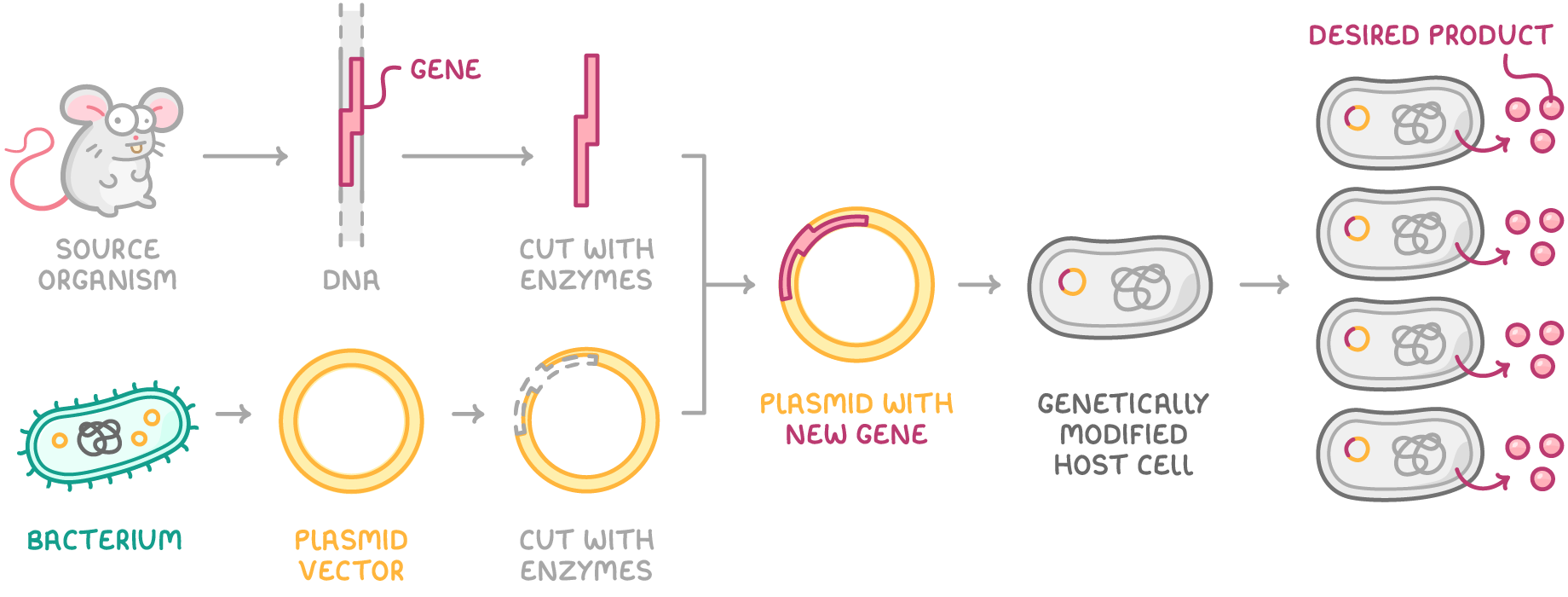
- A vector is a carrier that transfers the gene into a cell. Either a plasmid (a small ring of DNA taken from a bacterium) or a virus can be used.
- Enzymes are used to cut out the gene and to insert it into the vector.
The stages
- The gene for the desired characteristic is identified on the chromosome of the source organism and cut out of its DNA using enzymes.
- A plasmid is taken from a bacterium, and the gene is inserted into it using enzymes. The plasmid acts as the vector (a virus can be used instead).
- The vector carries the gene into the cells of the organism being modified, where the gene becomes part of those cells' DNA.
- The modified organism now contains the new gene, so it can make the product or show the characteristic the gene codes for.
Using bacteria as the host
- When the host is a bacterium, it reproduces to give millions of identical cells.
- Every one of these cells carries and uses the inserted gene, so they all make the desired product.
TermDefinition
Genetic engineeringThe process of changing an organism's genome, usually by inserting a gene from another organism, to give it a desired characteristic.
Transgenic organismAn organism that contains genes transferred from a different species.
Vector (genetic engineering)A carrier, such as a plasmid or a virus, used to transfer a gene into a host cell.
PlasmidA small ring of DNA, separate from the main chromosome, found in bacteria and often carrying extra genes.