5.4 - The Heart & Circulatory System
Heart structure and the pathway of blood
- The heart is a muscular organ that pumps blood around the body, acting as a one-way pump.
- Its walls are made of muscle, which contracts to force blood out.
- Inside are valves that make blood flow in one direction only, by preventing backflow.
The four chambers and the septum
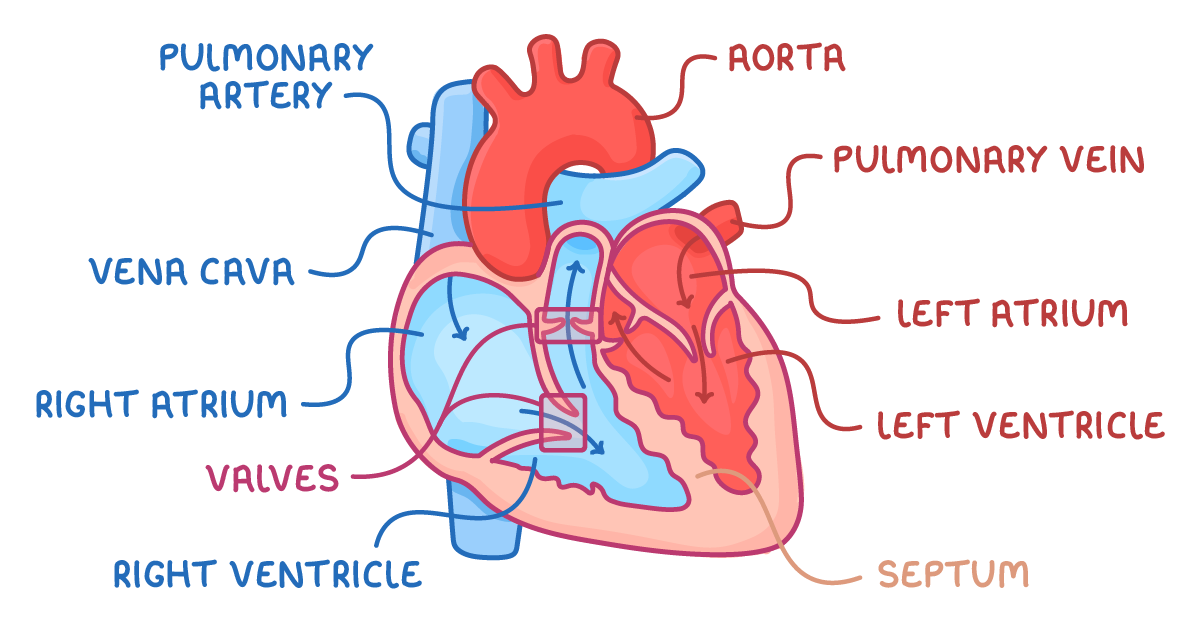
- The heart has four chambers:
- Left and right atrium at the top
- Left and right ventricle below
- The septum is the wall separating the left and right sides. It keeps the blood on the two sides apart.
Why the left ventricle wall is thicker
- The two ventricles do not have equally thick walls.
- The left ventricle has a much thicker, more muscular wall than the right ventricle.
- This is because:
- The left ventricle pumps blood all the way around the body
- The right ventricle only pumps blood the short distance to the lungs
- The thicker muscle lets the left ventricle generate the higher pressure needed.
The pathway of blood through the heart
- The right atrium receives blood from the vena cava; the left atrium receives blood from the pulmonary vein.
- The atria contract and push blood into the ventricles below them.
- The right ventricle contracts and pumps blood into the pulmonary artery towards the lungs.
- The left ventricle contracts and pumps blood into the aorta towards the rest of the body.
- The valves open and close as the chambers contract, so blood can only move forwards.
The heart muscle itself is supplied with oxygenated blood by the coronary blood vessels, which run over its surface.
Double circulation
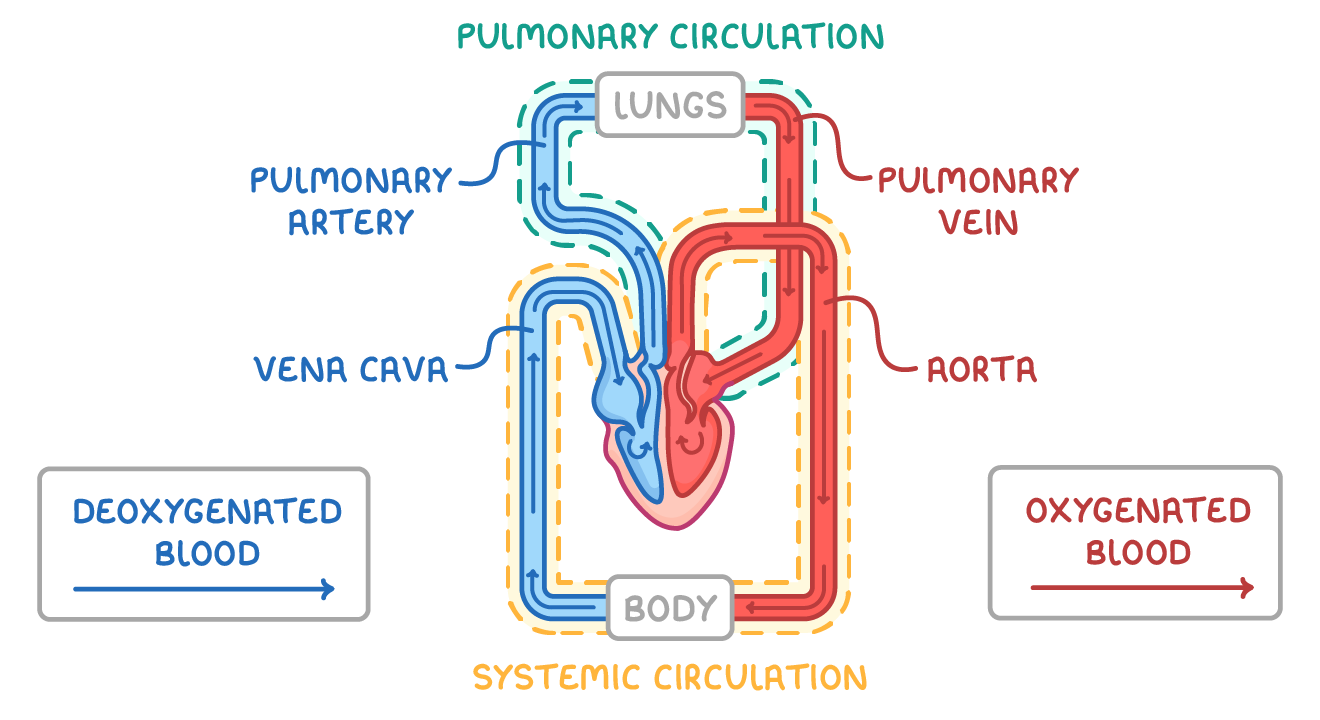
- Humans have a double circulatory system - two separate circuits joined together at the heart.
- The blood passes through the heart twice for each complete circuit of the body.
- The two circuits are:
- Pulmonary circuit (the pulmonary circulation) - Carries blood to the lungs
- Systemic circuit (the systemic circulation) - Carries blood to the rest of the body
How the two circuits work
- The right side of the heart pumps deoxygenated blood to the lungs.
- In the lungs the blood takes in oxygen, becomes oxygenated, and returns to the heart.
- The left side of the heart pumps this oxygenated blood out to all the other organs of the body.
- There the blood gives up its oxygen to the body cells, becomes deoxygenated, and returns to the heart - ready to be pumped to the lungs again.
Why the blood returns to the heart between circuits
- It can be given a fresh push at high pressure for the journey around the body.
- This means blood can be pumped to the tissues quickly and deliver plenty of oxygen.
TermDefinition
SeptumThe wall separating the left and right sides of the heart that keeps the blood on the two sides apart.