Respiration - exam practice
Respiration
Question 1 of 6
Respiration in human cells can happen aerobically or anaerobically.
Both processes release energy from glucose.
Draw one line from each type of respiration in human cells to the correct information.
One type of respiration in humans is aerobic respiration.
What is the correct word equation for aerobic respiration?
In which cellular organelle does aerobic respiration take place?
Energy is released in respiration.
Give two uses of this energy.
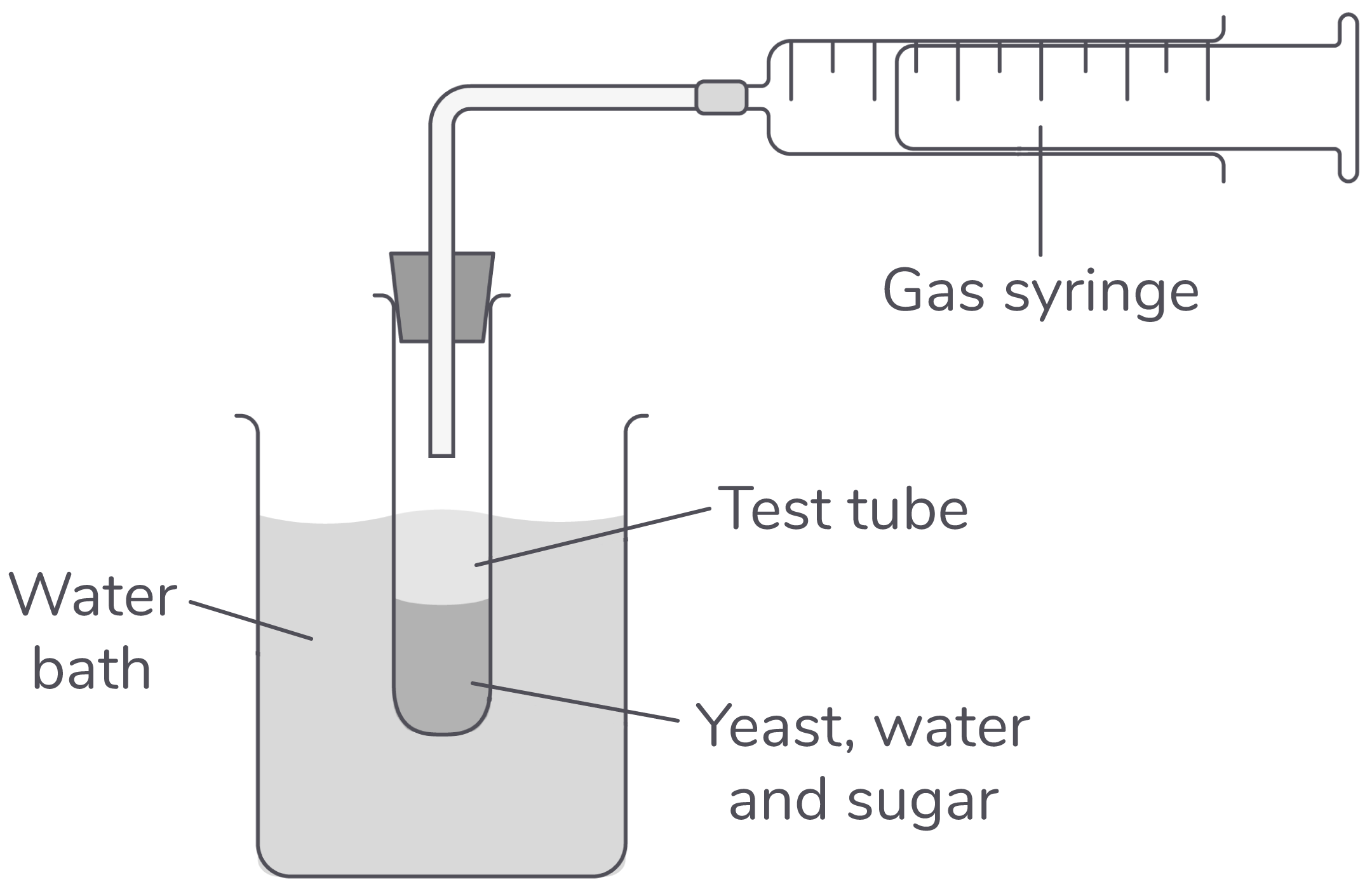
A scientist investigated respiration in a species of yeast.
The scientist followed the method below.
- Add 10 cm3 of a yeast and water mixture to 4 test tubes.
- Add different masses (0, 2, 4 and 6g) of sugar to each tube and mix gently.
- Place the test tubes in a water bath at 25 °C.
- Over the next 20 minutes, record the volume of gas released in each test tube.
The table shows the student’s results.
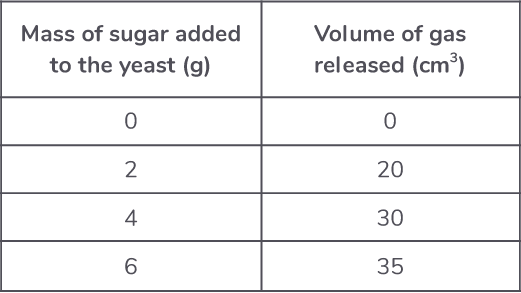
Which two variables did the scientist control in the method?
In the investigation, the scientist recorded the volume of gas released when the yeast respires. Which gas is released?
There was no gas released in the tube with 0 g of sugar.
Suggest a reason for this result.
Which of the following is another substance produced when yeast respires anaerobically?
Anaerobic respiration in yeast is also called fermentation.
Give one use of fermentation in the food industry.
When we breathe, our blood transports the oxygen from our lungs to cells in our body, where aerobic respiration takes place.
Complete the word equation for aerobic respiration.
glucose + → carbon dioxide +
Where does the glucose needed for respiration come from?
When oxygen is not available, our muscles can perform anaerobic respiration.
Name two differences between aerobic and anaerobic respiration in humans.
Do not refer to oxygen in your answer.
A student used the apparatus pictured below to investigate aerobic respiration in plants.
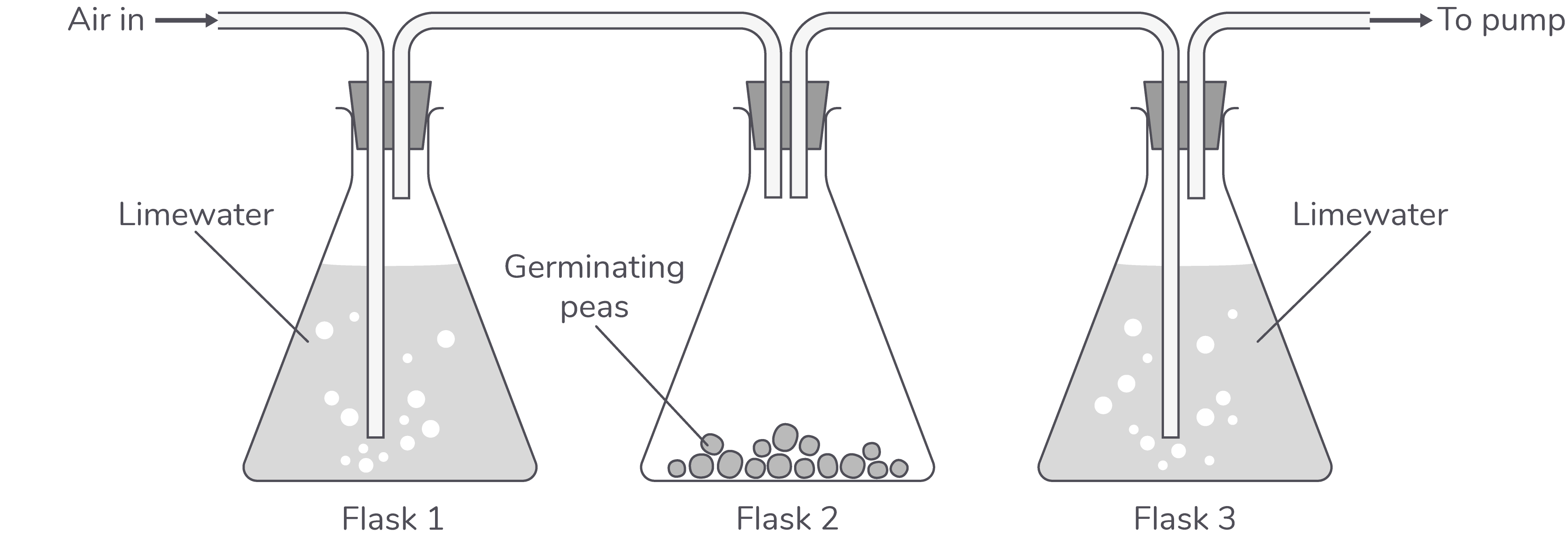
Limewater is an indicator for carbon dioxide because limewater turns cloudy in the presence of carbon dioxide.
After a few minutes the limewater in flask 1 was still colourless, but the limewater in flask 3 was cloudy.
Explain why.
Flask 1 acts as a control in this experiment.
Why do scientists use controls?
The student repeated the investigation with dead boiled peas.
Predict what will happen to the limewater in flasks 1 and 3 after 10 minutes.
Plant cells can also respire anaerobically.
What are the two products of anaerobic respiration in plants?
Micrograph 1 shows cells in muscle tissue.
Micrograph 2 shows an organelle inside a muscle cell.
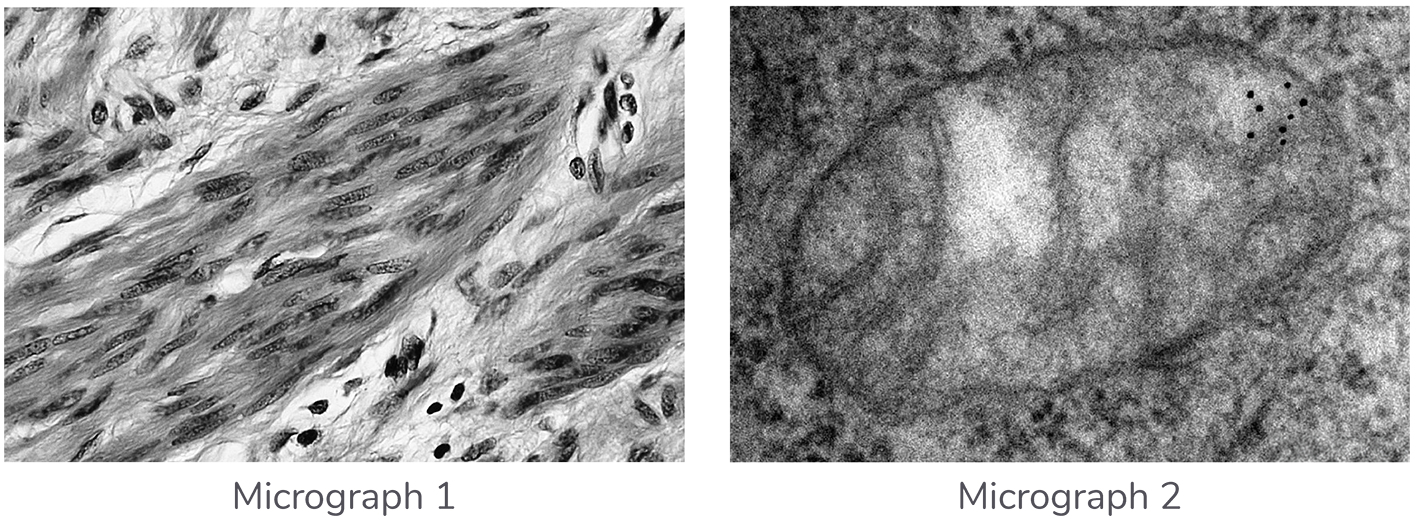
Micrographs 1 and 2 were obtained using different types of microscopes.
Which type of microscope was used to obtain micrograph 2?
Explain your answer.
The sub-cellular structure shown in micrograph 2 is where aerobic respiration happens.
What is the name of this organelle?
Complete the word equation for aerobic respiration.
+ oxygen → + water (+ energy)
The organelle shown in micrograph 2 uses oxygen.
Explain how oxygen is transported from the blood to the organelle.
A student performed an experiment to investigate anaerobic respiration in yeast cells.
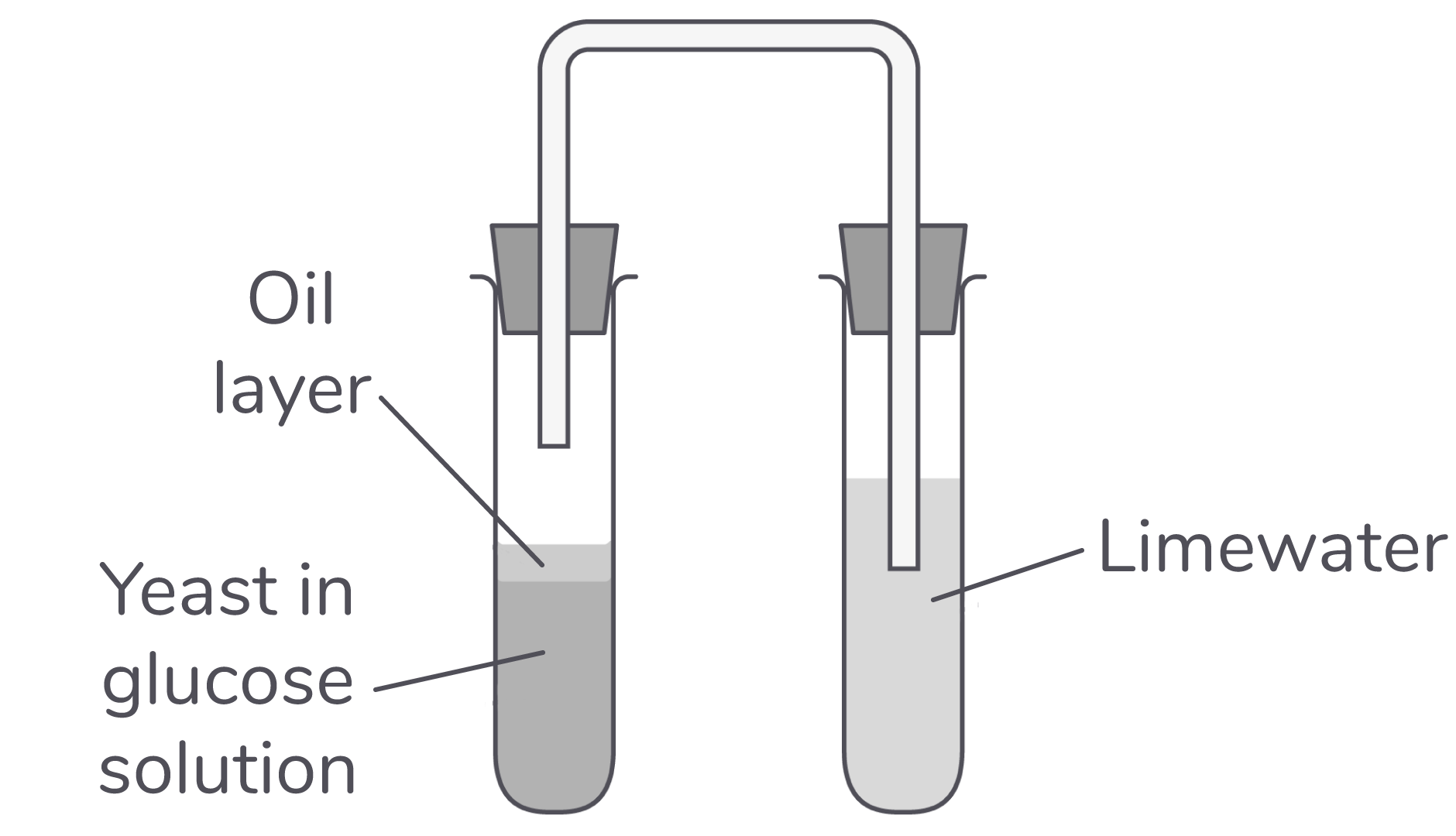
Why did the student add a layer of oil to the test tube containing the yeast and glucose solution?
Suggest how the student could modify his method to ensure his results are reproducible.
How does anaerobic respiration in yeast differ from anaerobic respiration in muscle cells?