Cell Structure & Microscopy - exam practice
Cell Structure & Microscopy
Question 1 of 6
Plants are made up of different types of cells.
The diagram below shows a root hair cell and leaf palisade cell.
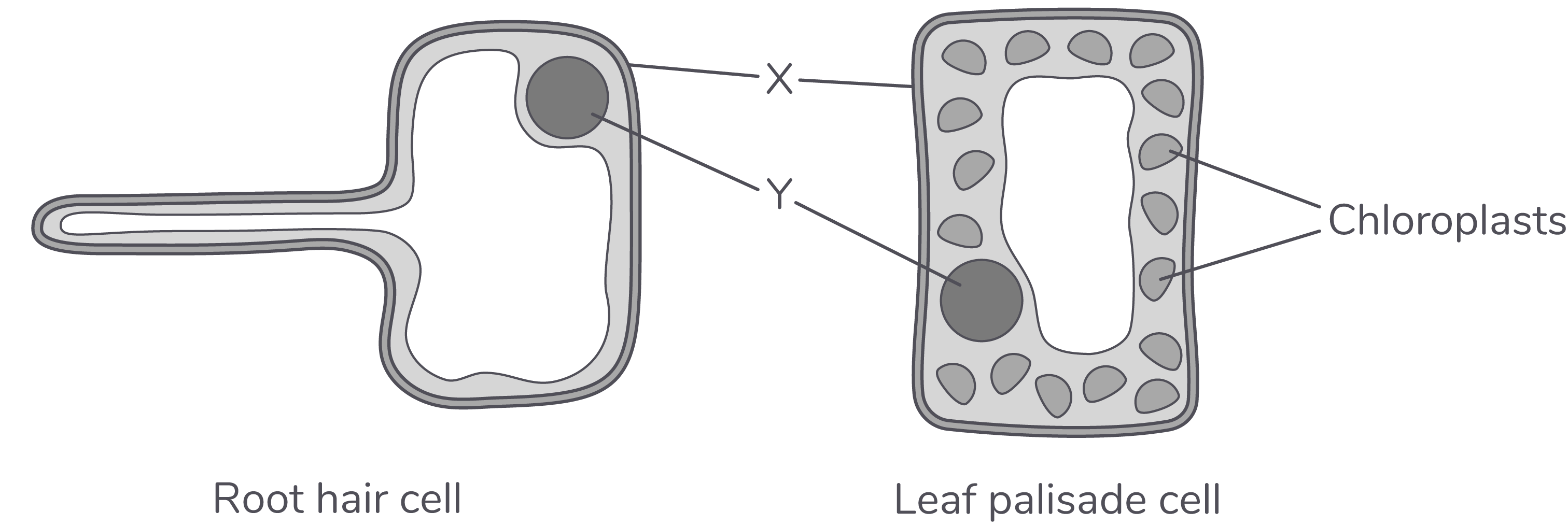
What is the name of the structure labelled X?
State the function of structure X.
What is the name of the structure labelled Y?
State the function of part Y.
The root hair cell and the leaf palisade cell are examples of plant cells.
State the similarities and differences between plant and animal cells.
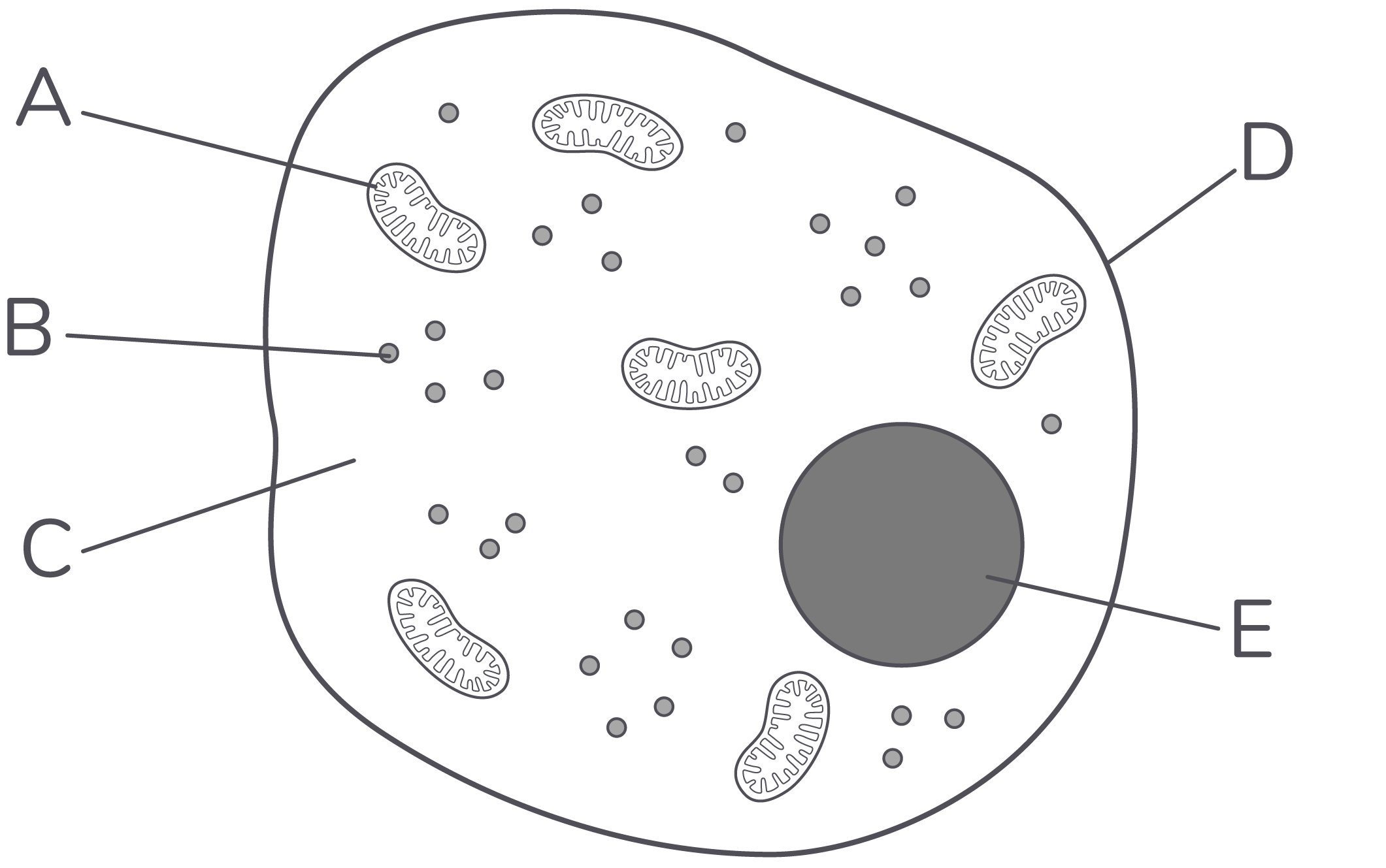
The diagram below shows the structure of an animal cell.
Name structures A to E in the diagram below.
Name two structures found in plant cells that are not present in animal cells.
Describe the function of the structures identified in part b).
Both animal cells and plant cells are eukaryotic cells.
Animal and plant cells have differences as well as similarities.
Tick the boxes in the table to indicate whether the structures are found in animal cells, plant cells or both.
Match the organelle to its function.
The diagram below shows a cell.
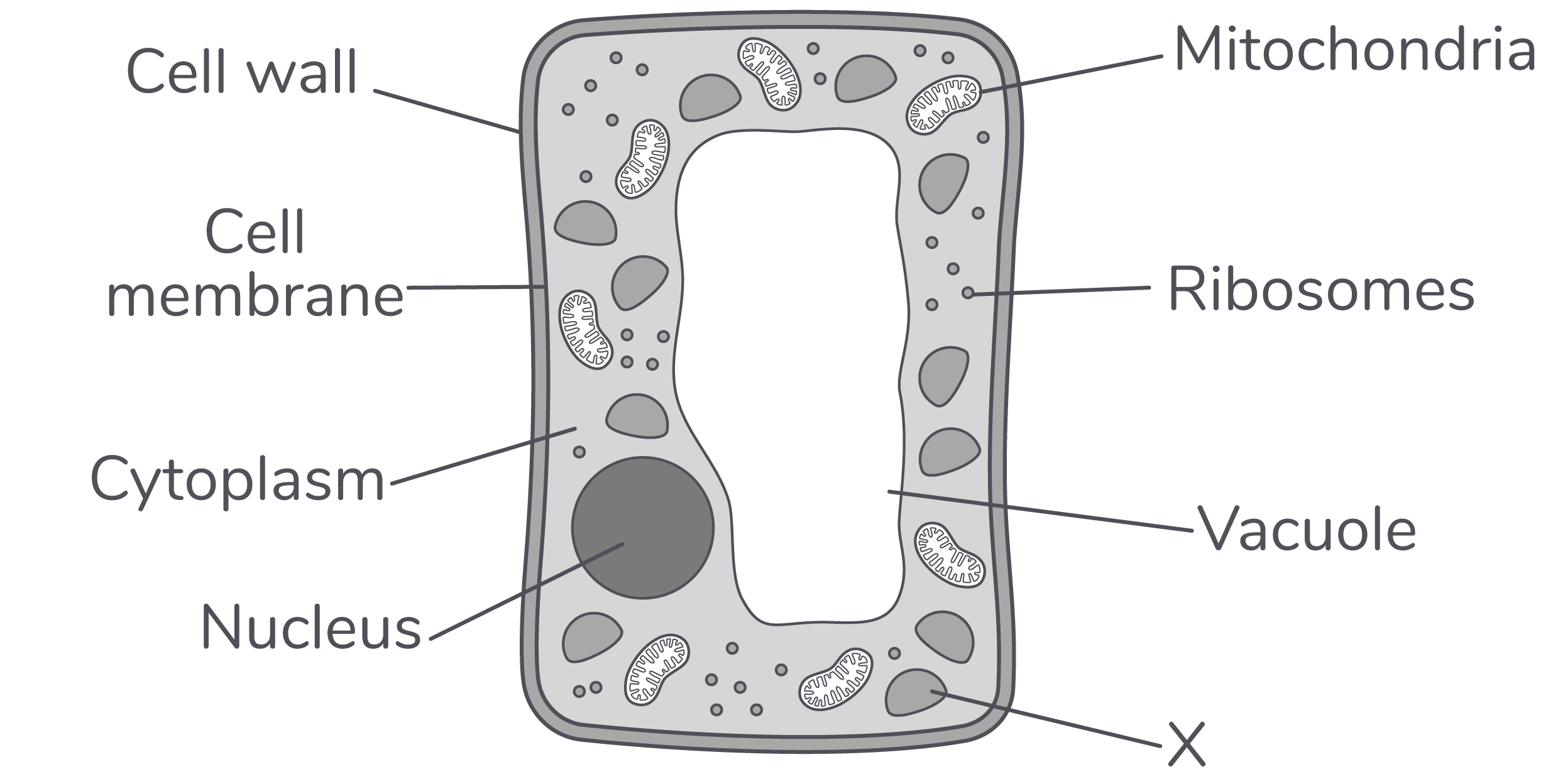
What type of cell is represented in the figure above?
Name structure X.
Give one function of organelle X.
How is a prokaryotic cell different from the cell in the drawing?
The figure below shows a bacterial cell and a yeast cell.
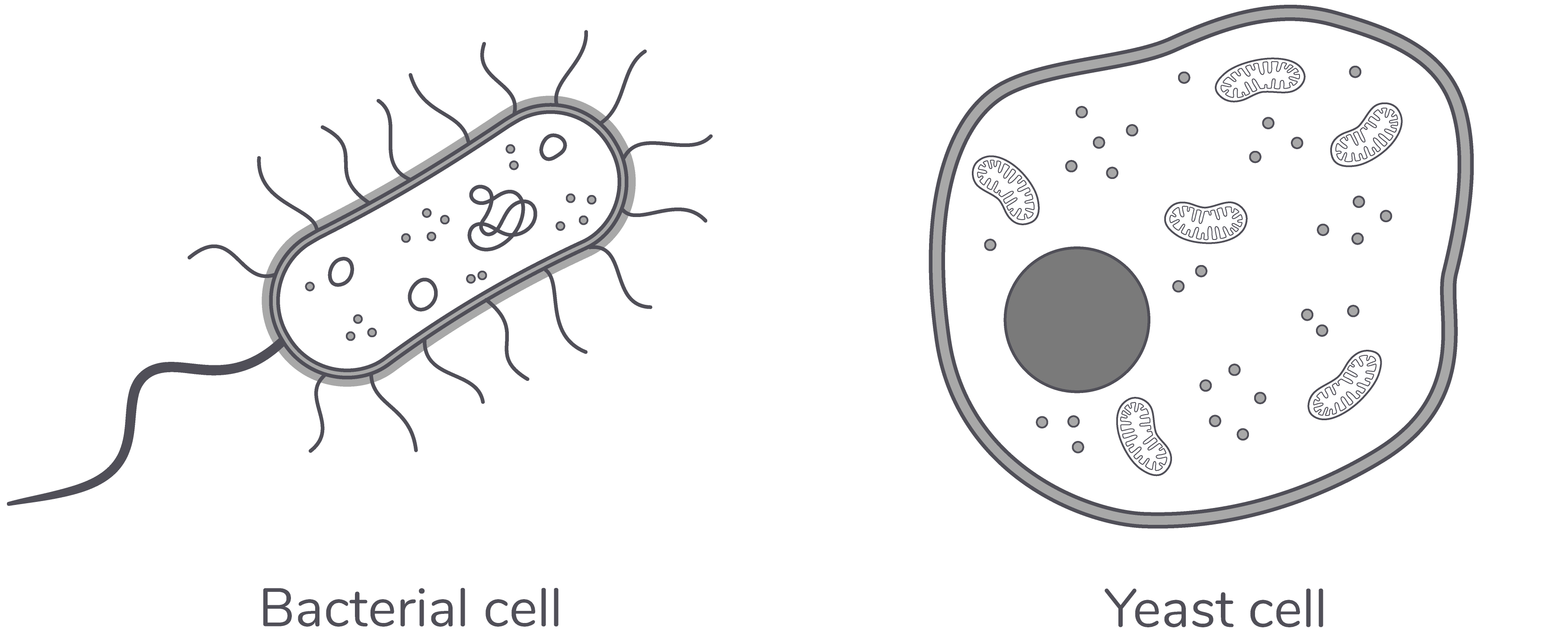
Use the figure above and your own knowledge to compare and contrast the two types of cells.
Select the correct statement(s) about yeast from the list below.
A flagellum is a microscopic hair-like organelle used by cells and microorganisms for movement.
Eukaryotic flagella, like the ones in sperm cells, are very different from the flagella of prokaryotes such as bacteria.
Give three other differences between bacterial and the animal cells.
Bacteria are prokaryotes.
Name the other type of prokaryotic cell.
Viruses are not considered living organisms.
Explain why.