5.17 - Diabetes
What diabetes is, and Type 1 versus Type 2
- Diabetes is a condition that affects the body's ability to control its blood glucose level - it's what happens when the normal blood-glucose control mechanism fails.
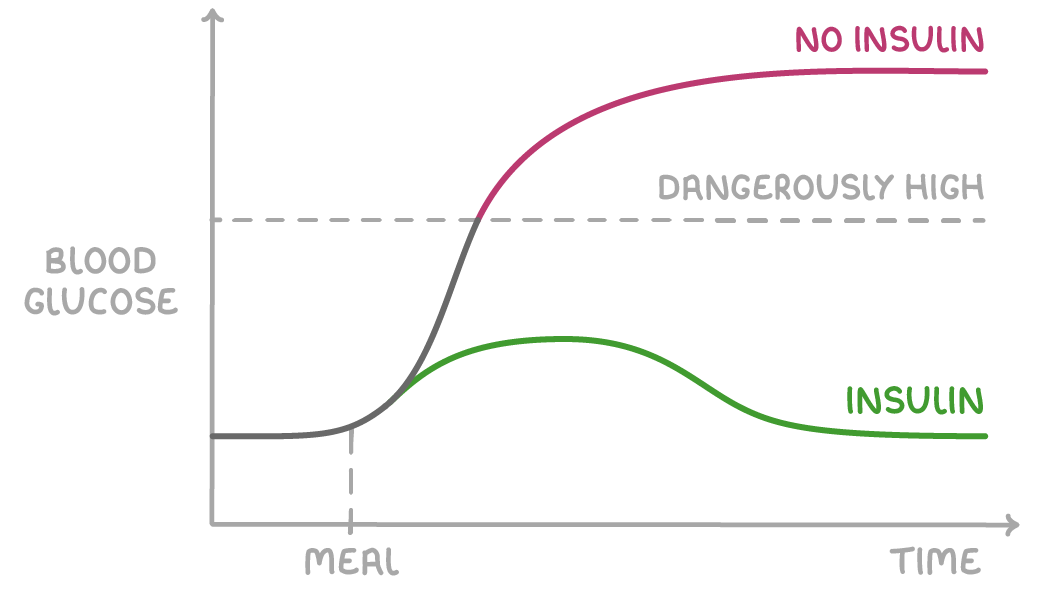
- Without treatment, the blood glucose level can rise to a dangerously high point.
- There are two types - Type 1 and Type 2 - with different underlying causes.
Type 1 diabetes
- The pancreas produces very little or no insulin.
- Insulin is the hormone that lowers a high blood glucose level, so a person who can't make it has no way of bringing their blood glucose down.
- After a meal containing carbohydrate, the level can rise to a point that is dangerous and can kill them.
- It usually begins early in life, often in childhood, and is not caused by lifestyle.
Type 2 diabetes
- The pancreas may still produce insulin, but the body's cells become resistant to it - they no longer respond properly to the hormone.
- In some cases the pancreas also stops producing enough insulin.
- Either way the insulin can no longer do its job, so the blood glucose level rises to a dangerous level.
- It usually develops in adulthood and is a progressive condition linked to lifestyle.
- Being overweight increases the risk - obesity is a major risk factor.
Signs and complications
- Signs that someone has diabetes:
- High blood glucose concentration
- Glucose appearing in the urine
- Tiredness (lethargy)
- Thirst
- If left poorly controlled over a long time, it can lead to serious complications:
- Damage to the eyes (and even blindness)
- Heart disease and strokes
- Kidney damage
Treating and controlling diabetes
- Diabetes cannot be cured, but it can be managed.
- The two types are managed in different ways because they have different causes.
Treating Type 1 diabetes
- Treated with insulin therapy - the body makes little or no insulin of its own, so insulin has to be put into the blood from outside by injection.
- Usually means several injections through the day, most often at mealtimes. This removes the extra glucose absorbed from a meal quickly once the food is digested, stopping blood glucose from rising too high.
- A careful diet and regular exercise also help to control it, and the amount of insulin needed depends on the person's diet and how active they are.
- Injecting too much insulin can send the blood glucose dangerously low.
Controlling Type 2 diabetes
- Often controlled without insulin, at least at first, because the body still makes some insulin.
- Managed by:
- Eating a healthy, carbohydrate-controlled diet
- Getting regular exercise
- Losing weight if needed
- Reducing sugar intake and avoiding obesity
- As the condition progresses, some people also need:
- Medication - Including drugs that improve how the body's cells respond to insulin
- Later, insulin injections
The rising cost of diabetes
- The number of people with diabetes is rising rapidly, and the cost of treating it is becoming very high.
- Most of the increase is in Type 2 diabetes, and it is linked to lifestyle - in particular poor diet and a lack of exercise.
TermDefinition
Type 1 diabetesA condition in which the pancreas produces little or no insulin.
Type 2 diabetesA condition in which the body's cells become resistant to insulin and no longer respond properly to it.
Insulin therapyA treatment for diabetes that involves injecting insulin to lower the blood glucose level.
Key points to remember
How were these notes?