2.12 - Cardiovascular Disease
Coronary heart disease
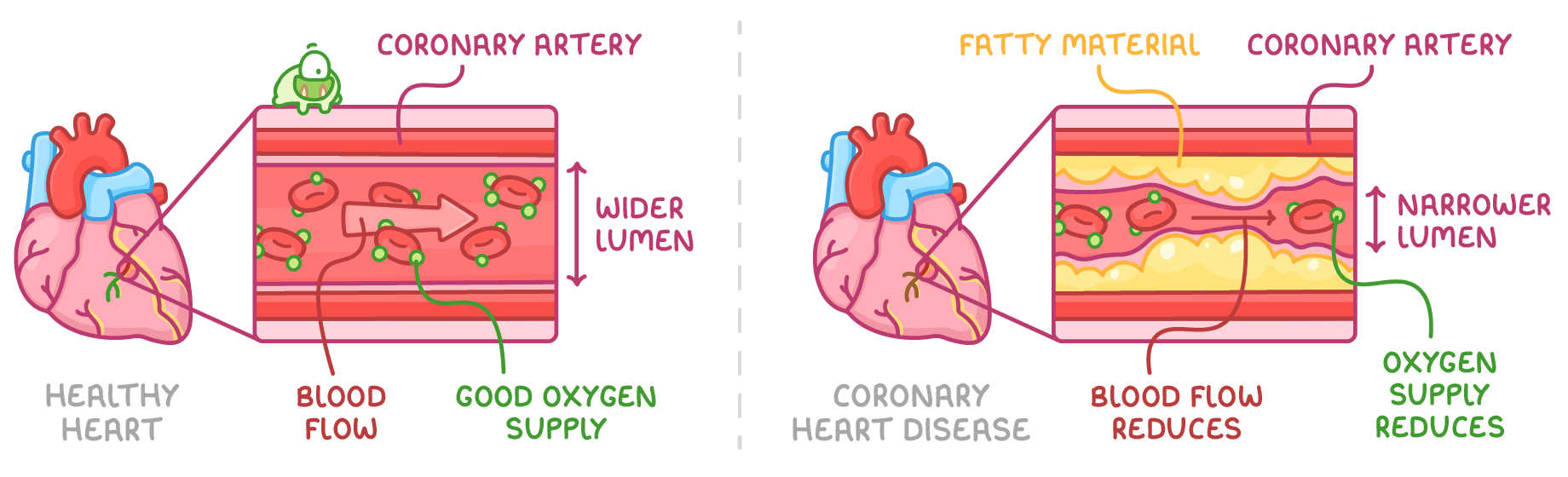
- The coronary arteries branch from the base of the aorta and run over the surface of the heart, supplying the heart muscle itself with oxygen-rich blood so it can keep contracting.
- Coronary heart disease is what happens when these arteries become blocked.
How the arteries become blocked
- Over time, layers of fatty material build up on the inside walls of the coronary arteries.
- This narrows the space inside them (the lumen), so blood flow through the arteries is restricted and less oxygen reaches the heart muscle.
- The heart muscle needs a constant supply of oxygen to respire and keep working, so this lack of oxygen puts the heart under strain.
Heart attacks and strokes
- The fatty deposits can harden and damage the artery wall. A piece breaking off can trigger a blood clot.
- If a clot blocks a coronary artery completely, the heart muscle beyond the blockage is cut off from blood altogether, causing a heart attack - part of the heart muscle is starved of oxygen and its cells die.
- The same kind of blockage can happen in the blood vessels supplying the brain. There it cuts off oxygen to the brain cells, which die, resulting in a stroke, with reduced brain function.
- A number of risk factors, including smoking, raise a person's chance of developing the disease.
Treating cardiovascular disease with lifestyle changes
- Cardiovascular disease can be treated in three broad ways: lifestyle changes, medication, and surgery.
- These are often used together, and each has its own balance of benefits and drawbacks.
- Lifestyle changes are usually tried first.
A person may be advised to:
- Eat a healthy diet low in saturated fat
- Exercise regularly
- Stop smoking
These changes lower the risk of developing the disease and form part of the treatment once someone has it.
Benefits and drawbacks
- Advantage - They have almost no harmful side effects.
- Drawback - They take a lot of self-discipline to keep up.
Drug treatments for cardiovascular disease
- The main medication used to treat cardiovascular disease is a group of drugs called statins.
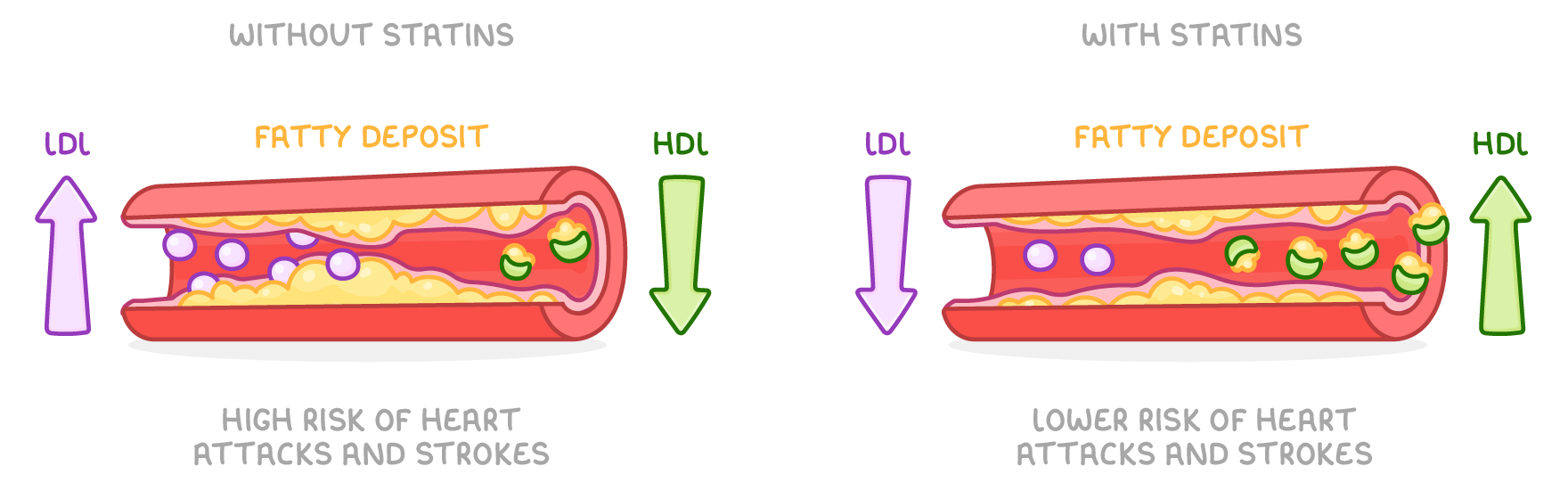
- Statins change the balance of cholesterol in the blood.
How statins work
- They reduce the amount of 'bad' (LDL) cholesterol, which slows the build-up of fatty deposits in the arteries.
- They can raise the level of 'good' (HDL) cholesterol, which helps remove the bad type.
- This lowers the overall risk of heart attacks and strokes.
Drawbacks of statins
- They must be taken regularly over years.
- They take time to work.
- They can cause side effects, ranging from headaches to liver or kidney damage.
Surgical treatments for cardiovascular disease
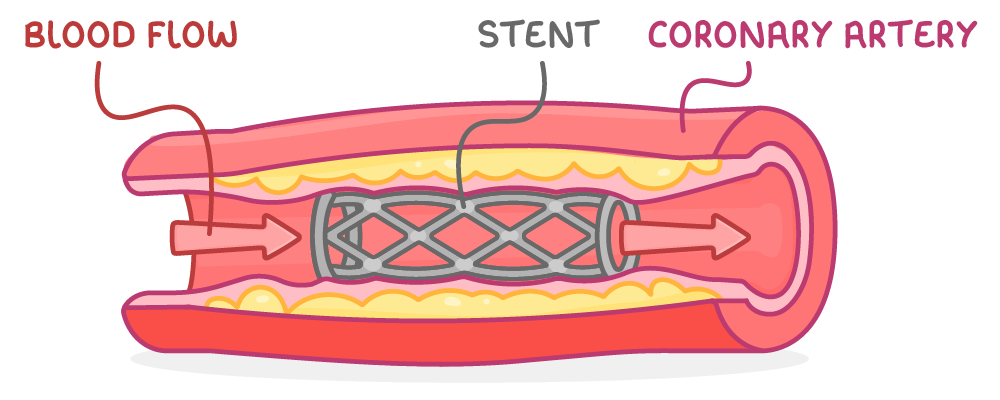
- A stent is used to open up a narrowed coronary artery.
- It is an expandable tube placed inside the artery to hold it open.
- This keeps blood flowing to the heart muscle, so the risk of a heart attack falls.
Advantages and disadvantages of stents
| Advantages | Disadvantages |
|---|---|
| Work for a long time. | Carry the usual surgical risks of an operation. |
| Recovery is fairly quick. | A blood clot (thrombosis) can form near the stent. |
TermDefinition
Coronary arteryA blood vessel that supplies the heart muscle with oxygen-rich blood.
Coronary heart diseaseA disease in which layers of fatty material build up inside the coronary arteries, narrowing them and reducing the blood supply to the heart muscle.
StatinA drug that lowers the level of cholesterol in the blood, slowing the build-up of fatty deposits in the arteries.
StentAn expandable tube placed inside a narrowed artery to hold it open.
Key points to remember
How were these notes?