5.5 - Blood
Red blood cells and oxygen transport
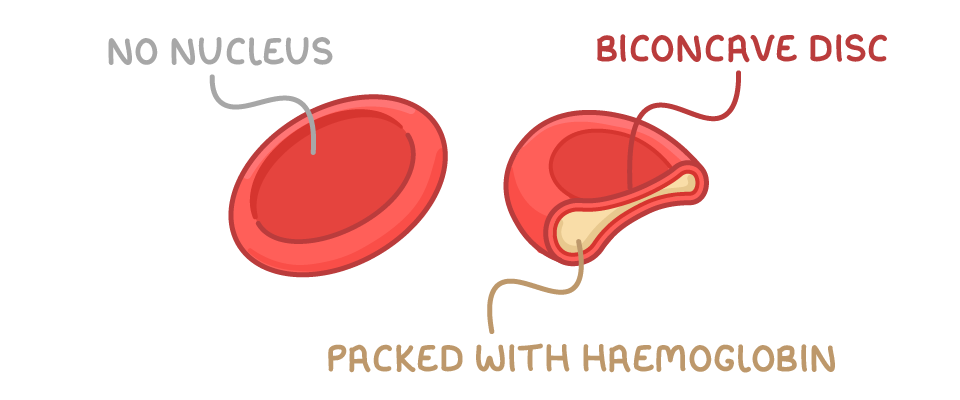
- Red blood cells (also called erythrocytes) carry oxygen from the lungs to all the cells in the body.
- Each cell is packed with a red pigment called haemoglobin, which contains iron and gives blood its colour.
How the cells are adapted
- Small, with a biconcave disc shape - A disc pushed in on both sides (a little like a doughnut), giving a large surface area for absorbing and releasing oxygen.
- No nucleus - Leaves more room inside the cell to carry oxygen.
- Packed with haemoglobin - Provides the pigment that binds the oxygen.
Binding and releasing oxygen
- In the lungs, where there is a lot of oxygen, haemoglobin binds to oxygen to form oxyhaemoglobin.
- In the body tissues, the reverse happens: oxyhaemoglobin splits back into haemoglobin and oxygen, releasing the oxygen to the cells that need it.
White blood cells and the body's defence
- White blood cells defend the body against infection.
- They are usually larger than red blood cells and, unlike red blood cells, they do have a nucleus.
- When the body has an infection, white blood cells multiply to fight it off - so a blood sample taken during an infection shows a raised white blood cell count.
The two main types
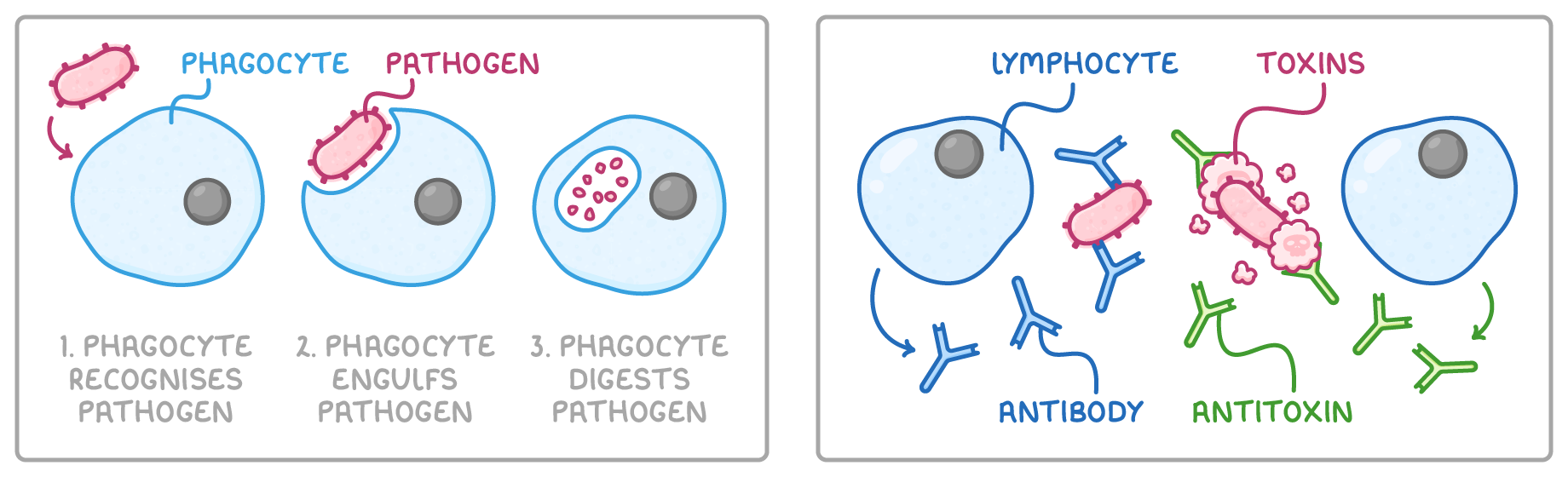
- Phagocytes - Change shape to engulf and digest unwelcome microorganisms, a process called phagocytosis.
- Lymphocytes - Produce proteins called antibodies that act against microorganisms. Some also produce antitoxins that neutralise the toxins microorganisms make.
How antibodies work
- Each antibody is specific to a particular pathogen.
- It recognises and binds to that pathogen's specific antigen.
Platelets and blood clotting
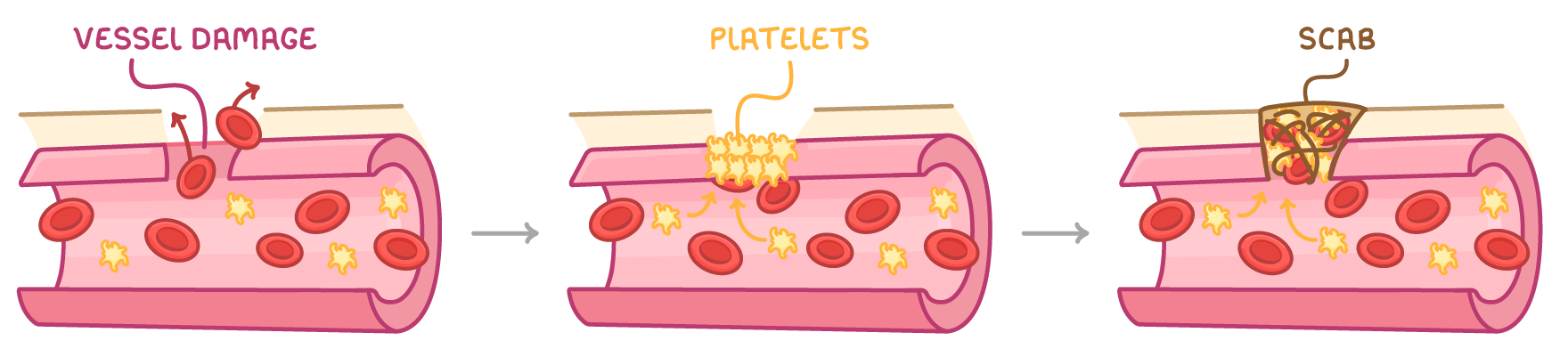
- Platelets are small fragments of cells - they have no nucleus.
- Their job is to help the blood to clot.
- Platelets carry proteins on their surface that help them stick to each other and to the wound site.
How a clot forms
- When a blood vessel is damaged, platelets gather at the wound and clump together to plug the damaged area - this is the basis of blood clotting.
- They help to form the scab that seals the cut.
Why clotting matters
- A clot stops too much blood being lost from the wound.
- It also stops microorganisms getting in through the broken skin.
- Someone short of platelets bleeds and bruises more easily than normal.
Plasma and what it transports
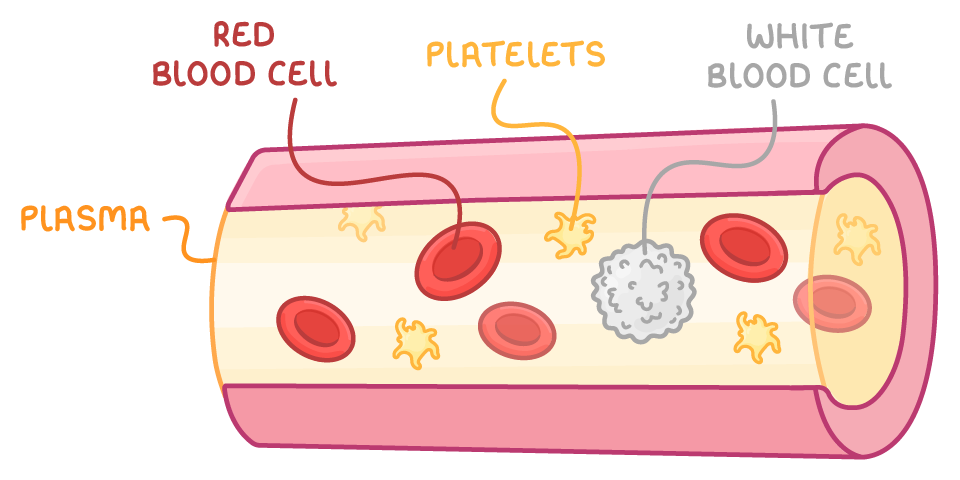
- Plasma is the pale, straw-coloured liquid part of blood - essentially blood with the cells removed.
- The red blood cells, white blood cells, and platelets are suspended in the plasma.
- Plasma carries just about everything that needs transporting around the body, and also spreads heat around the body, helping to keep the internal temperature stable.
What the plasma transports
- Soluble products of digestion - Such as glucose and amino acids, carried from the gut to the body's cells
- Carbon dioxide - Carried from the organs to the lungs
- Urea - Carried from the liver to the kidneys
- Hormones - Chemical messengers
- Dissolved ions and proteins - Carried around the body
TermDefinition
HaemoglobinThe red, iron-containing pigment in red blood cells that carries oxygen.
PhagocytosisThe process by which a white blood cell engulfs and digests a pathogen.
AntibodyA protein produced by lymphocytes that binds to a specific antigen.
PlateletsSmall fragments of cells that help the blood to clot at a wound.
PlasmaThe pale liquid part of blood that carries cells and dissolved substances.
Key points to remember
How were these notes?