2.10 - Monoclonal Antibodies
Producing monoclonal antibodies
- Antibodies are proteins made by a type of white blood cell called a B-lymphocyte.
- Each B-lymphocyte makes just one kind of antibody, which binds to one particular antigen.
- Monoclonal antibodies are antibodies produced from many clones of a single B-lymphocyte - so they are all identical and all bind to the same specific protein antigen.
How they're made
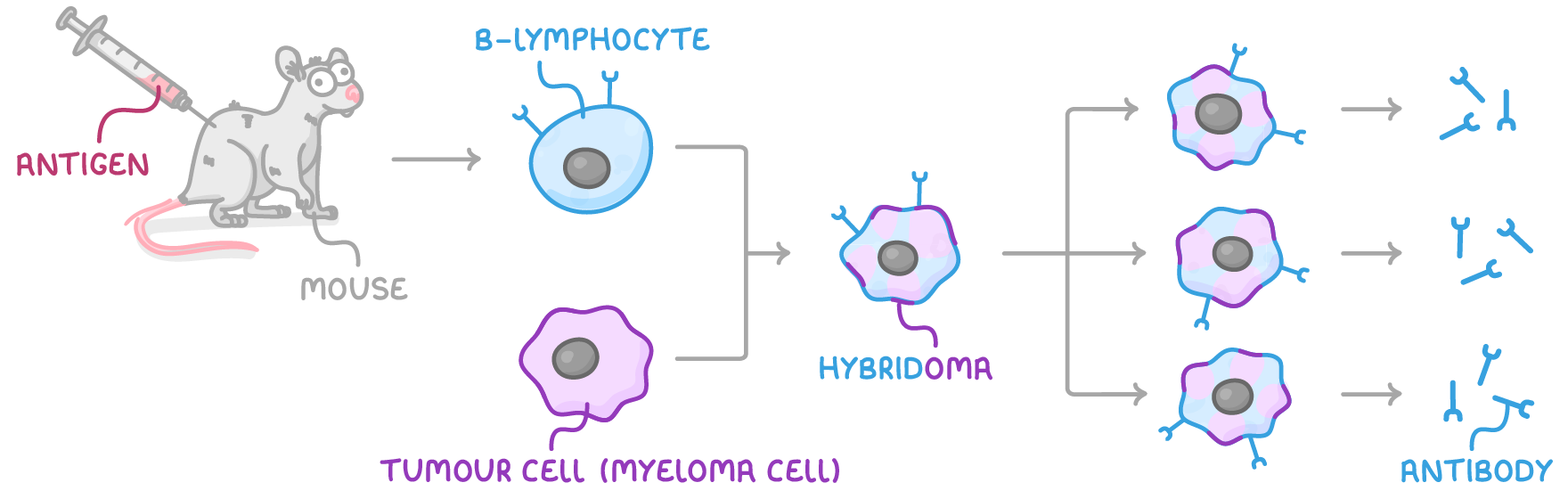
- A mouse is injected with the antigen the antibody is wanted against, so its immune system produces B-lymphocytes that make exactly that antibody.
- These B-lymphocytes are taken from the mouse. On their own they're no use for mass production, because lymphocytes don't divide easily.
- Each B-lymphocyte is fused with a fast-dividing tumour cell (also called a myeloma cell). Tumour cells don't make antibodies, but they divide rapidly.
- The fused cell - a hybridoma - does both: it makes the antibody like the lymphocyte, and divides quickly like the tumour cell.
- A single hybridoma is cloned to give many identical hybridoma cells, all dividing and all making the same antibody.
- The antibodies produced are collected and purified, giving a large amount of one specific antibody.
Why they're so useful
- Because the starting antigen can be chosen freely, a monoclonal antibody can be made to bind to almost anything.
- For example, it can target an antigen found only on the surface of one type of cell - which is what makes them so useful for targeting a particular cell or chemical in the body.
Monoclonal antibodies in diagnosis
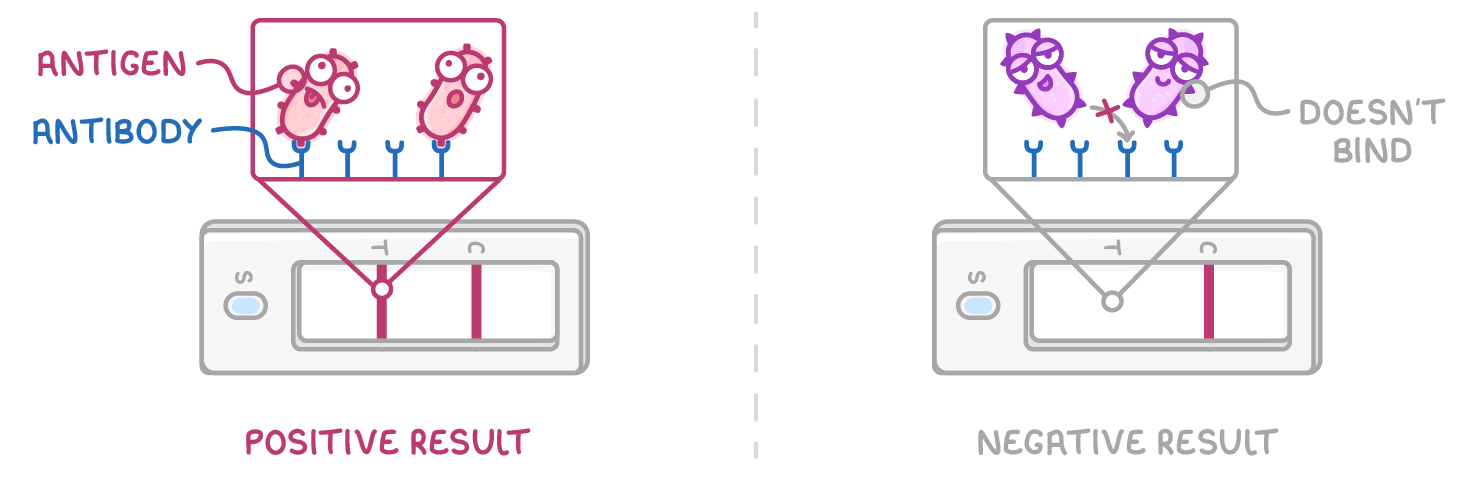
- A monoclonal antibody can be made to bind to the antigens on a particular pathogen.
- This means it can be used to test whether that pathogen is present in a sample.
- The antibody is chosen to match the antigens of the pathogen being tested for, so the test detects that one specific infection.
Reading the result
- Pathogen present - Its antigens bind the antibody, giving a positive result.
- Pathogen absent - Nothing binds, so the result is negative.
Monoclonal antibodies in treatment
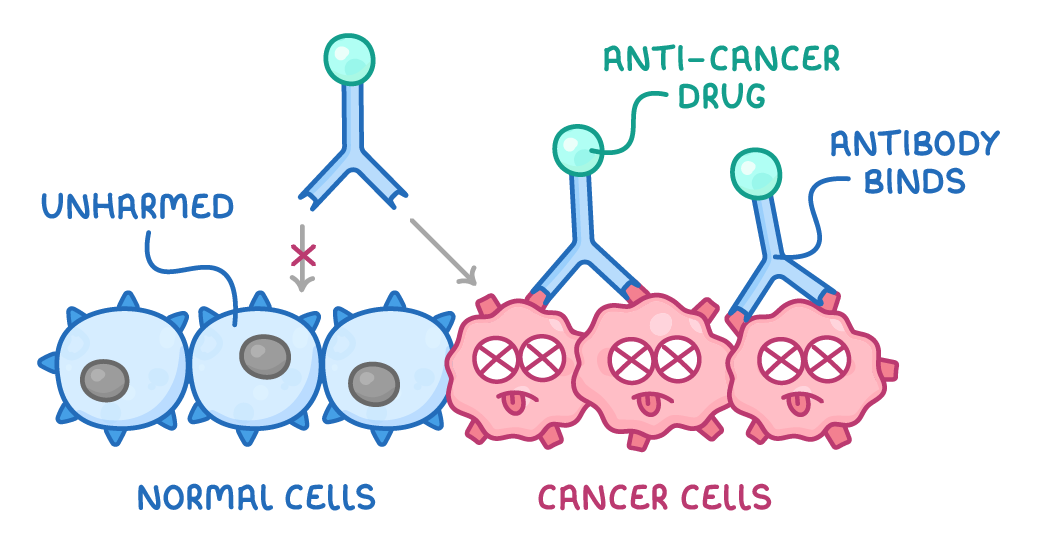
- Monoclonal antibodies can be used to treat cancer, using their ability to bind only to tumour markers on cancer cells.
- An anti-cancer drug is attached to the antibodies. This drug can be:
- A radioactive substance
- A toxic drug
- A chemical that stops cells growing and dividing
- The antibodies are given to the patient through a drip, travel in the blood and bind only to the cancer cells, delivering the drug straight to the tumour.
- This kills the cancer cells without harming the normal body cells nearby.
- In some cases the antibodies simply tag the cancer cells, so the patient's own white blood cells recognise them as foreign and destroy them.
Advantages and disadvantages
- Main advantage - targeting - The antibody binds only to its specific target, so treatment reaches the cancer cells while affecting fewer healthy cells. Ordinary treatments such as chemotherapy and radiotherapy damage normal body cells as well as cancer cells.
- Main drawback - side effects - Monoclonal antibodies cause more side effects than first expected, including fever, vomiting and low blood pressure, so they haven't become as widely used as scientists originally hoped.
TermDefinition
LymphocyteA type of white blood cell that produces antibodies.
Monoclonal antibodyAn antibody produced by a single clone of cells, so that all copies are identical and bind to the same specific antigen.
HybridomaA cell formed by fusing a B-lymphocyte with a tumour cell. It divides rapidly and produces antibodies.
Key points to remember
How were these notes?