6.12 - Effects of Global Warming
Biological consequences of global warming
- The rise in temperature is driven by rising carbon dioxide, mainly from the combustion of fossil fuels and from deforestation.
- Global warming then has several biological consequences: changes in distribution of organisms, rising sea levels, more extreme weather, and falling biodiversity.
Changes in the distribution of organisms
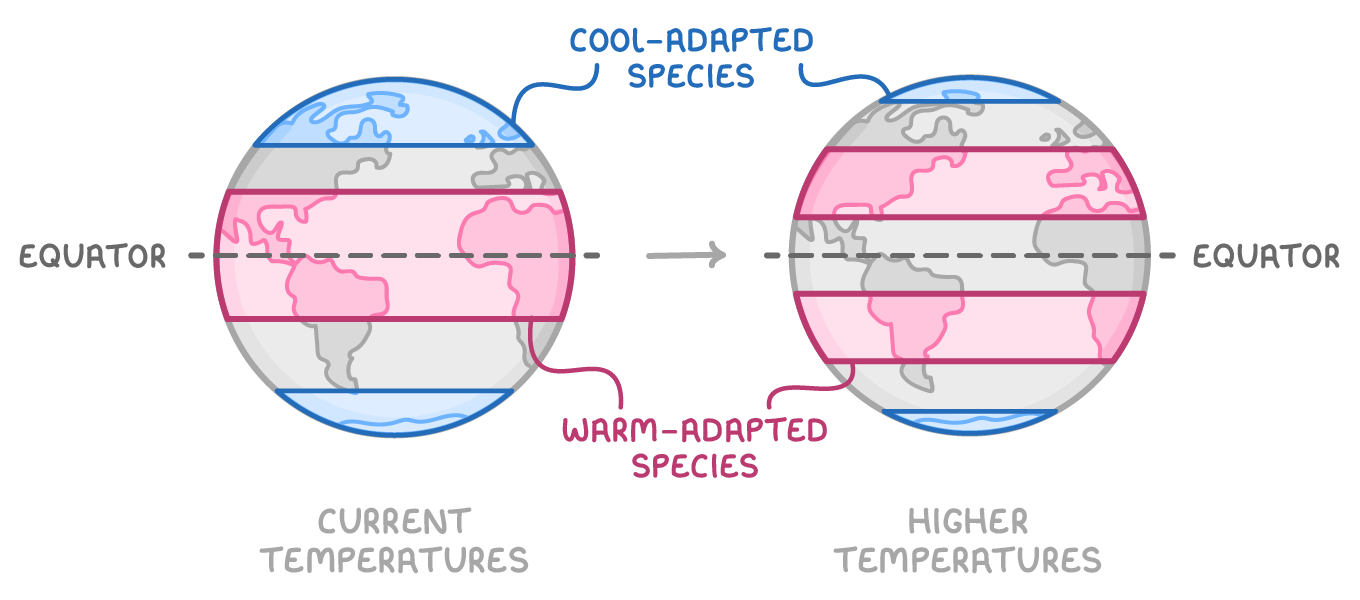
- As temperatures and rainfall patterns change, organisms shift where they can live:
- Organisms that need warmer conditions spread into new areas
- Organisms that need cooler conditions occupy smaller ranges
- Some species migrate towards the poles
- Some organisms shift to new regions, but others cannot move or adapt quickly enough, so their ranges shrink and some are lost.
- Evidence for these shifts in distribution links the environmental change to its effect on living things.
Rising sea levels and extreme weather
- Higher temperatures make seawater expand and the ice caps melt, so sea levels rise.
- This increases flooding in low-lying coastal areas and the loss of habitats.
- Extreme weather events - Droughts, storms, and floods - become more frequent and more severe.
- Habitats are lost as a result - for example, wetlands dry out or are submerged.
Falling biodiversity
- Together these changes reduce the variety of organisms an area can support, so biodiversity is likely to fall.
- This is because some species cannot adapt or migrate quickly enough and may become extinct.
Key points to remember
How were these notes?