6.10 - Human Impact on Biodiversity
Biodiversity and reducing it
- Biodiversity is the variety of all the different species of organisms living on Earth, or within a particular ecosystem, together with the number of individuals within each species.
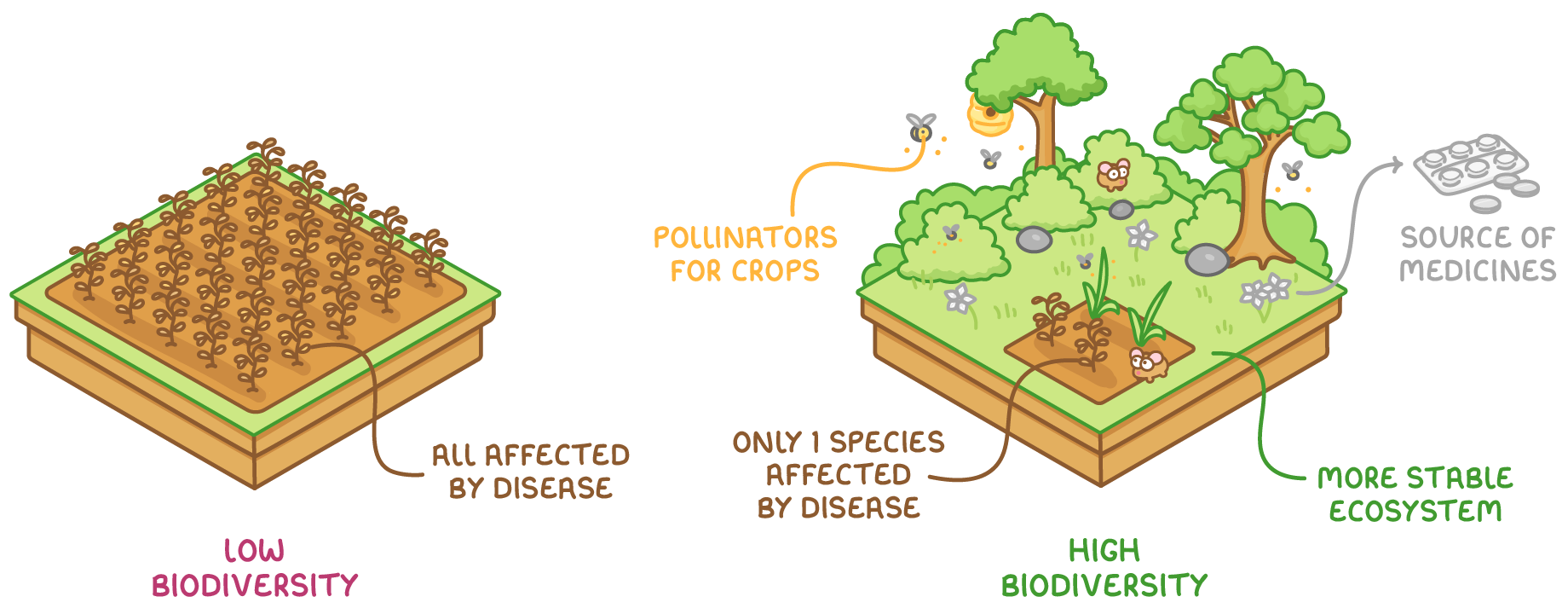
- A woodland or rainforest - full of animals, plants, fungi, and bacteria - has a far higher biodiversity than a single ploughed field.
Why a high biodiversity matters
- More stable ecosystems - When many species live together, losing any one of them (to disease, for example) is less damaging. The other species have many other feeding and supporting relationships to fall back on, rather than depending heavily on the one that's gone.
- Crops need pollinators - A great many of our crops depend on animal pollinators.
- Source of medicines - More than half of new medicines are derived in some way from living organisms.
- Every species lost is a possible food source or medicine lost with it, so the future of the human species relies on maintaining a good level of biodiversity across the planet.
The problem
- Many human activities are reducing biodiversity:
- Using up resources
- Destroying habitats
- Producing pollution and waste
- As biodiversity falls, so does the stability and the benefits it provides.
Pollution of air, water and land
- Humans release waste and harmful substances into the environment.
- This pollution can occur in three places: water, air, and land.
- Whatever its form, pollution harms or kills plants and animals - either directly, or by damaging the conditions they depend on.
- As organisms die, ecosystems change and biodiversity falls.
Pollution in water
- Sewage from homes, fertiliser washed off farmland, and toxic chemicals from industry can all enter lakes, rivers, and oceans.
- These harm the plants and animals that live there.
- A common named example: untreated sewage.
Pollution in air
- Many industrial processes and the burning of fuels release smoke and acidic gases, such as sulfur dioxide, into the atmosphere.
- Carbon monoxide is another harmful gas released when fuels burn - it binds to haemoglobin in red blood cells, reducing the amount of oxygen the blood can carry.
- These gases can harm organisms directly, or sulfur dioxide can fall as acid rain that damages ecosystems.
Pollution on land
- Household and industrial waste is buried in landfill.
- Toxic chemicals can seep from it into the surrounding soil and water, harming the organisms there.
Human population growth
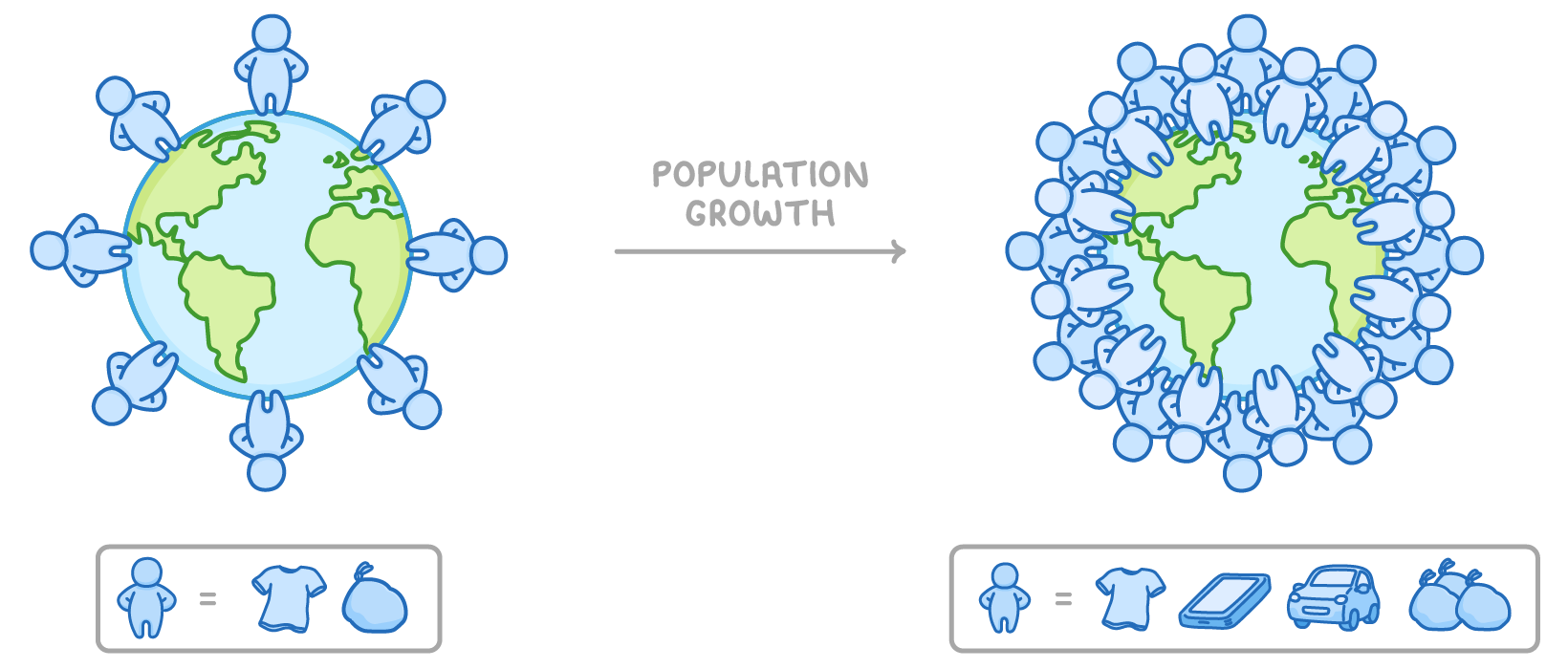
- The root cause behind much of the human impact on the environment is that there are now so many people, and that each person uses more than people used to.
- Over the past thousand years the human population has grown rapidly - from a few hundred million to well over seven billion - and it continues to grow.
- The main reason for this growth is that modern medicine and farming have greatly reduced the numbers dying from disease and hunger.
Rising standards of living
- Standards of living have risen, so people expect more consumer goods - new phones, clothes, and cars.
- Producing all of these uses up raw materials and energy.
- So both the number of people and the demand of each person have increased.
The impact on the environment
The growing demand for resources and rising production of waste is the underlying driver of the pollution, habitat loss, and falling biodiversity caused by humans. This is because:
- Humans take more resources from the environment, often faster than natural processes can replace them, so some supplies risk running out.
- Humans produce more and more waste.
TermDefinition
BiodiversityThe variety of all the different species of organisms on Earth, or within an ecosystem.
Key points to remember
How were these notes?