3.6 - Adrenaline & Thyroxine
Adrenaline and the fight-or-flight response
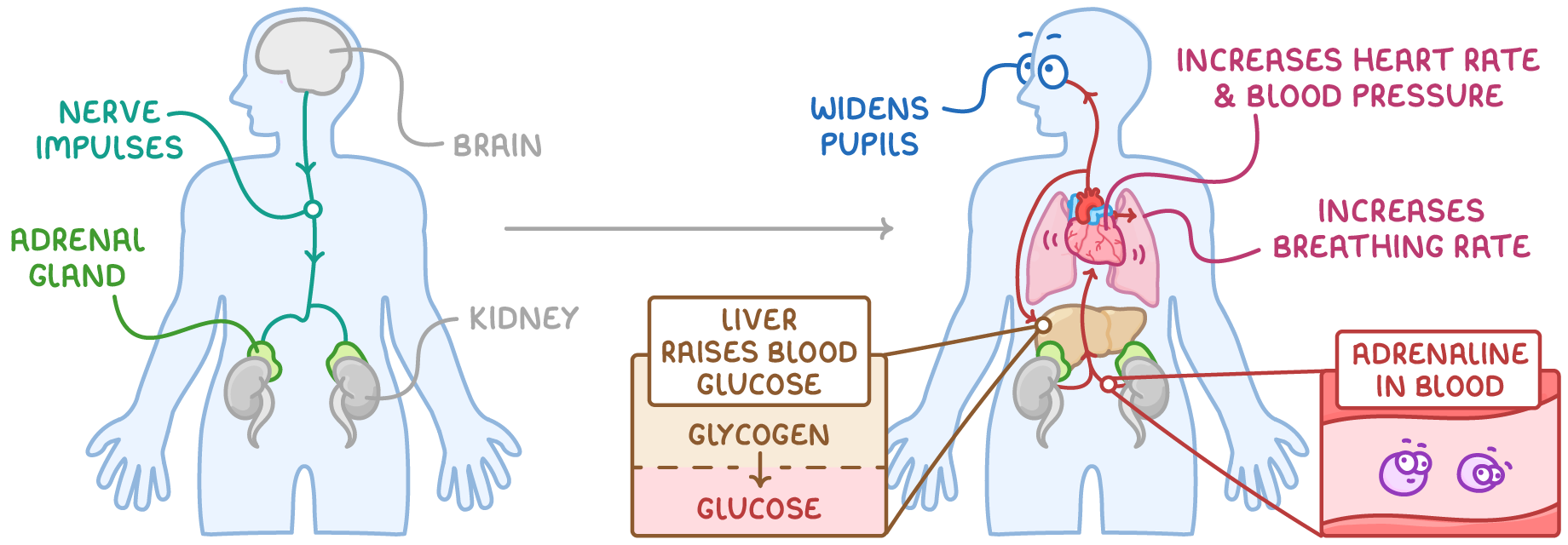
- Adrenaline is a hormone released by the adrenal glands, which sit just above the kidneys.
- When the brain detects a stressful or frightening situation, it sends nerve impulses to the adrenal glands, which respond by secreting adrenaline into the blood.
- Adrenaline prepares the body for fight or flight - standing its ground against a threat or running away.
- It does this by increasing the supply of oxygen and glucose to the cells of the brain and muscles, where they're needed for action.
How adrenaline prepares the body
- Heart - Adrenaline binds to receptor proteins in the heart, making the heart muscle contract more frequently and with more force, so heart rate and blood pressure rise. This increases blood flow to the muscles, so muscle cells get more oxygen and glucose for increased respiration.
- Pupils - Widen.
- Breathing - Speeds up, bringing more oxygen into the body.
- Liver - Adrenaline binds to receptor proteins in the liver, making it break down stored glycogen into glucose, which is released into the blood. This raises blood glucose level, so there's more glucose to carry to respiring cells.
The overall effect is to raise the body's metabolic activity, readying it for sudden physical effort.
Thyroxine and the control of metabolic rate
- Thyroxine is a hormone released by the thyroid gland, found in the neck.
- Its main role is to control the basal metabolic rate - the speed at which the body's chemical reactions take place while the body is at rest.
- By setting this resting rate of reactions, thyroxine affects how quickly the body uses energy.
- It also has other roles, including stimulating protein synthesis and supporting normal growth and development.
Thyroxine is controlled by negative feedback
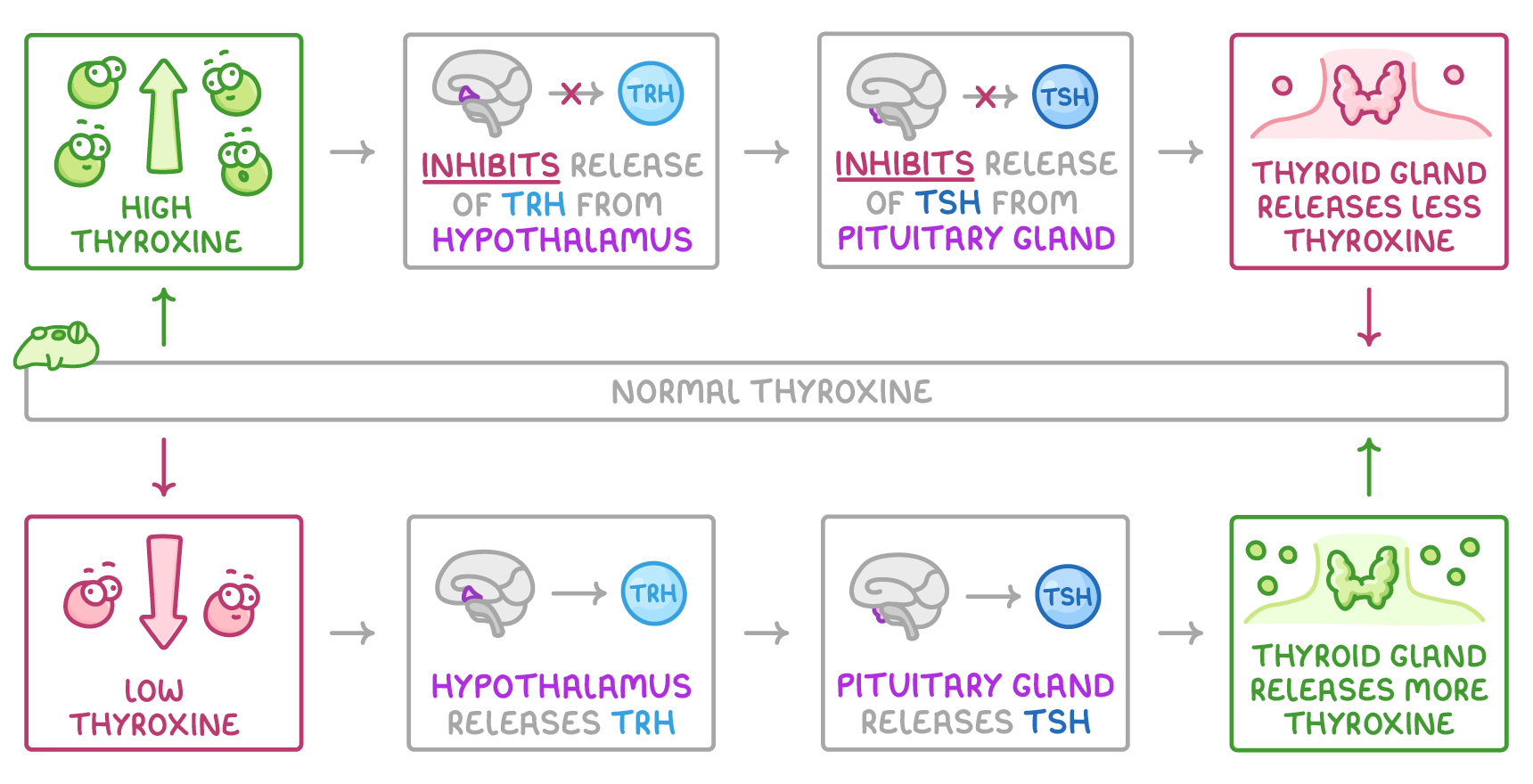
- The blood thyroxine level is held steady by a negative-feedback system: whenever the level moves away from normal, a response is triggered that brings it back.
- The control runs through the pituitary gland, which releases thyroid stimulating hormone (TSH). TSH acts on the thyroid gland and makes it release thyroxine.
When thyroxine rises higher than normal:
- Secretion of TSH from the pituitary gland is inhibited.
- With less TSH, the thyroid releases less thyroxine.
- The level falls back towards normal.
When thyroxine falls lower than normal:
- TSH is released again.
- The thyroid is stimulated to release more thyroxine.
- The level rises back towards normal.
The role of the hypothalamus
- The first stage of the loop involves the hypothalamus.
- A low thyroxine level stimulates the hypothalamus to release thyrotropin releasing hormone (TRH), which in turn stimulates the pituitary to release TSH.
- A high thyroxine level inhibits the release of TRH from the hypothalamus, as well as inhibiting TSH directly.
TermDefinition
AdrenalineA hormone released by the adrenal glands when a person is frightened or stressed. It prepares the body for sudden physical effort.
Fight-or-flight responseThe body's automatic preparation to either stand its ground against a threat or run away from it.
ThyroxineA hormone released by the thyroid gland that controls the basal metabolic rate (how fast the body's chemical reactions happen at rest).
Basal metabolic rateThe speed at which the body's chemical reactions take place while the body is at rest.
Negative feedbackA control mechanism in which a change away from the normal level triggers a response that brings it back to normal.
Thyroid stimulating hormone (TSH)A hormone released by the pituitary gland that acts on the thyroid gland and makes it release thyroxine.
Thyrotropin releasing hormone (TRH)A hormone released by the hypothalamus that stimulates the pituitary gland to release TSH.
Key points to remember
How were these notes?