3.9 - Uses of Plant Hormones
Gibberellins and their effects
- Plant hormones are chemicals that control how a plant grows.
- Gibberellins are one type of plant hormone. They stimulate:
- Seed germination - A seed starting to grow into a plant
- Stem growth - Through stem elongation, which helps plants grow tall
- Flowering
- Gibberellins and auxins can work together to have a large effect on growth - for example, helping a plant grow very tall.
Breaking dormancy
- Many seeds will not germinate until they have been through certain conditions, such as a period of cold or of dryness. This state is called dormancy.
- Gibberellins break this dormancy, allowing the seeds to germinate.
Ethene and its effects on plants
- Plant hormones are chemicals that control how a plant grows.
- Ethene is a gas produced by plants, including ageing leaves.
- It has two main effects: causing leaves to fall and ripening fruit.
Leaf fall
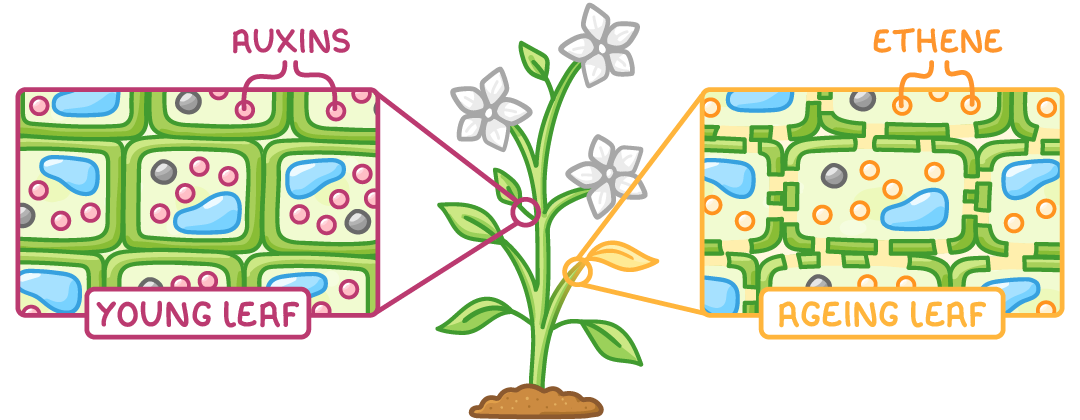
- Ethene stimulates the cells that connect a leaf to the rest of the plant to expand.
- This breaks the cell walls and causes the leaf to fall off.
- Auxins have the opposite effect - they inhibit leaf shedding.
- Auxins are made by young leaves, so as a leaf ages it produces less auxin. This loss of auxin lets the leaf fall.
Fruit ripening
Ethene stimulates enzymes inside fruit that cause the fruit to ripen.
TermDefinition
GibberellinA plant hormone that stimulates seed germination, stem growth and flowering.
DormancyA state where a seed will not germinate until it has experienced certain environmental conditions.
EtheneA plant hormone gas that causes leaves to fall and stimulates enzymes to ripen fruit.