5.2 - The Immune System
Phagocytosis
- When pathogens get past the body's barriers and into the body, the white blood cells of the immune system destroy them.
- White blood cells travel in the blood and move into the tissues, constantly patrolling for pathogens.
- One of their main defences is phagocytosis - carried out by white blood cells called phagocytes.
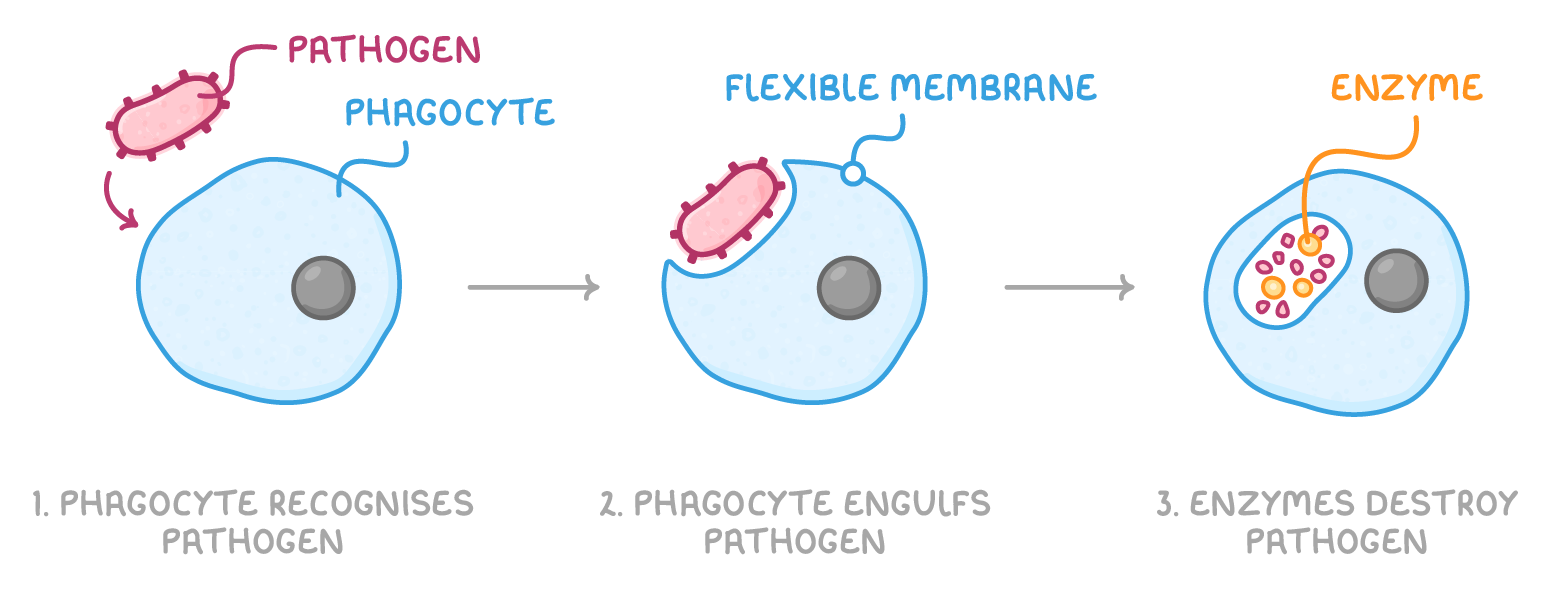
How a phagocyte destroys a pathogen
- The phagocyte tracks down a pathogen and binds to it.
- Its flexible membrane changes shape and wraps right around the pathogen, engulfing (surrounding) it and taking it inside the cell.
- Enzymes inside the phagocyte break the pathogen down and destroy it.
Key features of phagocytosis
- Non-specific - The same phagocyte can engulf many different kinds of pathogen, rather than acting against one in particular.
- Works alongside antibodies - Phagocytes more easily find and engulf pathogens that have been clumped together or marked by antibodies.
Antibodies and specificity
- As well as phagocytosis, white blood cells defend the body by producing antibodies, which deal with pathogens specifically.
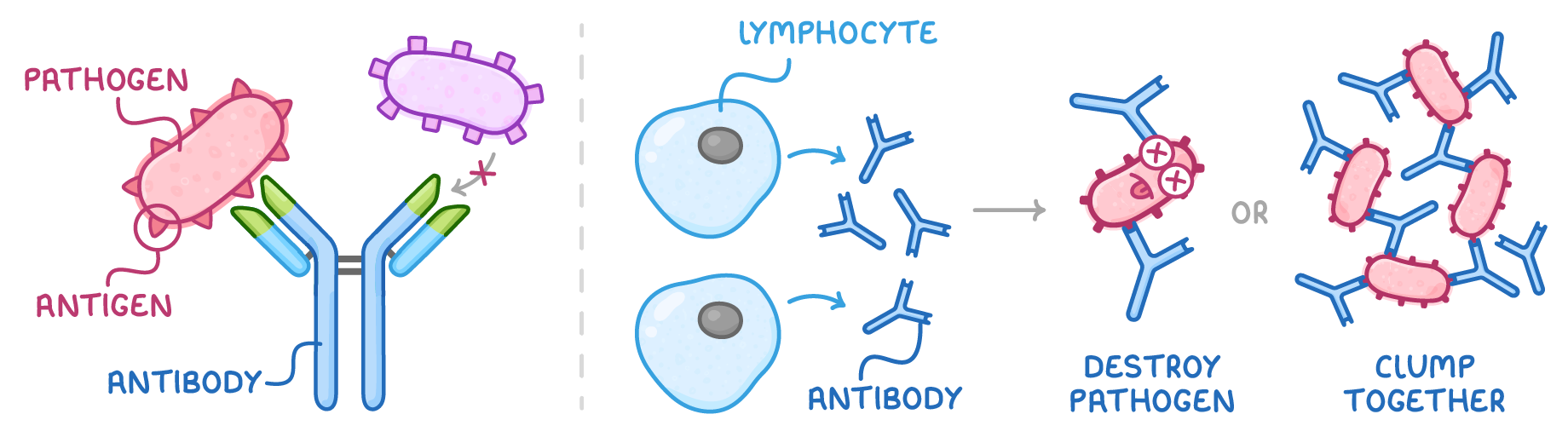
- Every pathogen has unique molecules on its surface called antigens, and each antigen has a particular shape.
Self vs non-self
White blood cells can tell the difference between the body's own cells and invaders:
- Antigens on the body's own cells are recognised as "self".
- Antigens on a pathogen are recognised as foreign, or "non-self".
How antibodies are made and how they work
- When white blood cells called lymphocytes meet a foreign antigen, they start to produce proteins called antibodies.
- An antibody has a shape that is complementary to a particular antigen, fitting it like a key in a lock - so each antibody binds to only one type of antigen and won't lock onto any others.
- The lymphocyte that recognises the pathogen then divides many times to make clones of itself, all producing the same antibody. This means antibodies are made rapidly and in large numbers and are carried all round the body.
- The antibodies bind to the antigens on the pathogens. This can:
- Destroy a pathogen directly, or
- Clump pathogens together and mark them out so that phagocytes find them more easily and engulf them.
TermDefinition
PhagocytosisThe process by which a white blood cell engulfs and digests a pathogen.
PhagocyteA type of white blood cell that carries out phagocytosis.
AntigenA unique molecule on the surface of a cell or pathogen that the immune system can recognise.
AntibodyA protein produced by lymphocytes that binds to a specific antigen.
LymphocyteA type of white blood cell that produces antibodies.