8.11 - Indicator Species
Indicator species
- An indicator species is a species whose presence or absence in an area can be used as a sign of how polluted that area is.
- Some organisms are very sensitive to changes in their environment, so they only survive where conditions are clean.
- Others are adapted to cope with polluted conditions where most species cannot.
- By looking at which species are present, and in what numbers, you can judge the pollution level without measuring the pollutant directly.
Freshwater invertebrates are the standard indicator of water quality
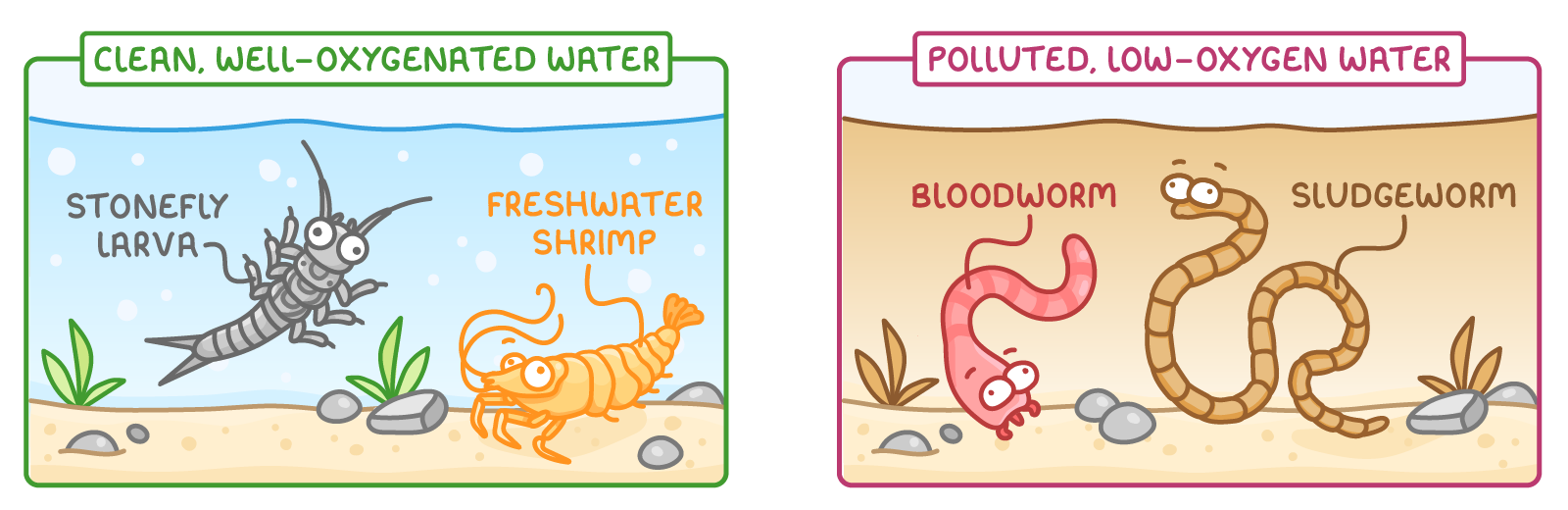
- Stonefly larvae and freshwater shrimps - Very sensitive to the concentration of dissolved oxygen. Finding them indicates the water is clean and well oxygenated.
- Bloodworms and sludgeworms - Adapted to live in low-oxygen, polluted water. Large numbers of them indicate the water is heavily polluted.
Pollution, such as untreated sewage, lowers the dissolved oxygen because the microorganisms that break down the extra material use the oxygen up.
Present-or-absent surveys versus counting
- A quick survey of whether an invertebrate is simply present or absent tells you whether the water is polluted, but not by how much.
- Counting how many of each kind are found at different points lets you compare how pollution levels vary along a stream.
- Pollution can also be checked directly, for example by measuring the dissolved oxygen concentration of the water.
TermDefinition
Indicator speciesA species whose presence or absence can be used as a sign of how polluted an area is.