Photosynthesis - exam practice
Photosynthesis
Question 1 of 7
Plants are called producers because they make their own food from a process called photosynthesis.
Write the balanced symbol equation for photosynthesis.
Plants need energy to produce glucose.
Where do plants get this energy from?
Which part of a plant cell absorbs the energy needed for photosynthesis?
Explain why photosynthesis is considered an endothermic reaction.
Give two uses of the glucose produced in photosynthesis.
In an experiment, a student measures the rate of photosynthesis of a pondweed at different light intensities.
The results are shown in the following table.
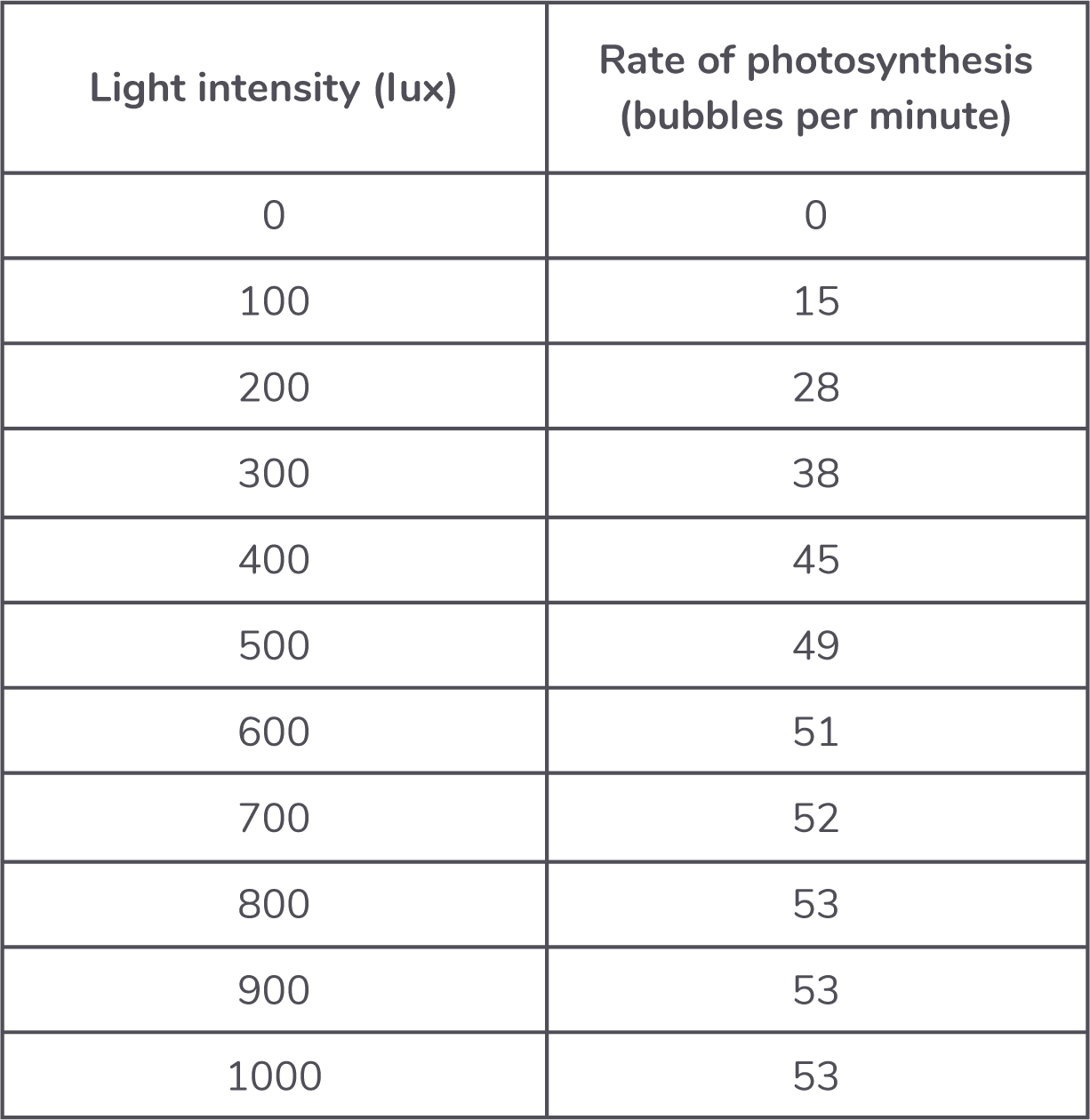
Using the data in the table, plot a graph of light intensity against rate of photosynthesis.
Describe the relationship between light intensity and the rate of photosynthesis.
At light intensities between 0 and 700 lux, light was a limiting factor for photosynthesis.
What evidence is there for this in the table?
Give one factor that could have limited the rate of photosynthesis when the light intensity was between 800 and 1000 lux.
The lamp gives out heat as well as light.
What could the students do to make sure that heat from the lamp did not affect the rate of photosynthesis?
The diagram below represents a section of a leaf under the microscope, where photosynthesis takes place.
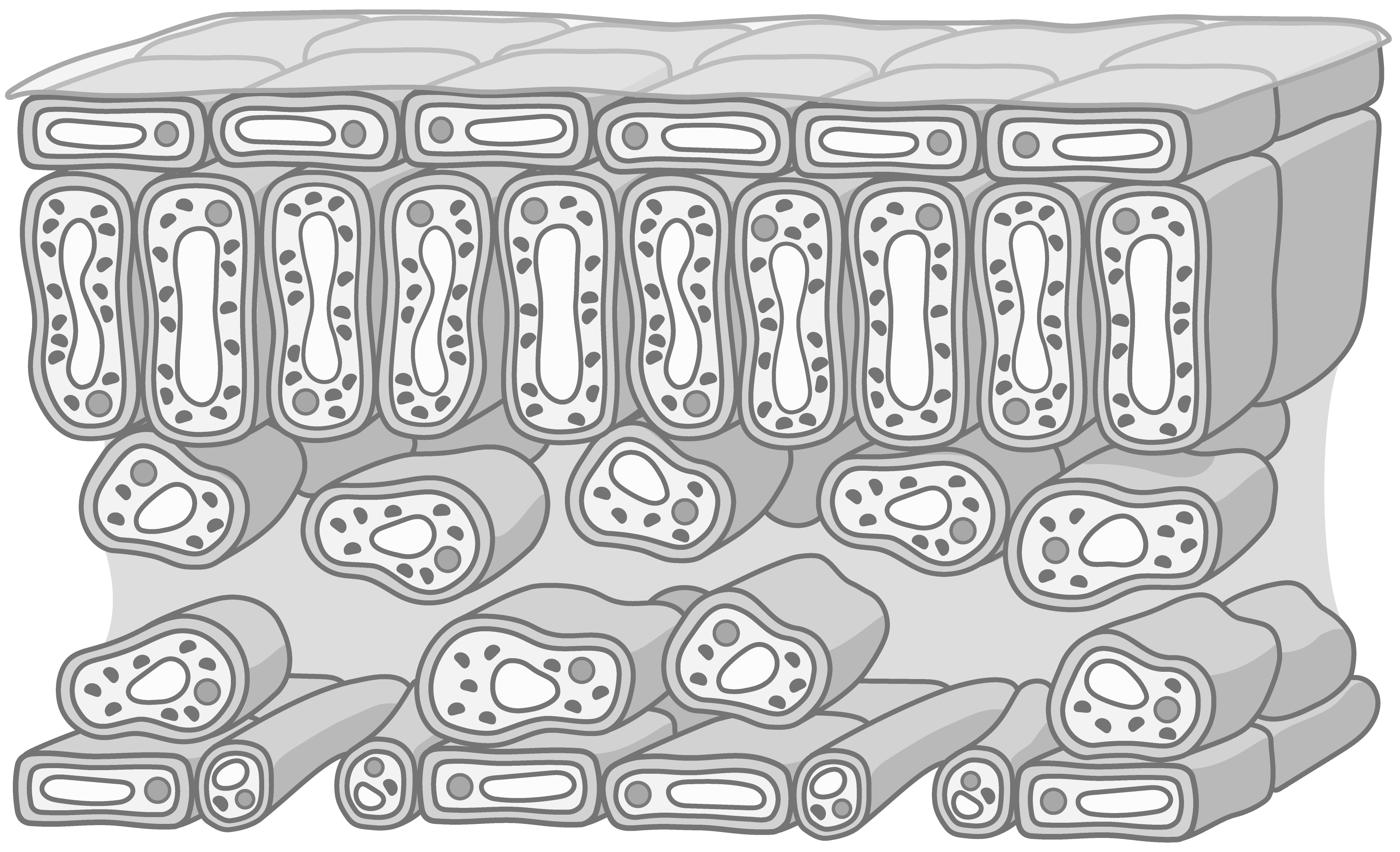
Identify and describe the role of two structures in the leaf that are involved in photosynthesis.
In a certain plant species, it is observed that the leaves have fewer stomata than a typical plant.
Suggest how this could impact the rate of photosynthesis.
The plant also has a very thick waxy cuticle.
Suggest the environment in which the plant lives and why having fewer stomata and a thick waxy cuticle is a useful adaptation.
A commercial greenhouse grower wants to maximise the rate of photosynthesis to increase the yield of a particular crop.
The grower is considering changes in temperature, light intensity, and carbon dioxide concentration within the greenhouse.
Explain the role of carbon dioxide in photosynthesis and how increasing its concentration might affect the rate of photosynthesis.
The grower also considers increasing the temperature inside the greenhouse.
Explain how temperature can affect the rate of photosynthesis.
The grower measures the rate of photosynthesis at different temperatures.
The results are shown in the table below:
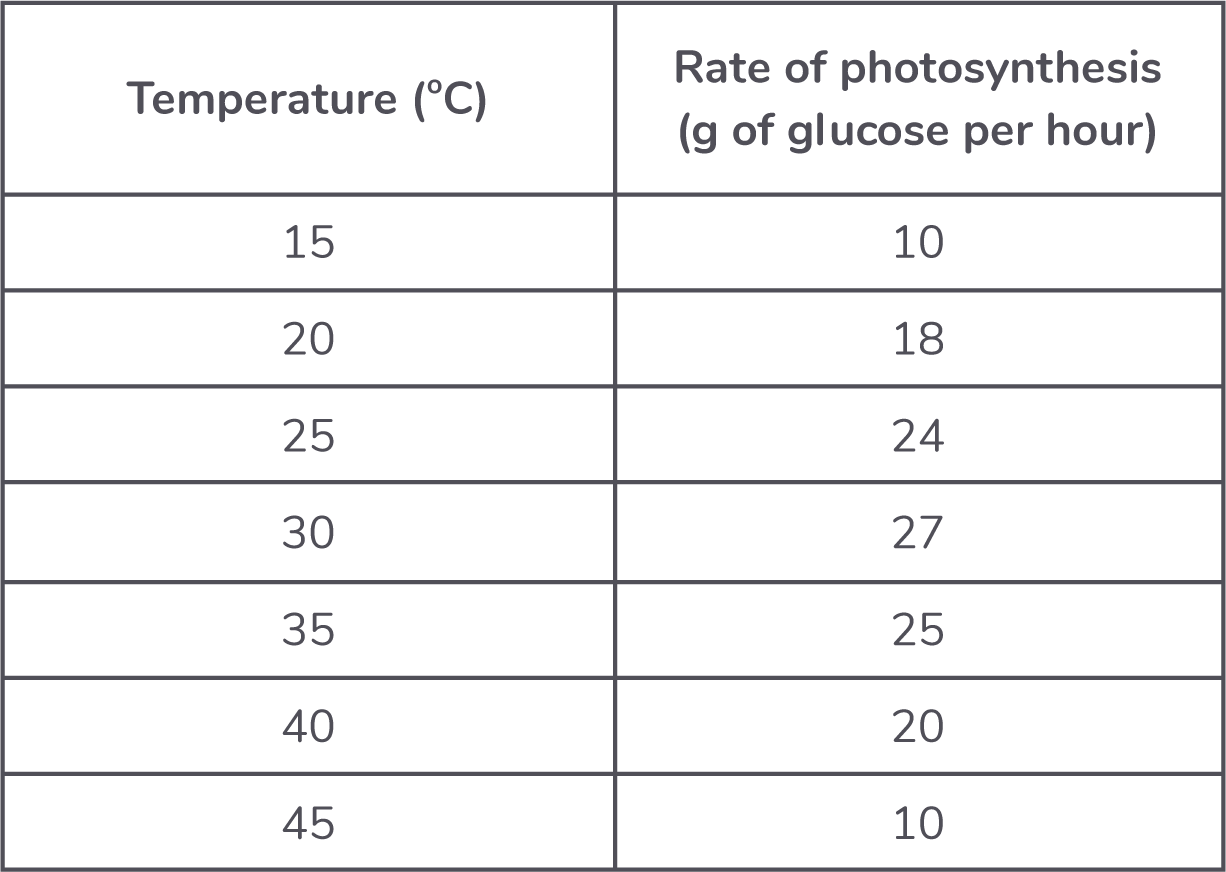
Using the data in the table, identify the optimal temperature for photosynthesis in this crop.
Scientists can collect the volume of oxygen produced by a plant in order to measure the rate of photosynthesis.
Why is measuring the amount of oxygen a reliable way to determine the rate of photosynthesis?
Photosynthesis takes place in the leaves of plants.
The micrograph below shows the underside of a leaf.
Label the stoma, guard cells, epidermal cells and chloroplasts.
Name the gases that:
- diffuse into the stoma
- diffuse out of the stoma.
Are the stomata larger during the day or at night?
Explain your answer.
Suggest what would happen to the rate of photosynthesis if a plant's stomata get covered in dust.
The figure shows a cross-section of a plant leaf.
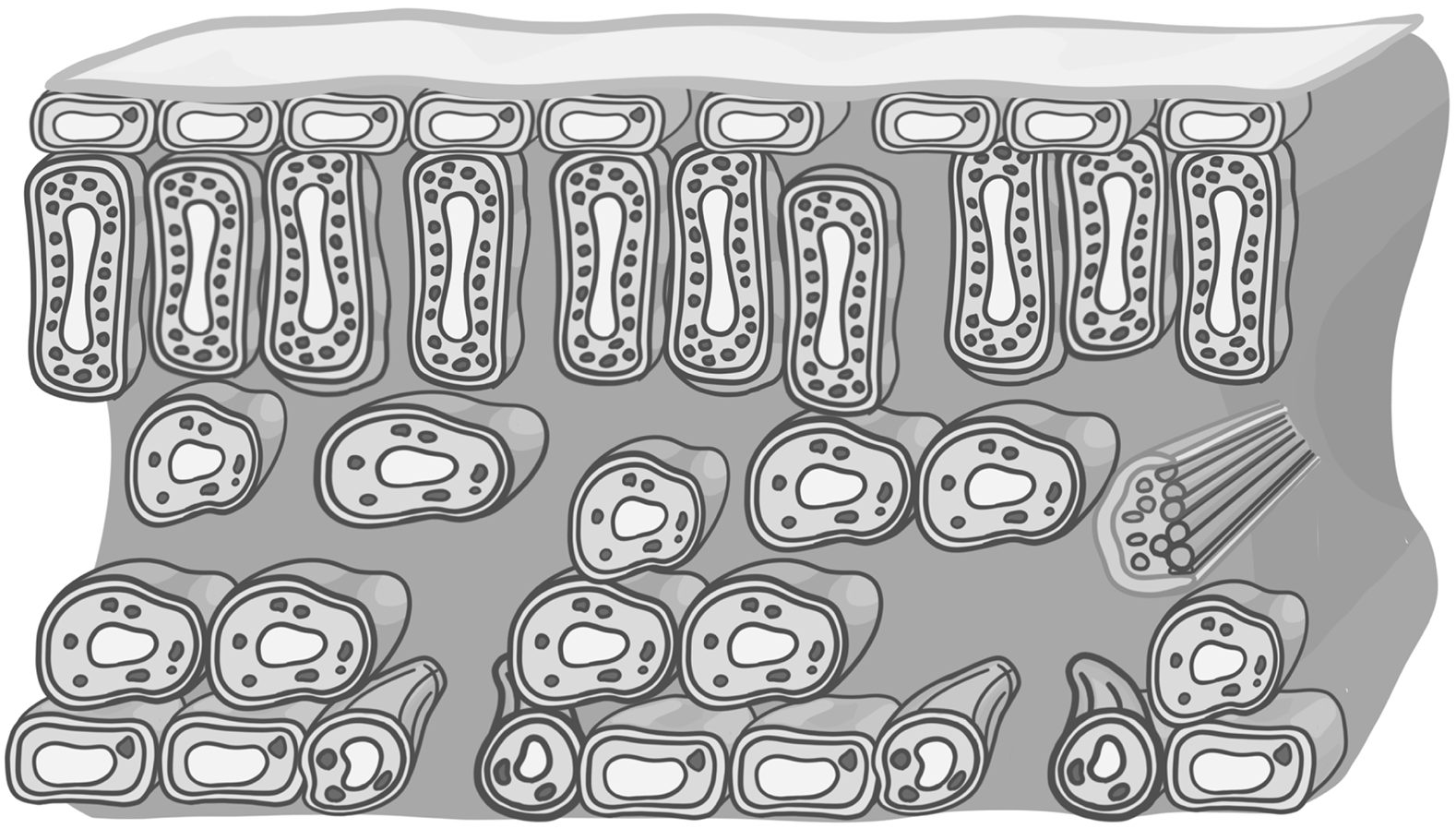
Describe the structure of the leaf and the functions of the tissues in the leaf.
Use the names of the tissues in your answer.
Complete the sentence about photosynthesis.
During photosynthesis, dioxide and are converted to glucose and .
The energy required for photosynthesis comes from the which is trapped by a green pigment called .
The plant can convert the glucose into which is insoluble and can be stored.
The rate of photosynthesis in a plant depends on several external factors.
These factors include light intensity and the availability of water.
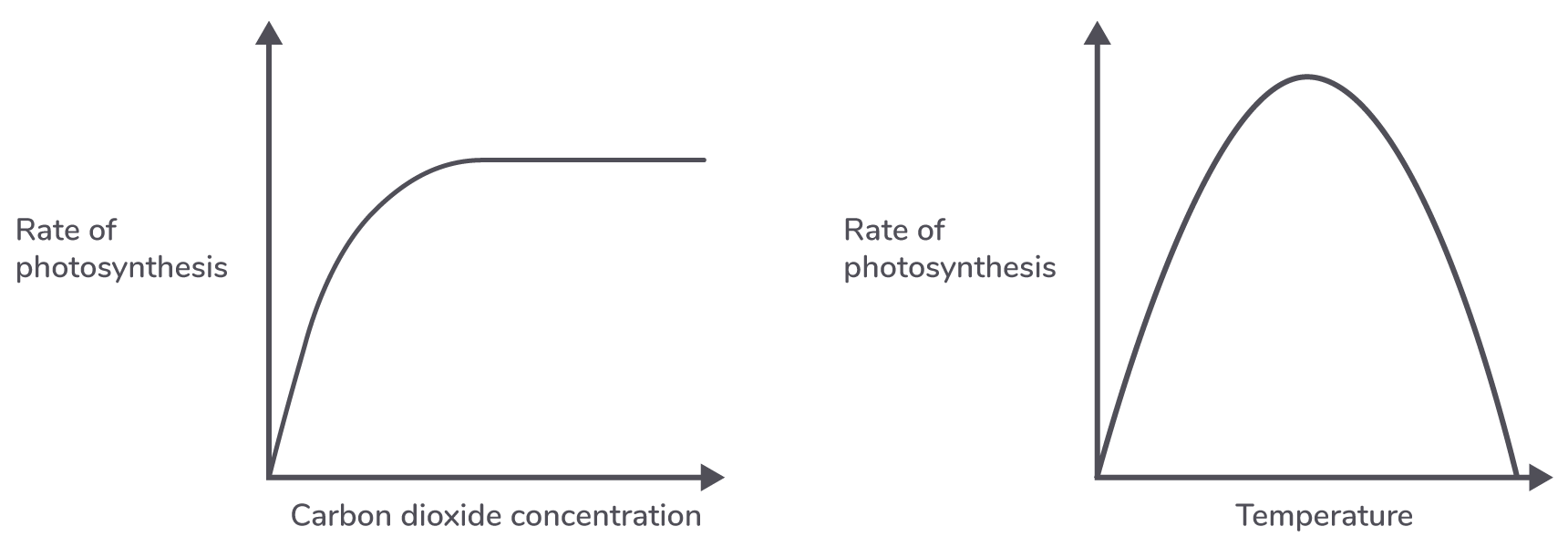
Describe and explain the effects of two other factors that affect the rate of photosynthesis.
You should include one or more sketches of graphs in your answer.