Brain & Eyes - exam practice
Brain & Eyes
Question 1 of 4
A girl is reading a book in her garden.
The girl's mother calls out her name.
The girl looks at her mother on the other side of the garden.
What name is given to the process that happens in the girl's eye when she looks at her mother in the distance, instead of looking at her book?
The girl starts reading her book again.
Explain how the girl’s eye adjusts to form a clear image of the book.
The diagram below shows the structure of the human eye.
Label parts A-H.
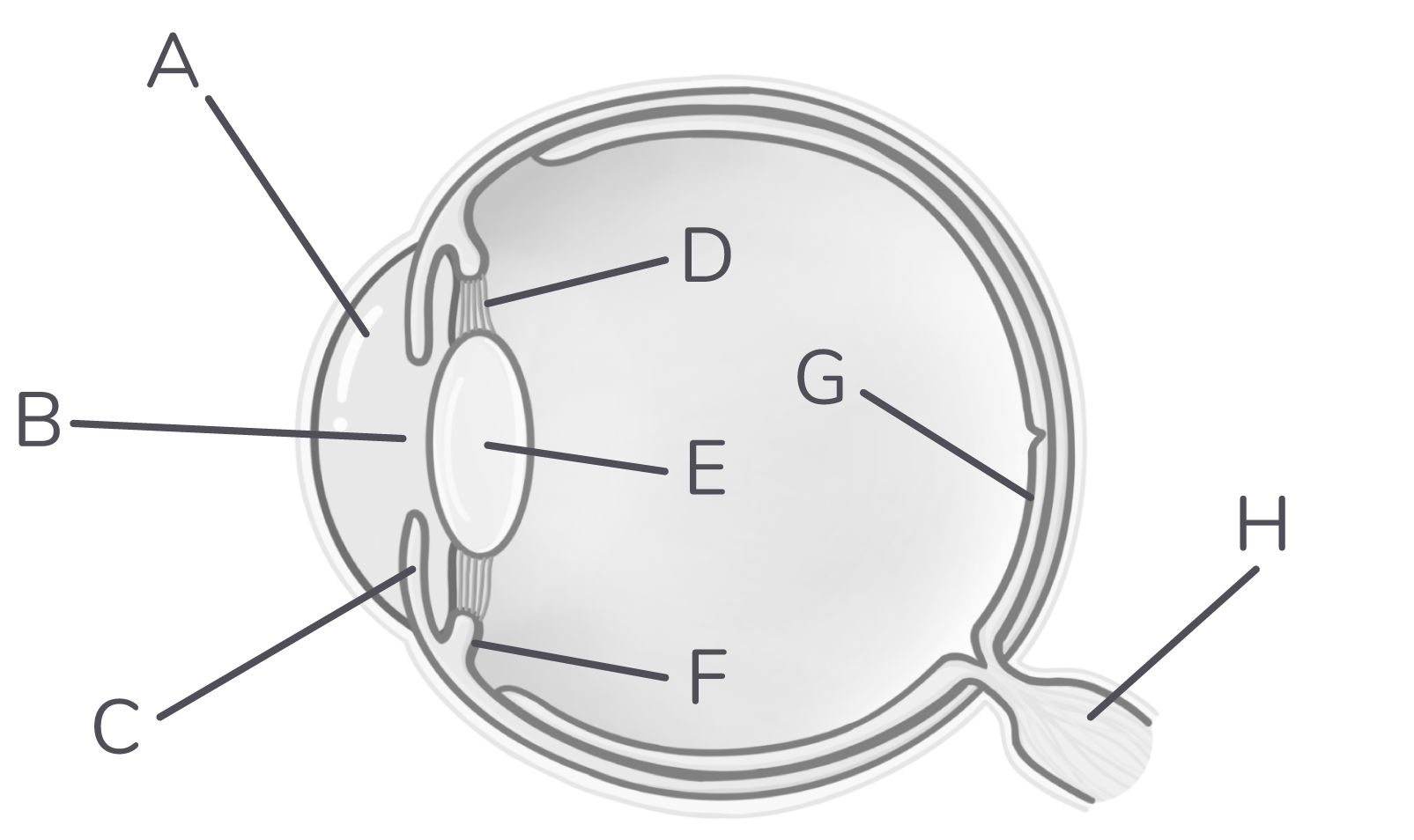
State which part of the eye performs the following functions:
Carries impulses to the brain.
Focuses light onto the back of the eye.
Detects light and colour.
A boy was in a well lit room when there was a power cut and the room went dark.
Diagram A shows one of the boy’s eyes in the well lit room and diagram B shows the boy's eye after the power cut.
Explain how this change happens.
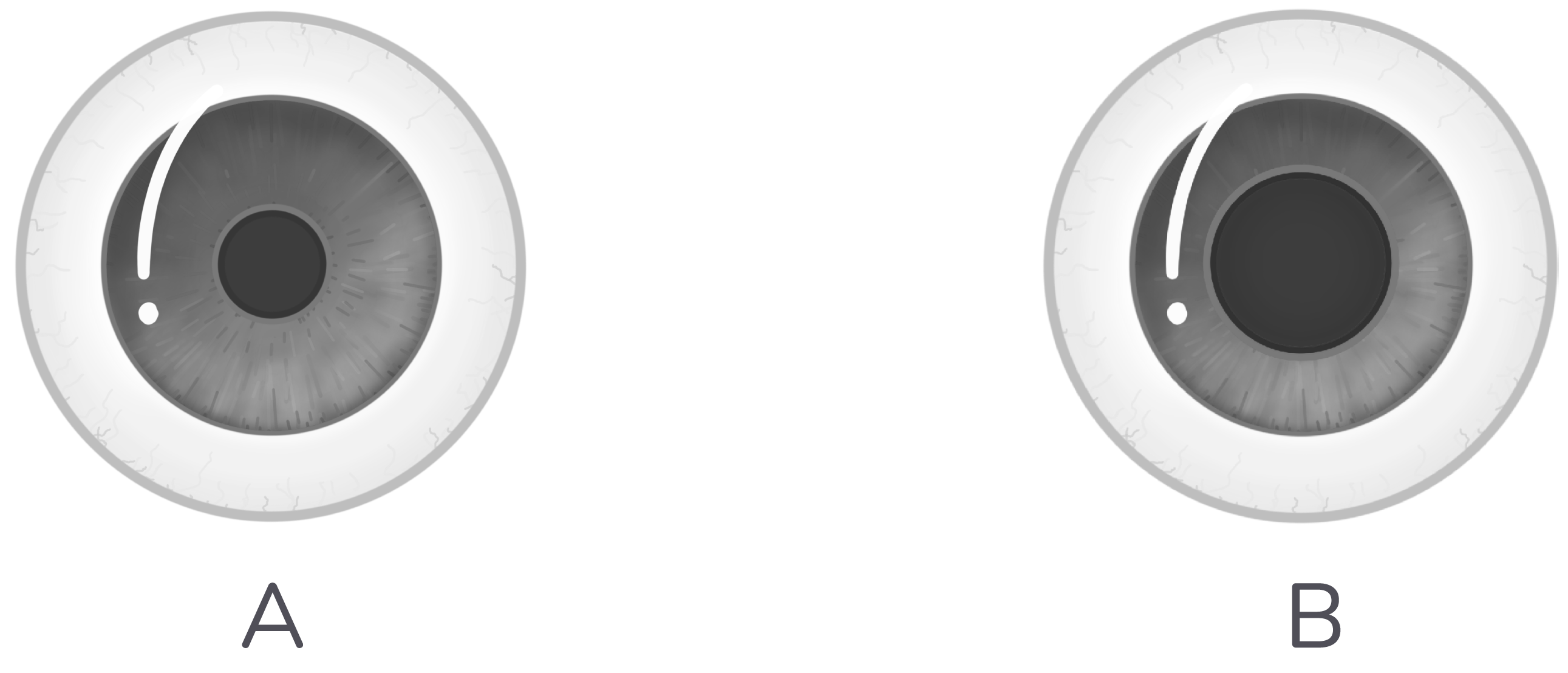
The diameter of the boy's pupils changed with the light intensity.
What is this an example of?
Suggest why blinking of the eyes is coordinated by nerves and not hormones.
A cataract is a cloudy area in the lens of your eye.
Cataracts are common as you get older.
Suggest how a cataract would affect the ability to see clearly.
In the UK, there are 11 million people over 65 years old.
It is estimated that 30% of people over the age of 65 have a cataract.
Calculate the number of people in the UK over the age of 65 who develop a cataract.
The eye can respond to changes in light intensity.
Where in the eye are the cells that detect the change in light and cause this response?
Explain the changes that take place in the pupil as a person moves from a bright area into a dark area.