9.8 - Eutrophication
Eutrophication
- Eutrophication is the enrichment of water with too many nutrients, especially nitrates and other dissolved mineral ions.
- The nutrients come from two main sources:
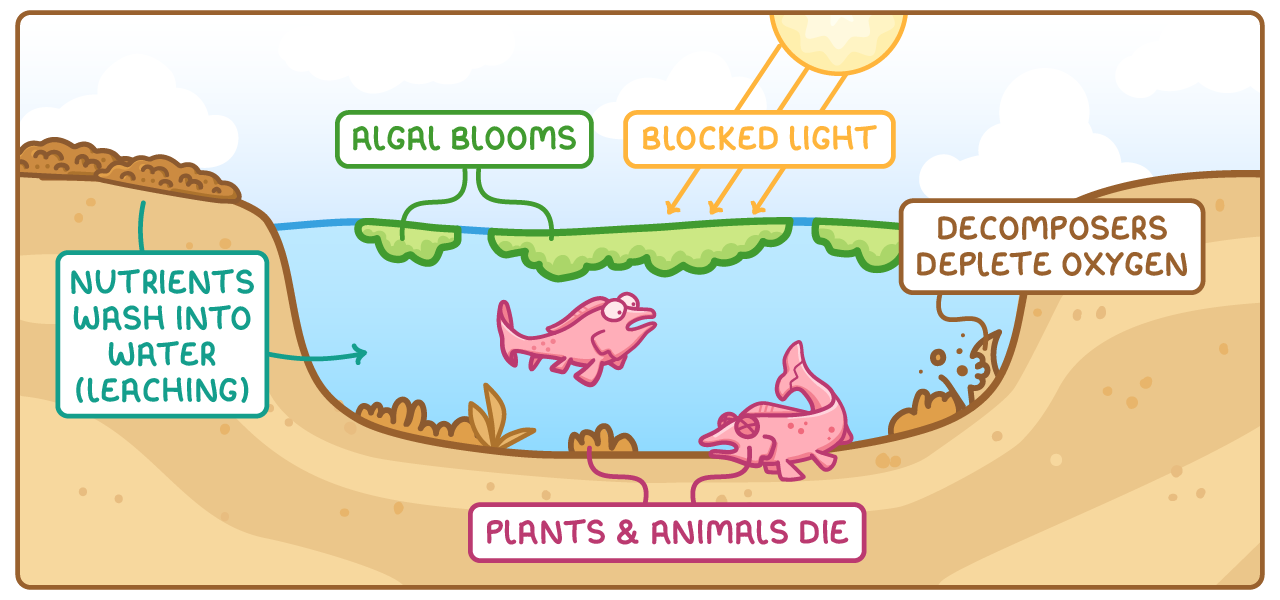
- Fertilisers - When farmers spread more than a crop can take up, rain washes (leaches) the excess nitrate off the fields into rivers and lakes.
- Untreated sewage - Draining into water has the same enriching effect.
The sequence of events
- Extra nitrates let algae and water plants grow very fast, forming a thick surface layer called an algal bloom.
- The bloom blocks out light, so plants lower down in the water can no longer photosynthesise.
- Starved of light - and of nitrate once the bloom exhausts the nutrients - these shaded plants and the algae die.
- The large amount of dead material becomes food for decomposers (bacteria), which multiply rapidly.
- As the decomposers break down the dead matter they respire aerobically, using up the oxygen dissolved in the water.
- Dissolved oxygen falls so low that animals which depend on it, such as fish and many aquatic invertebrates, can no longer get enough - they suffocate and die.
The overall effect
- A nutrient-enriched stretch of water ends up almost empty of animal life.
- The biodiversity of the habitat falls sharply.
TermDefinition
EutrophicationThe enrichment of water with too many nutrients, especially nitrates and other dissolved mineral ions.
LeachingThe washing of dissolved minerals out of the soil by rain. For example, rain can carry excess fertiliser off fields into rivers and lakes.
Algal bloomA thick layer of fast-growing algae on the surface of water, caused by extra nutrients in the water.
Key points to remember
How were these notes?