5.9 - Vaccination
What a vaccine is and why we vaccinate
- The first time a pathogen infects you, your body takes a while to make enough of the right antibody to clear it. During that time you can become ill - sometimes seriously.
- Once you've fought a pathogen off, you're usually immune to it. If the same pathogen gets into your body again, you make the right antibody so quickly that the pathogen is destroyed before it can make you ill.
- A vaccine is a way of gaining that immunity without ever having to catch the disease first.
How a vaccine works
- A vaccine contains a safe form of the pathogen you want protection against.
- This safe form cannot make you ill, but it still triggers your body to build up its defences against the pathogen.
- Vaccines can be made against both bacterial and viral diseases - for example tuberculosis, polio, and measles.
The arguments for and against vaccination
- Vaccination usually happens in childhood, so it's normally a parent's decision whether their child is vaccinated.
- There are points to weigh on both sides.
For and against
| Arguments for | Arguments against |
|---|---|
| Vaccines can protect a child from very serious diseases. | Vaccination doesn't always work - it sometimes fails to give full immunity. |
| Widespread vaccination has controlled or virtually wiped out diseases that were once common, such as smallpox and polio. | A person can occasionally have a bad reaction, such as swelling at the injection site or, rarely, a fever or seizure - though such reactions are very rare. |
The influence of the media
- Parents are also influenced by media coverage - both campaigns by health organisations encouraging vaccination, and scare stories.
- In 1998 there was a claim of a link between the MMR vaccine and autism.
- That claim was never reproduced, and the vaccine is now known to be safe.
- However, the story led many parents to stop vaccinating their children, and measles cases rose as a result.
How vaccination produces immunity
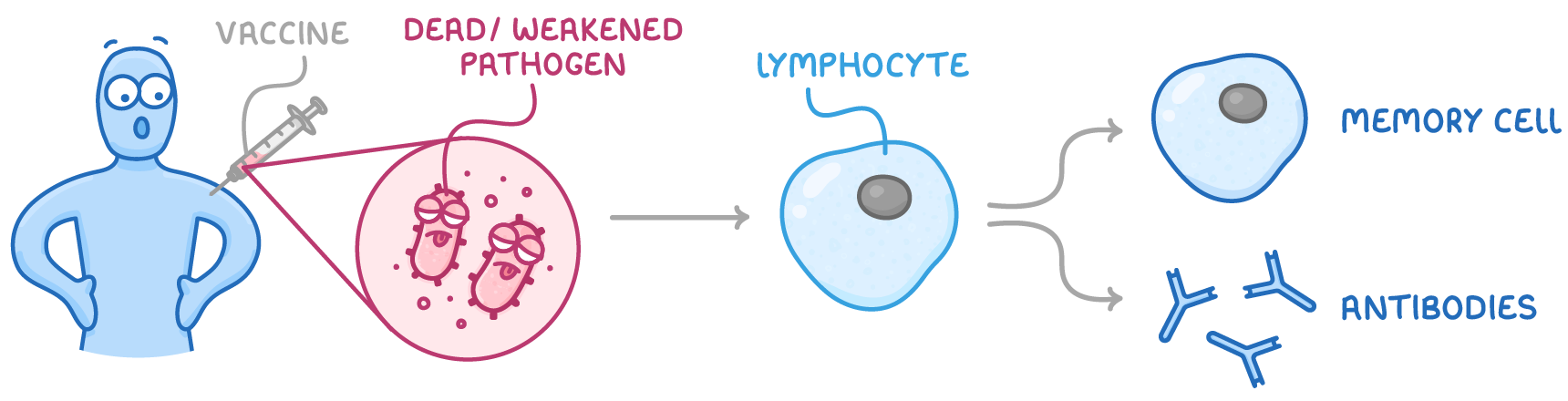
- A vaccine contains a safe form of the pathogen: it may be the pathogen killed, inactivated or weakened, or just the antigens isolated from it.
- It's usually given by injection.
- Antigens are the unique surface molecules the immune system recognises as foreign.
- The safe form can't make you ill, but it still carries the pathogen's antigens - so the body responds exactly as it would to the real pathogen.
The response to the vaccine
- White blood cells called lymphocytes produce antibodies against those antigens.
- At the same time, memory cells are made and stay in the blood for a long time, giving long-term immunity.
The secondary response
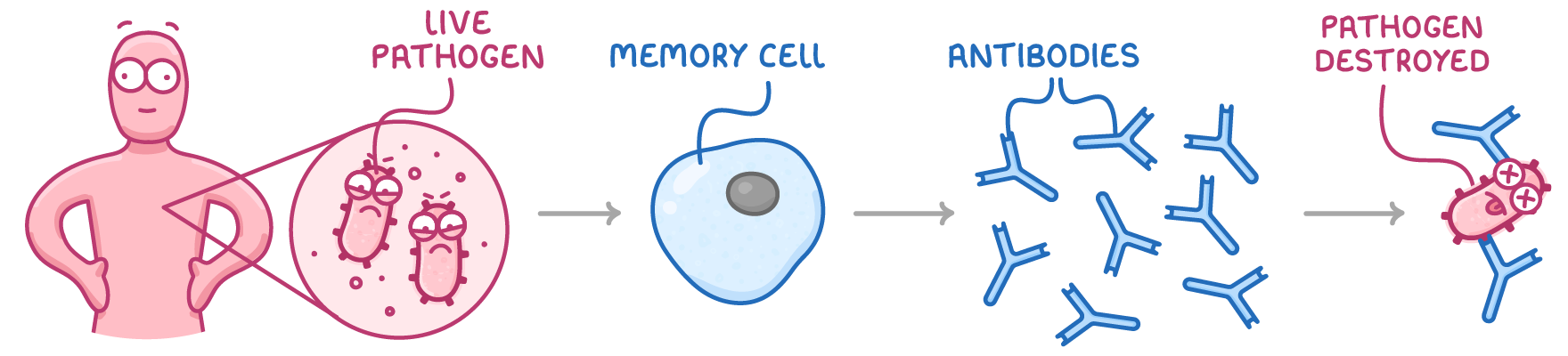
- If the live pathogen of the same type later enters the body, the memory cells recognise its antigens at once.
- They trigger the rapid production of large amounts of the right antibody.
- This secondary response is much faster and stronger than the first, so the pathogen is destroyed before it can build up and make you ill.
Herd immunity
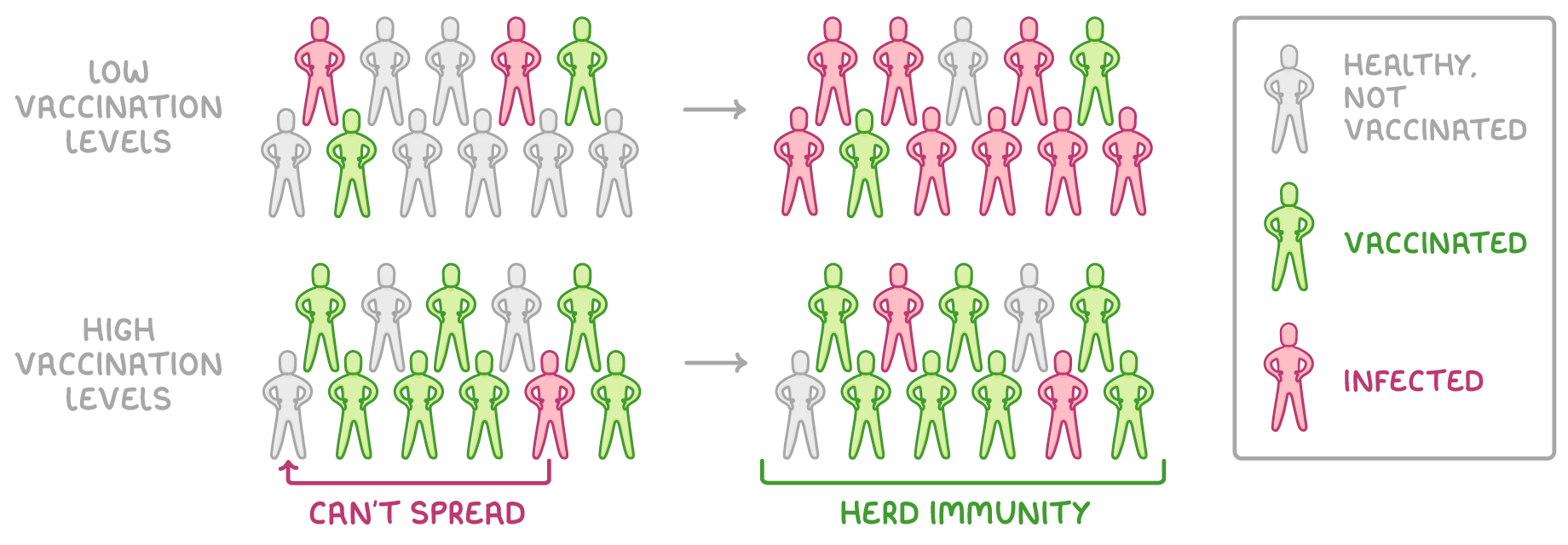
- Herd immunity is when a large proportion of a population is vaccinated against a disease, so the disease is far less able to spread - even to people who haven't been vaccinated.
- Because so many people are immune, an infected person comes into contact with very few people who could become ill and pass on the pathogen.
- The chain of transmission breaks down, so the pathogen has nowhere to go.
Who it protects
- Even unvaccinated people - for example those too young or too ill to be vaccinated - are unlikely to catch the disease, because almost everyone around them is immune.
- This is how vaccination prevents large outbreaks, called epidemics, of diseases that once spread rapidly through whole populations.
The protection depends on high vaccination levels
- Herd immunity only works if the proportion vaccinated stays high.
- If a significant number of people are not vaccinated, the disease can spread quickly through them and many people can become ill at the same time.
TermDefinition
VaccineA dead, weakened or inactive form of a pathogen (or just its antigens) that makes the body build immunity without causing the disease.
AntigenA unique molecule on the surface of a cell or pathogen that the immune system can recognise.
Herd immunityThe protection given to unvaccinated people when a large proportion of a population is vaccinated, so a disease cannot spread easily.
Key points to remember
How were these notes?