17.6 - Stem Cells
What a stem cell is
- A stem cell is an unspecialised cell - unlike a nerve cell or muscle cell, it hasn't yet taken on a particular form or job.
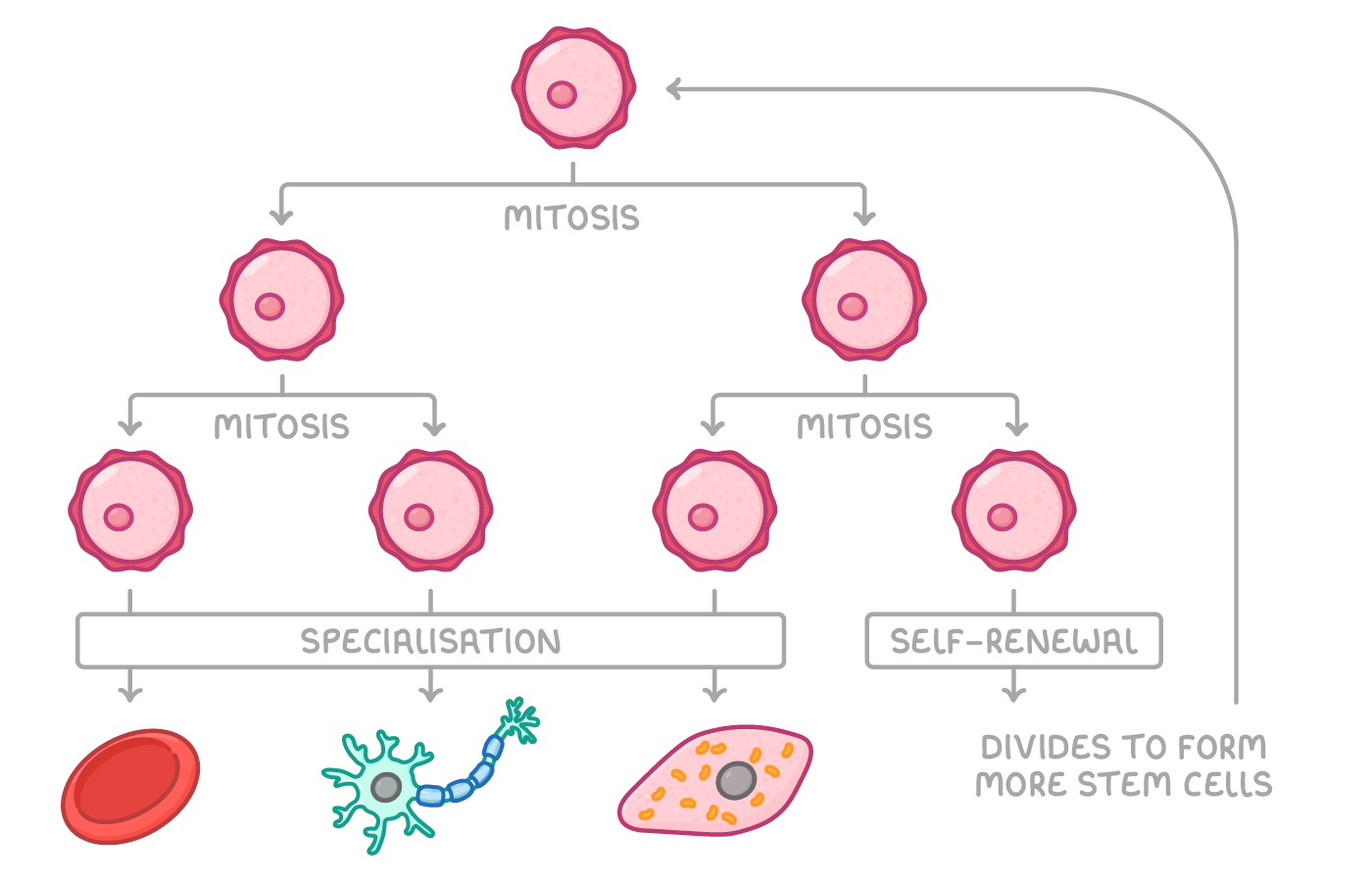
- Stem cells can do two things:
- Self-renewal - Keep dividing by mitosis to produce more cells of the same type (more stem cells), so a supply of them is maintained.
- Specialisation - Depending on the instructions they're given, their daughter cells can become specialised, developing into a particular cell type such as a blood cell, a nerve cell or a muscle cell.
How they differ from specialised cells
- In most fully developed tissues the cells have already become specialised and can no longer turn into other types of cell.
- A stem cell stays unspecialised and keeps the ability to divide and to give rise to specialised cells.
- Because of this, stem cells are the source of the new specialised cells an organism needs as it grows and develops, and of the new cells that replace worn-out or damaged ones.
TermDefinition
Stem cellAn unspecialised cell that can divide to produce more stem cells or develop into specialised cells.