10.2 - Cholera
Cholera and its toxin
- Cholera is a disease caused by a bacterium.
- It's transmitted through water contaminated with the bacterium - for example, drinking water that has been polluted by sewage.
- Its main effects are diarrhoea, dehydration, and the loss of ions from the blood.
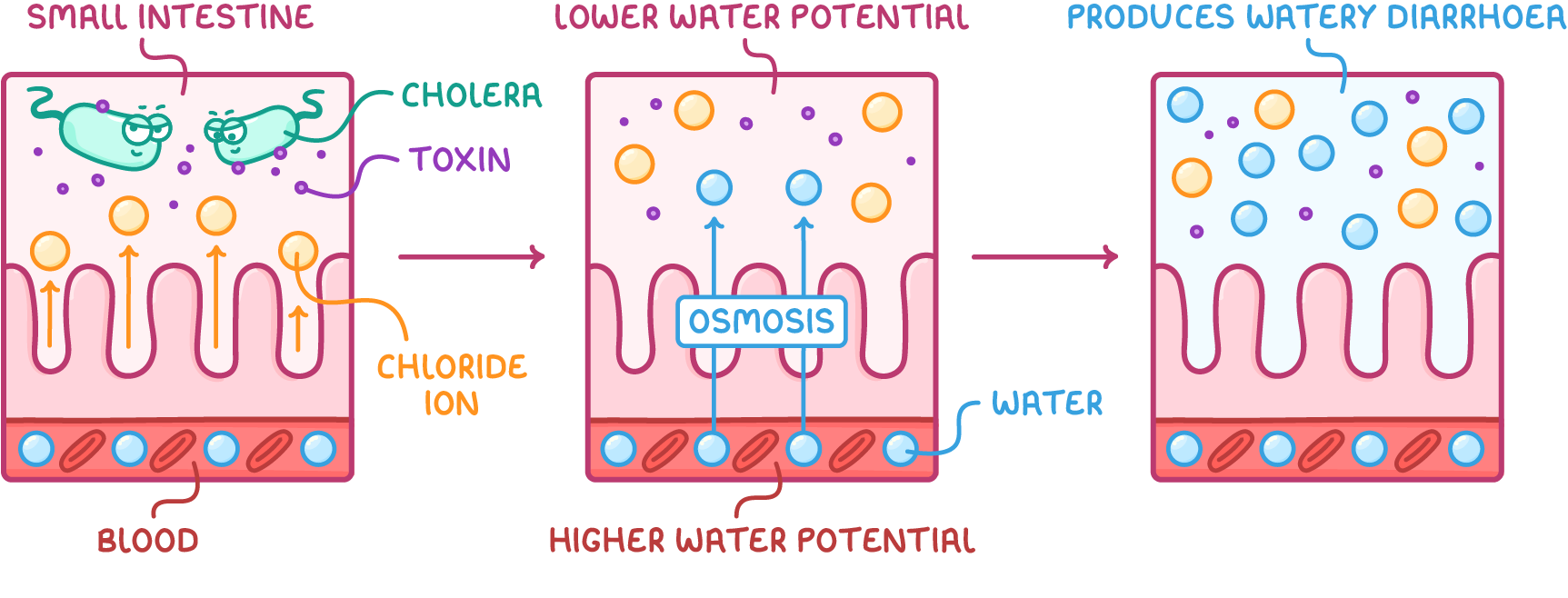
- These effects are all produced by a toxin that the bacterium releases.
How the toxin causes its effects
- The toxin makes the lining of the small intestine secrete chloride ions into the gut.
- This raises the concentration of dissolved ions in the small intestine, which lowers the water potential there.
- The gut now has a lower water potential than the blood, so water moves out of the blood and into the small intestine by osmosis.
- The extra water in the gut produces watery diarrhoea.
- So much water is lost from the blood that the person becomes dehydrated.
- Chloride ions and other ions are also lost in the diarrhoea, so the balance of ions in the blood is disturbed.