21.1 - Food & Drink from Microorganisms
Bread-making
- Yeast is a single-celled fungus (Saccharomyces cerevisiae) used to make bread rise.
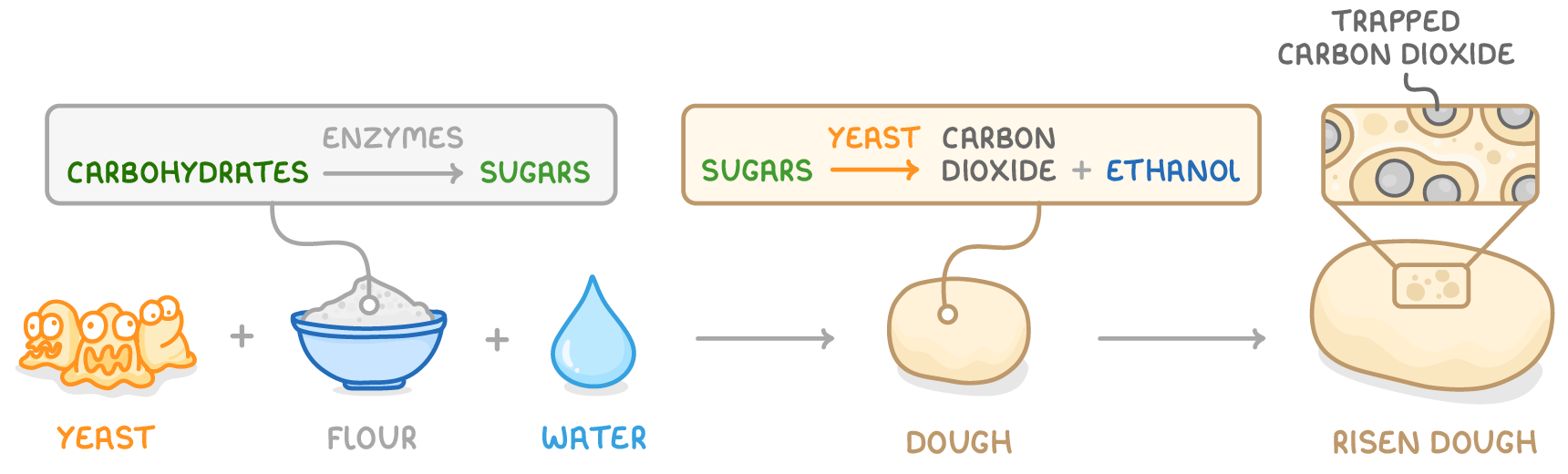
- To make bread, yeast is mixed with flour, water, and a little sugar to form a dough, which is left in a warm place.
- Enzymes break down the carbohydrates in the flour into sugars, and the yeast uses these sugars in respiration.
How the dough rises
- While oxygen is still present, the yeast respires aerobically, producing carbon dioxide.
- Once the oxygen runs out, the yeast switches to anaerobic respiration (also called fermentation), which produces both carbon dioxide and alcohol (ethanol).
- The carbon dioxide is trapped in bubbles in the dough. These pockets of gas expand, so the dough rises.
Baking the dough
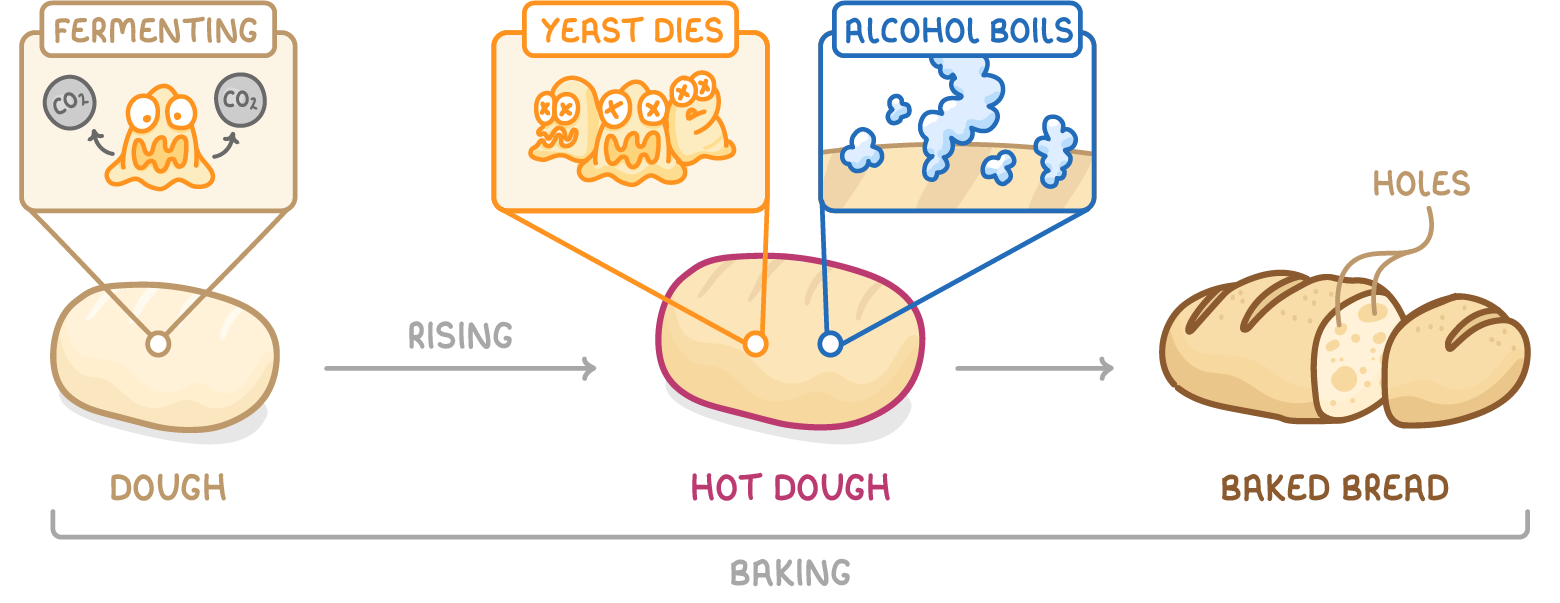
- The dough is baked in an oven.
- The yeast keeps fermenting until the dough gets hot enough to kill it, at which point the bread stops rising.
- Any alcohol made during anaerobic respiration is boiled away by the heat.
- The pockets where the carbon dioxide was trapped are left behind as the holes in the baked bread.
Bioethanol from yeast
- Biofuels are fuels made from living material, known as biomass.
- One of the most common biofuels is bioethanol - ethanol produced by yeast.
How bioethanol is made
- The biomass is first processed, for example using enzymes, to break down its large carbohydrates into smaller sugars.
- Yeast is added and breaks these sugars down to produce ethanol by anaerobic respiration - the same anaerobic respiration yeast carries out when short of oxygen, releasing ethanol as a product.
- The ethanol produced is collected and purified so it can be used as a fuel.
Producing it on a large scale
- The process is carried out in large vessels called fermenters.
- Conditions inside the fermenter are kept suitable for the yeast to grow and respire.
TermDefinition
FermentationAnaerobic respiration in yeast and other microorganisms, which breaks down sugars to release energy.
BiofuelA fuel made from living material, such as crop plants, that can be used in place of fossil fuels.
BiomassThe material that living organisms are made of, or the mass of this material in an organism or at a trophic level (a feeding level in a food chain).