22.10 - Apparatus - Identifying, Selecting & Completing Diagrams
What an apparatus question looks like
- Apparatus questions can appear anywhere on the paper - wherever an experiment needs a piece of equipment named, chosen, or drawn.
- They carry small but reliable marks on most papers, and come in two forms.
A typical question
The first form gives you a job and asks which apparatus does it:
The student needs to measure out 25 cm3 of water accurately.
Name a piece of apparatus the student could use. [1]
The second form shows part of a set-up and asks you to finish it:
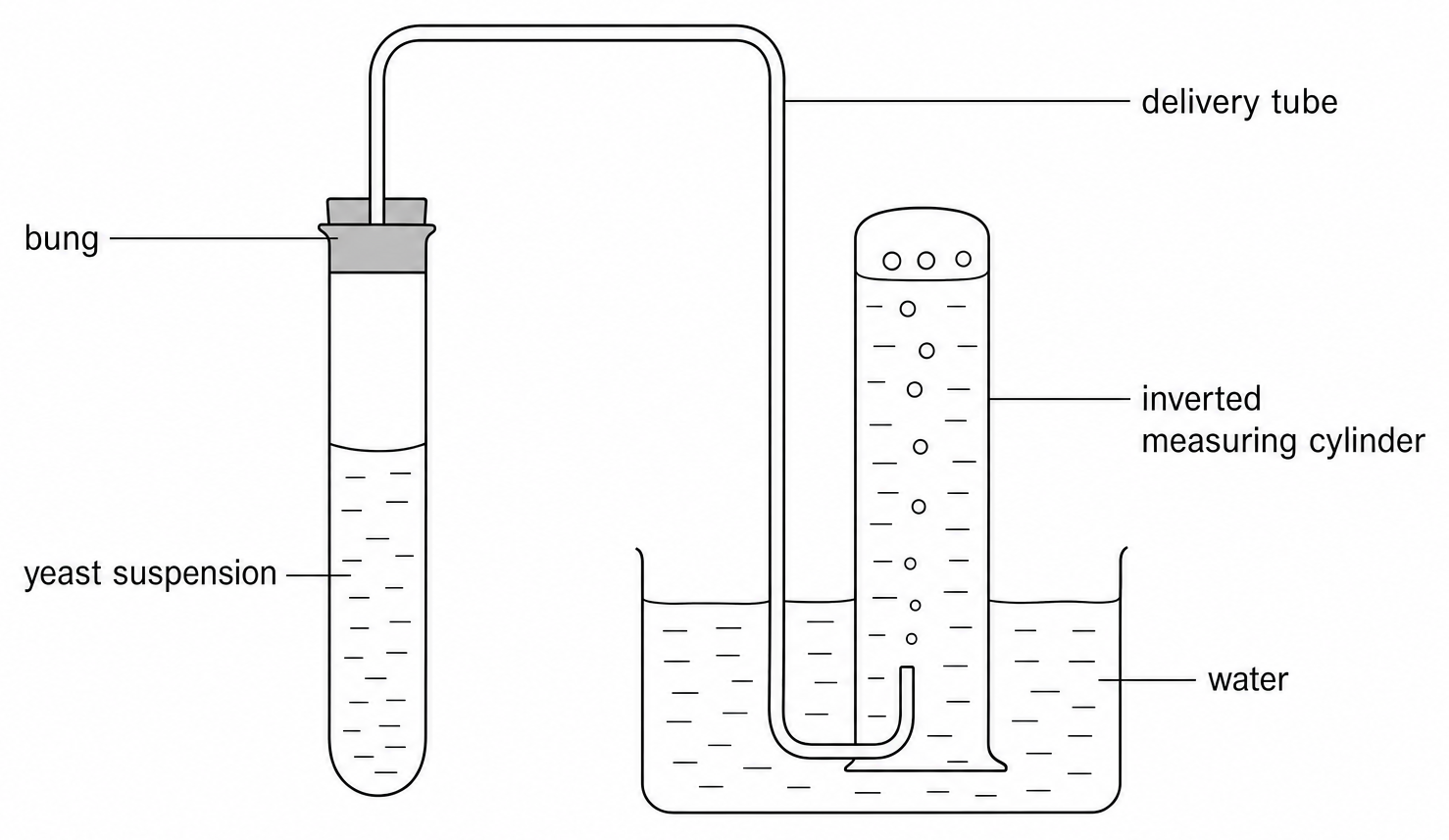
Fig. 1.4 shows part of the apparatus for collecting the gas given off.
Complete the diagram by drawing and labelling the two pieces of apparatus that are missing. [2]
What each form is worth
- Naming or choosing apparatus (usually 1 mark) - Give the right piece of equipment for the variable being measured or controlled: a measuring cylinder for a volume, a thermostatically controlled water bath to hold a temperature steady.
- Completing a diagram (usually 2 marks) - Draw and label the missing parts clearly, one mark for each part drawn and named, such as a delivery tube and an inverted measuring cylinder for collecting a gas.
What drives the choice of apparatus
The choice is almost always driven by one thing: what variable has to be measured or kept constant.
Naming and choosing apparatus
- Choosing apparatus means asking what the experiment needs to measure or control, then naming the standard piece of equipment for that job.
- The variable decides the apparatus - so start from the variable.
Matching the apparatus to the job
| Job to do | The right apparatus | Example in an experiment |
|---|---|---|
| Measure a volume of liquid | Measuring cylinder (or syringe, burette, graduated pipette) | Measuring out 25 cm3 of hydrogen peroxide for a catalase experiment |
| Keep the temperature constant | Thermostatically controlled water bath | Holding an enzyme and its substrate at 40 °C |
| Measure temperature | Thermometer | Reading the temperature of the water bath |
| Measure mass | Balance | Weighing a potato cylinder before and after soaking in a sugar solution |
| Measure time | Stopclock (stopwatch) | Timing how long starch takes to disappear |
| Measure length or distance | Ruler | Measuring how far a dye has risen up a stalk of celery |
| Measure a volume of gas | Gas syringe, or a measuring cylinder inverted over water | Collecting the carbon dioxide from respiring yeast |
Two things that make the answer score
- Name a specific instrument, not a vague one - "a measuring cylinder" scores where "a container" does not.
- Match the instrument to the precision the job needs - A measuring cylinder measures a volume accurately, which is why the mark scheme credits "measuring cylinder / AVP" for measuring out a liquid. AVP means any valid point - a suitable alternative such as a syringe is accepted too.
Improving a method by choosing better apparatus
- The same logic answers "how would you improve this method?" questions that ask for better apparatus.
- If the method counted gas bubbles by eye, the improvement is to measure the volume of gas with a gas syringe.
- If it judged a mass roughly, the improvement is to weigh it on a balance.
- In each case you swap a rough judgement for a proper measuring instrument.
Completing an apparatus diagram
- Some questions print part of a set-up and ask you to draw in the missing pieces.
- Marks are awarded for drawing each part clearly and labelling it - so the same conventions as a biological drawing apply, plus you must show how the apparatus actually works.
Drawing conventions
- Single clear lines - Draw each piece with clean single lines, not sketchy strokes.
- Use a ruler - For straight edges and for label lines.
- Label lines - Run straight from the part to its name, so it's clear which piece each label belongs to.
Show how the apparatus connects and seals
- The point of the diagram is usually that the apparatus must be airtight, or must guide a gas or liquid somewhere - so draw those connections.
- A delivery tube must lead from the reaction vessel to wherever the gas is collected.
- Any bung or seal must be drawn closing the vessel completely - a gap would let the gas escape, so show none.
Collecting a gas - The standard set-up
- The most common diagram to complete is collecting a gas given off in a reaction.
- The gas is led away through a delivery tube and collected over water in an inverted measuring cylinder (or into a gas syringe).
- The mark scheme awards:
- One mark for the delivery tube drawn and labelled
- One mark for the measuring cylinder inverted in water drawn and labelled
- Both the drawing and the label are needed for each mark.
Worked example - Collecting carbon dioxide from yeast
A flask of respiring yeast is drawn on the paper, sealed with a bung. Complete the apparatus so the carbon dioxide can be collected and measured.
Step 1 - Draw the delivery tube
- Draw a delivery tube running from the bung in the flask.
- Use clear single lines and label it.
Step 2 - Draw the collection vessel
- Lead the tube into a measuring cylinder inverted over water.
- Draw it and label it - the gas bubbles up and pushes the water down, so you can read the volume collected.
Step 3 - Check the seal
The gas now has a sealed path from the flask to a container where its volume can be measured - both marks are for exactly this.
Common exam questions
Question 1
Name a piece of apparatus a student could use to measure out 25 cm3 of a liquid accurately.
A measuring cylinder (a syringe, burette, or graduated pipette is also accepted).
Question 2
A student needs to keep an enzyme experiment at a constant 40 °C. What apparatus should they use?
A thermostatically controlled water bath, which holds the temperature steady at the set value.
Question 3
A method judges the amount of gas produced by counting bubbles by eye. Suggest a better piece of apparatus and what it improves.
Collect the gas in a gas syringe (or a measuring cylinder inverted over water) and measure its volume; this gives an accurate measured volume instead of a rough count of bubbles.
Question 4
A diagram question asks you to complete a gas-collection set-up. What two things does the mark scheme want you to draw and label?
A delivery tube leading from the reaction vessel, and a measuring cylinder inverted over water to collect the gas - each drawn and labelled for its mark.
Question 5
Why must the bung and delivery tube be drawn with no gaps in an apparatus diagram for collecting a gas?
Because the set-up has to be airtight, so that the gas is guided through the delivery tube to the collecting vessel rather than escaping, which is the whole point of the apparatus.