14.7 - Adrenaline
Adrenaline and the fight-or-flight response
- Adrenaline is a hormone released by the adrenal glands, which sit just above the kidneys.
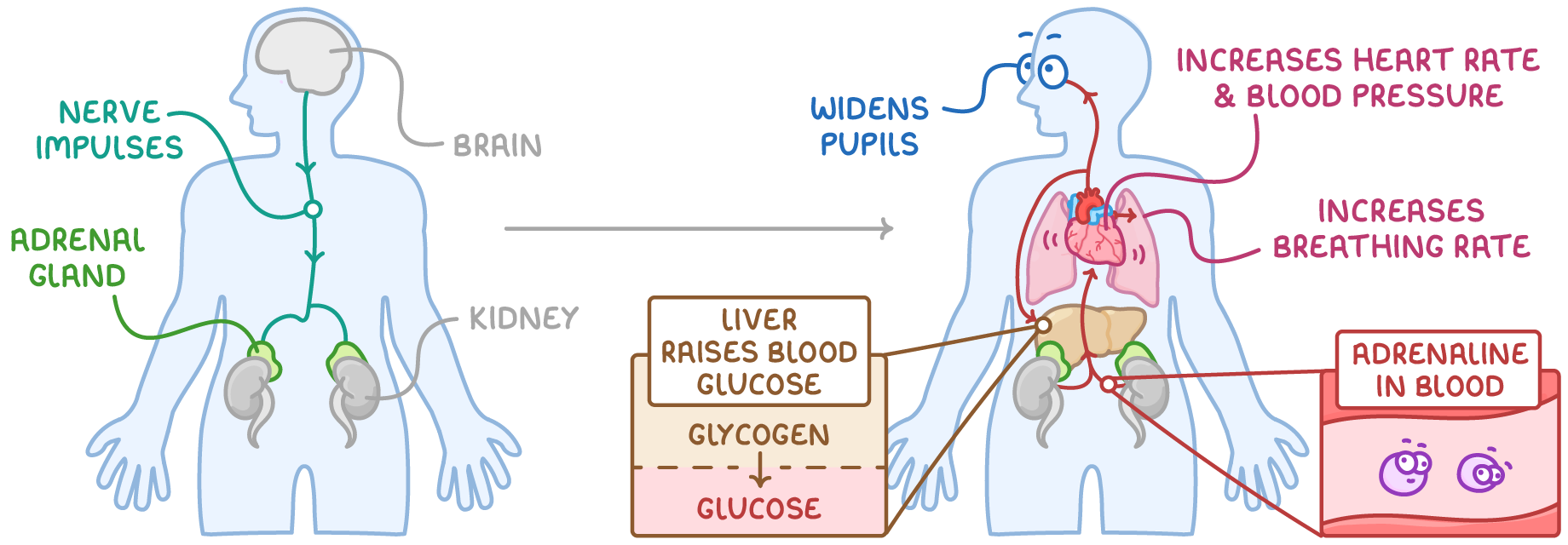
- When the brain detects a stressful or frightening situation, it sends nerve impulses to the adrenal glands, which respond by secreting adrenaline into the blood.
- Adrenaline prepares the body for fight or flight - standing its ground against a threat or running away.
- It does this by increasing the supply of oxygen and glucose to the cells of the brain and muscles, where they're needed for action.
How adrenaline prepares the body
- Heart - Adrenaline binds to receptor proteins in the heart, making the heart muscle contract more frequently and with more force, so heart rate and blood pressure rise. This increases blood flow to the muscles, so muscle cells get more oxygen and glucose for increased respiration.
- Pupils - Widen.
- Breathing - Speeds up, bringing more oxygen into the body.
- Liver - Adrenaline binds to receptor proteins in the liver, making it break down stored glycogen into glucose, which is released into the blood. This raises blood glucose level, so there's more glucose to carry to respiring cells.
The overall effect is to raise the body's metabolic activity, readying it for sudden physical effort.
TermDefinition
AdrenalineA hormone released by the adrenal glands when a person is frightened or stressed. It prepares the body for sudden physical effort.
Fight-or-flight responseThe body's automatic preparation to either stand its ground against a threat or run away from it.